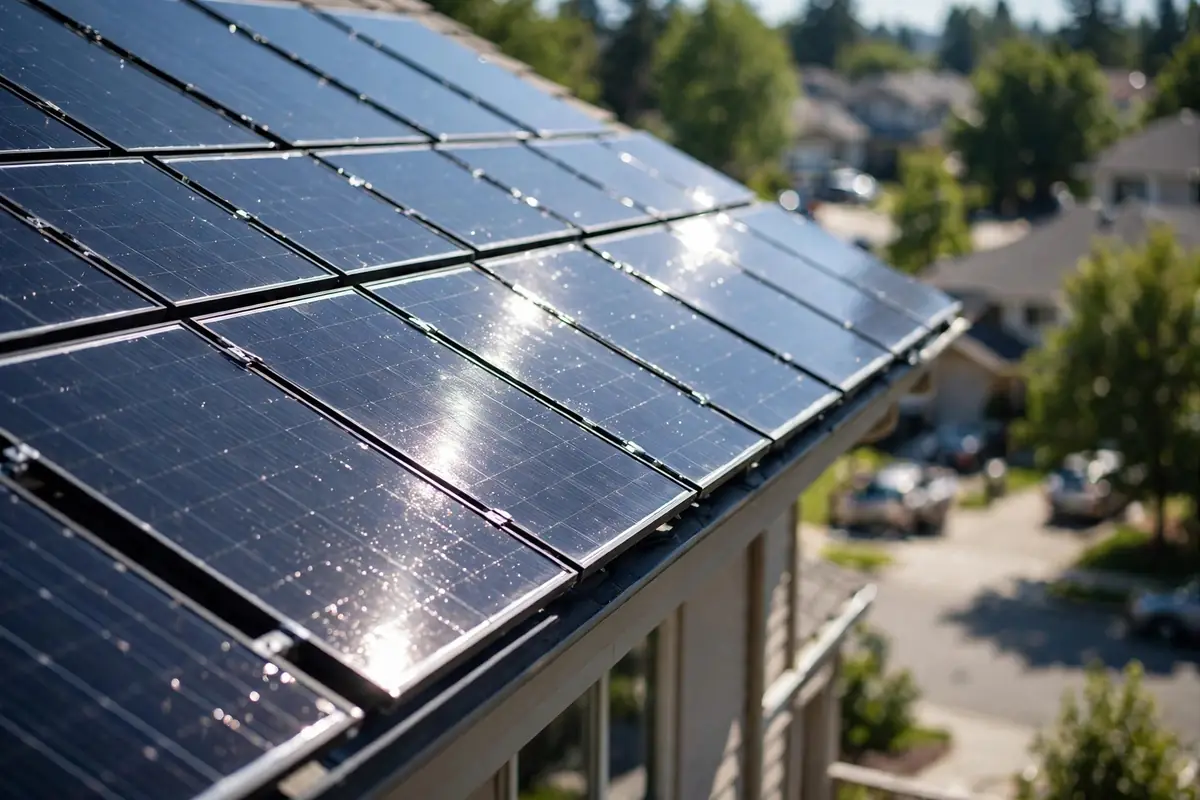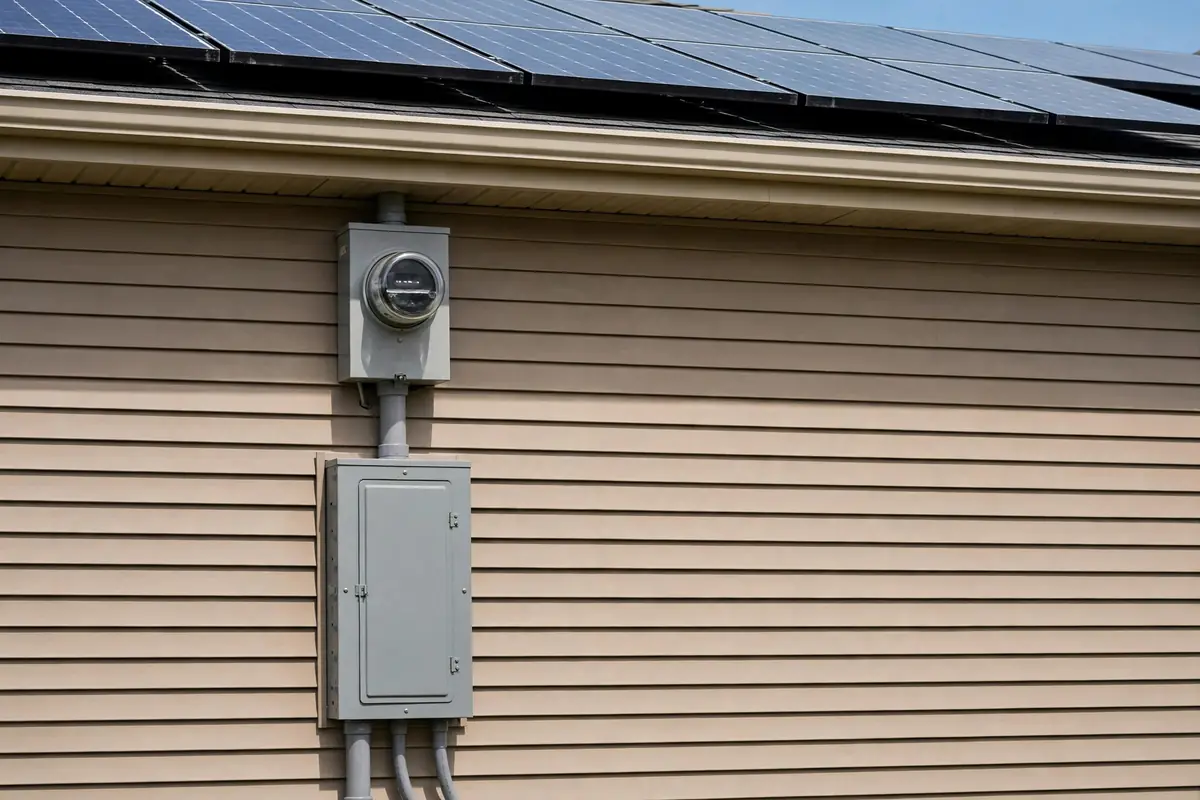


If your solar system was up and running by December 31, 2025, the end of the federal tax credit probably does not affect you. You can still claim the 30% residential clean energy credit on your 2025 tax return. But eligibility turns on specific timing rules, and the details decide who qualifies.
- Systems placed in service by December 31, 2025 generally qualify for the 30% 25D credit.
- “Placed in service” means installed and operational, not just contracted or paid for.
- Claim it on your 2025 tax return using IRS Form 5695, even if you file in 2026.
- If you lack enough tax liability, the credit carries forward to future years.
- Leased systems follow different rules: the leasing company, not you, claims any credit.
The placed-in-service rule
Tax credits attach to timing, and for Section 25D the timing that matters is when the system was placed in service: installed, inspected where required, and capable of generating electricity for your home. A signed contract in November 2025 with installation completed in February 2026 does not qualify. Panels on the roof but awaiting utility permission to operate at year end sit in a gray area that has generated real disputes, which is why the safest interpretation is operational by December 31. When in doubt, the documents that prove your timeline are worth more than anyone’s verbal reassurance, so assemble them before you file rather than after a notice arrives.
This surprises homeowners who assumed the payment date controlled. It does not. Someone who paid in full in 2025 but whose system went live in January 2026 is on the wrong side of the line, while someone who financed and paid nothing in 2025 but whose system was operational December 15 qualifies. If your 2025 installation timeline was tight, pull your installer’s completion records and your utility’s permission-to-operate date now, because those documents are your evidence.
Who qualifies and who does not
The credit was available to homeowners for solar installed on a home they own and use as a residence in the United States, including second homes in most interpretations, but not generally for rental properties you do not also use personally. The system must be new; used equipment does not qualify. Both purchased systems (cash or financed) qualify, because the homeowner owns the system and bears its cost.
Leased systems and power purchase agreements are the big exception. With third-party ownership, the leasing company owns the system and claims any applicable business credit; the homeowner cannot also claim 25D. This is one of the mechanics our lease vs purchase guide unpacks, and it is worth understanding even now, because it affects whether your 2025 lease paperwork entitles you to anything at tax time. (It generally does not.) Community solar subscriptions similarly do not create 25D eligibility for subscribers.
How much you can claim
The credit equals 30% of the system’s cost, and “cost” is broader than the panels. It includes equipment, labor, permitting and inspection fees, wiring, and the balance-of-system components. Battery storage installed alongside or as part of the solar project generally qualified too, subject to capacity rules in IRS guidance. What does not count: your time, landscaping, or a roof replacement done at the same time (even if the new roof was “for” the solar).
A $24,000 system yields a $7,200 credit. That credit offsets your federal income tax liability dollar for dollar; it is not a deduction that merely reduces taxable income, and it is not a refundable check beyond what you owe. If your total federal tax for 2025 was $5,000, you use $5,000 of the credit this year. The remaining $2,200 is not lost, which brings us to carryforwards. For the mechanics of actually filing, see our Form 5695 walkthrough.
| Your situation | 2025 credit eligibility | Notes |
|---|---|---|
| Owned system, operational by 12/31/2025 | Yes, 30% via Form 5695 | File with 2025 return |
| Contracted 2025, operational 2026 | No | Placed-in-service date controls |
| Leased system or PPA, any date | No (for homeowner) | Lessor claims business credit if eligible |
| Second home, owned system, 2025 | Generally yes | Confirm personal-use requirements |
| Rental-only property | Generally no under 25D | Different rules may apply; ask a pro |
| Battery added to 2025 solar | Generally yes | Subject to IRS capacity guidance |
When you cannot use it all at once
Many homeowners, especially retirees with modest tax liability, cannot absorb a $7,000 credit in one year. The law allows the unused portion to carry forward to subsequent tax years. Using the earlier example: $7,200 credit against $5,000 of 2025 liability leaves $2,200 to apply against 2026 taxes. There is no need to amend anything or take special action beyond completing Form 5695 correctly each year until the credit is exhausted.
What you cannot do is carry the credit back to earlier years, and you cannot transfer or sell a residential 25D credit to someone else. Plan the timing with your tax preparer if your liability is lumpy, for instance if you expect much higher income next year. And keep every year’s return showing the carryforward; the paper trail is the proof.
Documentation to keep
If the IRS ever questions your claim, the documents that matter are: the final paid invoice showing itemized system cost, the installer’s completion certificate or equivalent, the utility’s permission-to-operate letter with its date, permits and inspection sign-offs, and proof of payment. Keep these for at least three years after the return claiming the credit is filed, and longer if you are carrying the credit forward. Photograph the system’s specification labels too; model numbers on panels and inverters corroborate that the installed equipment matches the invoice.
One more record people forget: correspondence about timing. If your system was completed December 28, 2025, save the emails proving it. Placed-in-service disputes are won and lost on dated evidence, and installers’ records are not always as precise as you would hope.
Edge cases and gray areas
A few situations genuinely require professional advice. DIY installations qualify on equipment and material costs but not on the value of your own labor. Partial payments across years do not split the credit; it attaches to the placed-in-service year regardless of when you paid. Roof-integrated solar (solar shingles) created long-running disputes about how much of the roofing cost counts; IRS guidance historically allowed the portion attributable to the solar function. New construction where the builder installed solar: the homeowner-buyer generally claims the credit based on the home’s cost allocation, which builders do not always document helpfully. The Department of Energy’s homeowner solar guide offers useful background on these ownership scenarios, though it does not replace tax advice.
None of this is DIY tax planning territory if real money is involved. A $7,000 credit justifies a one-hour consultation with a tax professional who handles energy credits. The IRS page on the residential clean energy credit is the primary source to read first, and for what replaced the credit going forward, see our overview of what 2026 buyers get instead.
My system was installed December 2025 but PTO came in January 2026. Do I qualify?
This is genuinely gray. The conservative reading ties placed-in-service to operational status, which PTO affects. Gather your dated documents and get professional advice; do not rely on a salesperson’s assurance.
Can I amend a prior return to claim a 2025 install?
If you already filed your 2025 return without the credit, you can generally file an amended return (Form 1040-X) with Form 5695. Watch the amendment deadlines and keep documentation.
Does the credit reduce my basis if I sell the home?
Tax basis questions on home sales with solar credits are fact-specific. This is squarely “ask your tax professional” territory, especially if you claimed a large credit and sell within a few years.
I leased my 2025 system. Can I claim anything?
No 25D credit for you; the leasing company is the owner for tax purposes. Your benefit was supposed to be reflected in the lease pricing, which is worth scrutinizing.
What if my tax liability is zero?
The credit carries forward to future years when you do have liability. It is not lost, but it is also not a refund check. Plan around your expected future income.
Ready to compare real solar prices?
Get free, no-pressure quotes from vetted local installers and see what solar costs for your roof.