
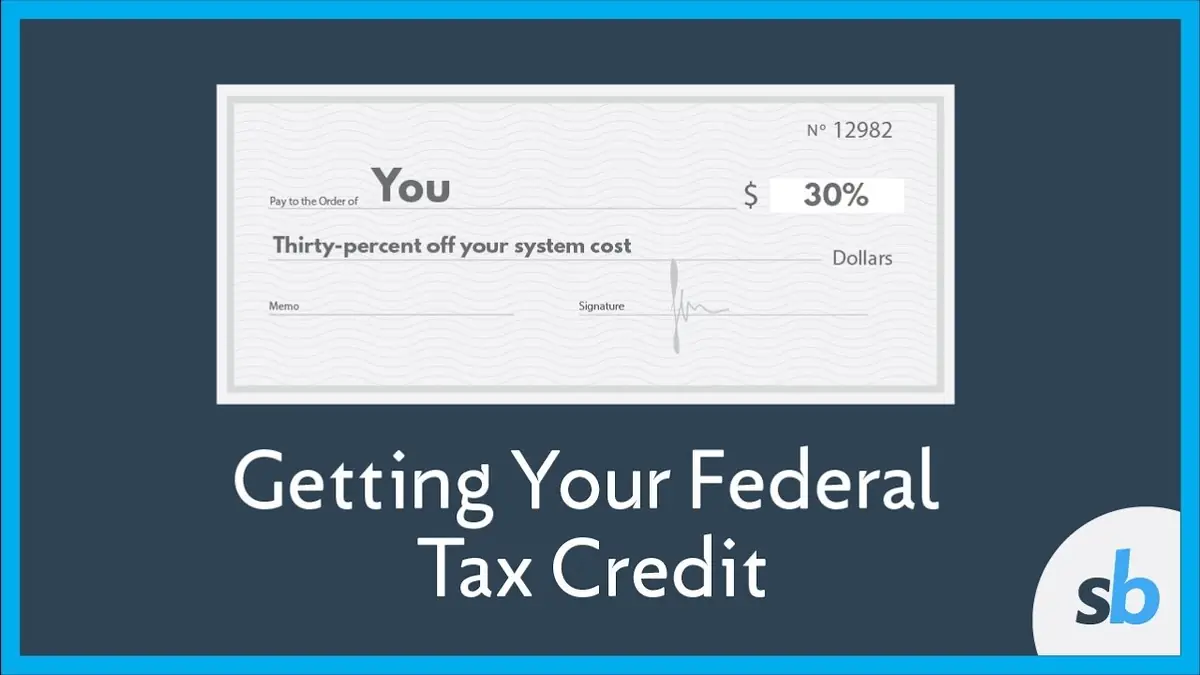
IRS Form 5695, “Residential Energy Credits,” is the two-page form that turns your 2025 solar installation into a 30% tax credit. It looks intimidating but the solar portion is straightforward: report your costs, multiply by 30%, apply it against your tax liability, and carry forward whatever you cannot use. Here is each line explained.
- File Form 5695 with your 2025 return to claim the 30% credit for a system placed in service in 2025.
- Qualified costs include equipment, labor, permitting, and wiring, not your own DIY labor or an unrelated roof replacement.
- The credit offsets tax you owe; unused amounts carry forward to future years.
- Keep your invoice, PTO letter, and proof of payment; they are your audit defense.
- This guide is educational, not tax advice. Confirm specifics with a tax professional.
Before you start: eligibility check
Form 5695 is only useful if you are eligible. The quick test: you own (not lease) a solar system installed on a US home you use as a residence, the system was placed in service during 2025, and the equipment is new. If your system went live in 2026, the 25D credit is gone and this form will not help you; read our guide to what 2026 buyers get instead. If you are unsure about timing, our 2025 eligibility guide covers the placed-in-service rules in detail.
Download the current Form 5695 and its instructions from irs.gov. Tax software handles the form automatically if you answer its energy-credit questions, but walking through it manually once teaches you what the software is doing and lets you catch errors. The official Form 5695 instructions are worth reading for the fine print on qualified costs. Have your final invoice, total cost, and 2025 tax liability handy before you begin.
Part I walkthrough: the solar lines
Part I of Form 5695 covers residential clean energy credits, which is where solar lives. The structure is simple:
- Line 1: qualified solar electric property costs. Enter what you paid for the solar system in 2025’s placed-in-service year. This is the big number: equipment plus installation.
- Line for solar water heating (if applicable): separate line, separate property type. Most readers skip it.
- Battery storage costs: storage installed with the system has its own line subject to IRS capacity guidance (generally 3 kWh minimum capacity in recent guidance). Enter qualifying battery costs here.
- Multiply by 30%: the form instructs you to multiply your total qualified costs by 0.30. A $24,000 system produces a $7,200 tentative credit.
- Limitation based on tax liability: the credit cannot exceed your tax liability for the year (with carryforward for the rest, covered below). The form walks you through the limitation worksheet.
- Carryforward from prior year: if you are carrying an unused credit from an earlier return, it enters here and adds to this year’s available credit.
The resulting credit flows to your Form 1040’s credits section (Schedule 3 in recent years). That is the entire journey: one form, one multiplication, one transfer. The complexity is never the arithmetic; it is knowing which costs qualify and documenting them.
What counts as a qualified cost
The IRS instructions define qualified costs functionally: amounts paid for the property and for labor to install it, including permitting and inspection fees tied to the installation. In practice for a standard residential job:
| Cost item | Qualifies? | Notes |
|---|---|---|
| Panels, inverter, racking, wiring | Yes | The core of the claim |
| Installer labor | Yes | Included in contract price |
| Permitting and inspection fees | Yes | Keep the receipts |
| Battery storage (3+ kWh) | Generally yes | Per IRS capacity guidance |
| Main panel upgrade required for solar | Often yes | If necessary for the installation; document it |
| Your own DIY labor | No | Materials only for DIY systems |
| Full roof replacement | No | Even if timed with the solar install |
| Landscaping, tree removal | No | Not part of the energy property |
The panel upgrade line deserves emphasis because it is commonly missed. If your 100-amp panel had to become a 200-amp panel for the solar to interconnect safely, that cost is part of the solar project in most readings. Keep the electrician’s invoice describing the work as solar-related. Conversely, do not get creative: claiming an entire $18,000 roof replacement because panels sit on it is the kind of overreach that draws notices.
Limits, carryforwards, and interactions
Three limitations shape the real value. First, the credit is nonrefundable: it can reduce your tax to zero but not below, and the government does not send you the difference. Second, the unused portion carries forward indefinitely under the statute’s terms; each year’s Form 5695 picks up where the last left off. Third, the credit interacts with other subsidies: if a utility rebate or state program paid part of your cost directly, some interpretations require reducing your cost basis by subsidized amounts. Tax-exempt grants and subsidized financing can complicate the calculation, which is another reason a professional review pays for itself on larger systems.
Also note the AMT interaction is generally favorable: the residential energy credit can offset alternative minimum tax in most situations, unlike some other credits. And if you financed the system, the credit is based on the full contract cost, not on what you have paid so far; financing does not shrink the credit, though dealer fees baked into the contract price do inflate the cost basis, for better or worse.
Mistakes that cause problems
The most common error is claiming in the wrong year: filing for 2025 when the system went live in 2026, or vice versa. The placed-in-service year controls, full stop. Second is claiming a leased system: if you do not own it, you cannot claim 25D, and the IRS data-matches lessor claims. Third is inflated cost basis: including the roof, the patio cover the panels shade, or “consulting fees” paid to a relative. Fourth is missing the carryforward chain: if you carried credit forward from an earlier year and forget to enter it, you lose money you already earned.
Fifth, and most avoidable: no documentation. The form itself requires no attachments, which lulls people into keeping nothing. Keep the invoice, the permission-to-operate letter, permits, and proof of payment for at least three years after filing, longer if carrying forward. An audit without documents is an argument you lose by default.
After you file
Once filed, the credit reduces your 2025 liability and any remainder carries forward automatically through next year’s Form 5695. If you already filed your 2025 return without claiming, file Form 1040-X (amended return) with Form 5695 attached; mind the amendment deadlines. If the IRS sends a notice questioning the claim, respond with your documentation package promptly and completely; most residential solar credits with proper paperwork resolve without drama.
And remember the bigger picture: this credit no longer exists for new installations, so its value is now a one-time benefit for 2025 buyers, not an ongoing planning tool. For everything that replaced it in the incentive stack, from state credits to net metering, see our guide to what 2026 buyers get instead, and if you are deciding between ownership models going forward, our lease vs purchase analysis covers the changed mechanics.
Can I e-file Form 5695?
Yes. All major tax software supports it, and IRS Free File handles it too. The software will ask about your solar costs and generate the form automatically.
What if I installed in 2025 but have not filed yet?
File Form 5695 with your 2025 return whenever you file it, including on extension. The credit attaches to the 2025 tax year regardless of when in 2026 you get around to filing.
Do I need to send the IRS my solar invoice?
No attachments are required with the return, but keep the invoice, PTO letter, permits, and proof of payment. You will need them if the claim is ever questioned.
Can I claim the credit if I am retired with low income?
You can claim whatever your tax liability supports, and the rest carries forward to future years. It may take several years to use a large credit on a small liability, but it is not lost.
Does the credit apply to a battery I add in 2026 to 2025 solar?
Standalone storage placed in service in 2026 faces the same post-2025 rules as everything else. The battery’s own placed-in-service year generally controls its eligibility. Get professional advice for mixed-timing projects.
Ready to compare real solar prices?
Get free, no-pressure quotes from vetted local installers and see what solar costs for your roof.