
A Tesla Powerwall 3 typically costs $11,000 to $16,000 installed in the US in 2026, but quotes swing widely because the battery itself is only part of the bill. This guide breaks down every line item: the unit, the gateway, labor, electrical work, and the adders that turn a $12,000 quote into a $17,000 one.
- The Powerwall 3 unit itself lists around $9,000 to $10,000; the rest of a typical $11,000 to $16,000 installed price is gateway hardware, labor, and electrical work.
- Tesla’s direct pricing is usually the floor. Third-party installers charge more but often include panel upgrades and trickier electrical work Tesla may decline.
- Common adders: main panel upgrade ($1,500 to $4,000), Backup Switch vs Gateway choice, long wire runs, and critical-load subpanels.
- The federal 25D credit ended for 2026 installs, so budget the full installed price. Some states and utilities still offer battery incentives.
The short answer
Budget $11,000 to $16,000 installed for a single Powerwall 3 in 2026, and $20,000 to $28,000 for two. The battery unit lists near $9,000 to $10,000 before installation; everything above that is the Backup Gateway (or Backup Switch), electrician labor, permitting, and any electrical upgrades your home needs. Simple installs on modern 200-amp panels land near the bottom of the range. Older homes needing panel work land near the top.
Two things changed the math recently. First, Tesla moved Powerwall 3 to LFP chemistry and integrated the solar inverter, which simplified installs. Second, the federal 25D residential credit ended for systems installed after December 31, 2025, so 2026 buyers pay the full installed price with no 30 percent credit to soften it. That makes understanding each line item more important than ever. For the broader comparison, see our Powerwall 3 vs Enphase 5P guide.
What the hardware costs
The Powerwall 3 unit (13.5 kWh usable, 11.5 kW continuous) lists around $9,000 to $10,000 as standalone hardware. Tesla’s own online pricing has historically been the low end of that band when you order direct. Third-party installers typically mark the hardware up modestly, which is normal: they carry inventory, handle warranty logistics, and bundle design work.
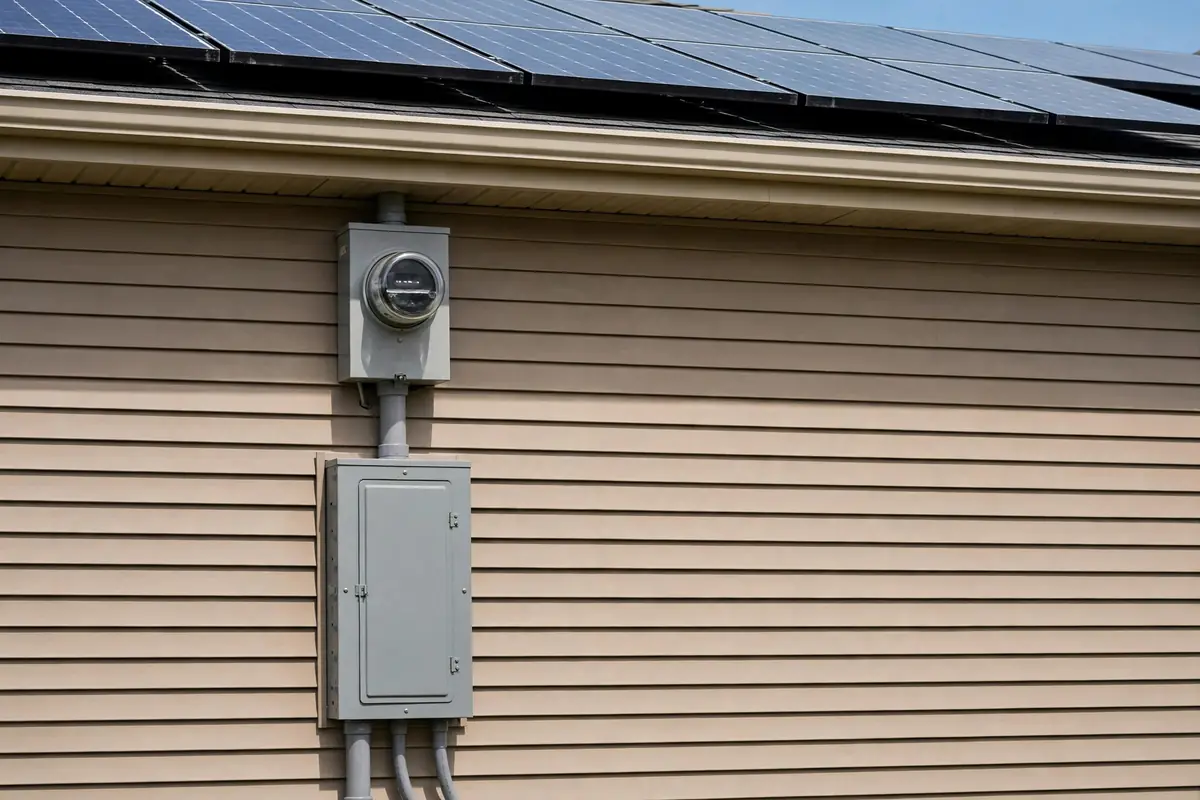
You also need a grid-disconnection device, and this is where quotes diverge. The Backup Gateway 2 is the full-featured option: it manages whole-home backup, metering, and grid isolation, and typically adds $1,000 to $1,800 installed. The simpler Backup Switch is cheaper (often a few hundred dollars in hardware) but suits simpler setups and may not be offered in every market or configuration. Ask your installer which one is in your quote and why. A quote that just says “gateway” without specifying is a quote you should question.
Do not forget the small hardware that adds up: conduit, disconnects, breakers, mounting hardware, and monitoring CTs (current transformers) for consumption monitoring. Reputable installers roll these into labor or list them as a materials line of a few hundred dollars. If a quote has a vague $2,000 “miscellaneous electrical” line with no detail, ask for the breakdown.
Labor and electrical work
Standard installation labor for a single Powerwall 3 runs $1,500 to $3,000 in most markets: mounting the unit, wiring the gateway, commissioning, and the inspection visit. Two units do not double labor; the second typically adds $800 to $1,500 since the crew, permitting, and gateway work are already covered.
Permitting and interconnection paperwork usually cost $200 to $600, sometimes bundled into labor. Your utility’s interconnection application for storage is generally straightforward for a single Powerwall, though some utilities require additional review for larger systems or specific export settings. Your installer should handle all of this; if a quote asks you to pull the permit yourself, that is a red flag.
Where labor gets expensive is the electrical panel. A modern 200-amp panel with open breaker spaces is the easy case. A full panel, a 100-amp service, or outdated equipment (Federal Pacific, Zinsco, or Challenger panels, which many electricians will not touch) triggers upgrade work. Panel upgrades are the single biggest variable in battery quotes, which brings us to adders.
Adders that inflate quotes
These are the legitimate extras that separate a $12,000 install from a $17,000 one. None are scams on their own, but each should be itemized and justified:
| Adder | Typical cost | When it applies |
|---|---|---|
| Main panel upgrade (100A to 200A) | $1,500 to $4,000 | Undersized, full, or obsolete panels |
| Critical-loads subpanel | $800 to $2,000 | Partial-home backup instead of whole-home |
| Long wire runs / trenching | $500 to $2,500 | Battery far from panel, detached garage |
| Consumption monitoring CTs | $200 to $500 | If you want detailed usage data in the app |
| Structural / bollard work | $300 to $1,000 | Garage installations needing impact protection |
| Second Powerwall (marginal) | $9,000 to $12,000 | Added to an existing single-unit install |
The panel upgrade deserves emphasis because it surprises buyers most. If your home has a 100-amp panel, most installers will require a 200-amp upgrade before adding a Powerwall, since the battery plus your existing loads can exceed the old panel’s capacity. Get the panel question answered during the site survey, not after you have signed. And if you are deciding between one battery or two, our one vs two Powerwalls guide helps you size before you price.
Tesla direct vs third-party installer
Tesla sells Powerwall 3 directly in many markets, and its pricing is usually the lowest headline number you will find. The trade-off is flexibility: Tesla’s direct operation standardizes installs and may decline complex jobs (difficult panel situations, unusual layouts, tight timelines). Scheduling can also be slower during demand spikes.
Certified third-party installers typically quote $1,000 to $3,000 more for the same single unit, but they earn it on harder jobs: panel upgrades, partial-home backup design, coordination with existing solar from another company, and faster scheduling. They are also the better bet if you want the battery paired with non-Tesla solar equipment or a phased plan to add a second unit later.
Get both quotes when you can. Tesla’s number sets your floor; a local installer’s number tells you what the full-service version costs. If the gap is more than about $3,500 for an identical scope, ask the installer to walk you through the difference line by line. Sometimes the answer is legitimate (your panel needs work Tesla did not include); sometimes it is margin.
How to get a fair price
First, get three quotes minimum, and make at least one of them Tesla direct if available in your area. Second, insist on itemized quotes: hardware, gateway model, labor, permitting, and each adder on its own line. Third, ask every installer the same sizing question: “What will this actually run in my house during an outage?” Vague answers suggest they have not done the load math. Our battery sizing guide shows you the math so you can check their work.
Fourth, check incentives before you sign. The federal credit is gone for 2026 installs, but programs like California’s SGIP, utility battery rebates, and state storage incentives still exist in some markets. Search DSIRE for your state and ask installers what they have claimed for other customers recently. Finally, never pay the full amount up front. A typical structure is a deposit at contract, a progress payment at install, and the balance at permission to operate.
Can I buy a Powerwall 3 without solar panels?
Yes. The Powerwall 3 works as a standalone battery charged from the grid, which is useful for time-of-use rate arbitrage and outage backup. Without solar, though, the economics are weaker since you are buying grid power to store rather than generating your own.
How long does Powerwall 3 installation take?
The physical install is usually one day. Permitting and utility interconnection add two to eight weeks depending on your city and utility. Ask your installer for their current local timeline.
Does Tesla offer financing for the Powerwall 3?
Tesla has offered financing and monthly payment options in the past, and third-party installers commonly bundle batteries into solar loans. Compare the total cost with interest, not just the monthly payment.
Is a second Powerwall worth it?
It depends on your outage goals. One unit covers essentials for most homes; two covers whole-home backup with air conditioning and multi-day resilience. See our one vs two guide for the decision framework.
Will the Powerwall 3 work during a grid outage?
Yes. The gateway disconnects your home from the grid in milliseconds and the battery powers your backed-up loads. Your solar panels keep recharging it during the day. Without a battery, grid-tied solar shuts down in outages for safety.
Ready to compare real solar prices?
Get free, no-pressure quotes from vetted local installers and see what solar costs for your roof.