
RV solar panels come in three types: rigid, flexible, and portable. Each wins in a different situation, and picking the wrong one is the most common regret in RV solar builds. This guide compares all three on efficiency, durability, weight, and cost, names the best 2026 picks, and shows how many watts your rig needs.
- Rigid panels are the best choice for most RVs: cheapest per watt, most durable, and highest efficiency.
- Flexible panels suit curved roofs and low-clearance rigs, but they run hotter, degrade faster, and cost more per watt.
- Portable suitcase panels are ideal for renters, shaded campsites, and anyone who refuses to drill into the roof.
- Most weekend setups need 200 to 400 W; full-time boondockers usually need 600 to 1,200 W.
- Buy monocrystalline, match all panels in a string, and leave roof space for the system you will want in two years, not the one you want today.
Rigid, Flexible, and Portable Compared
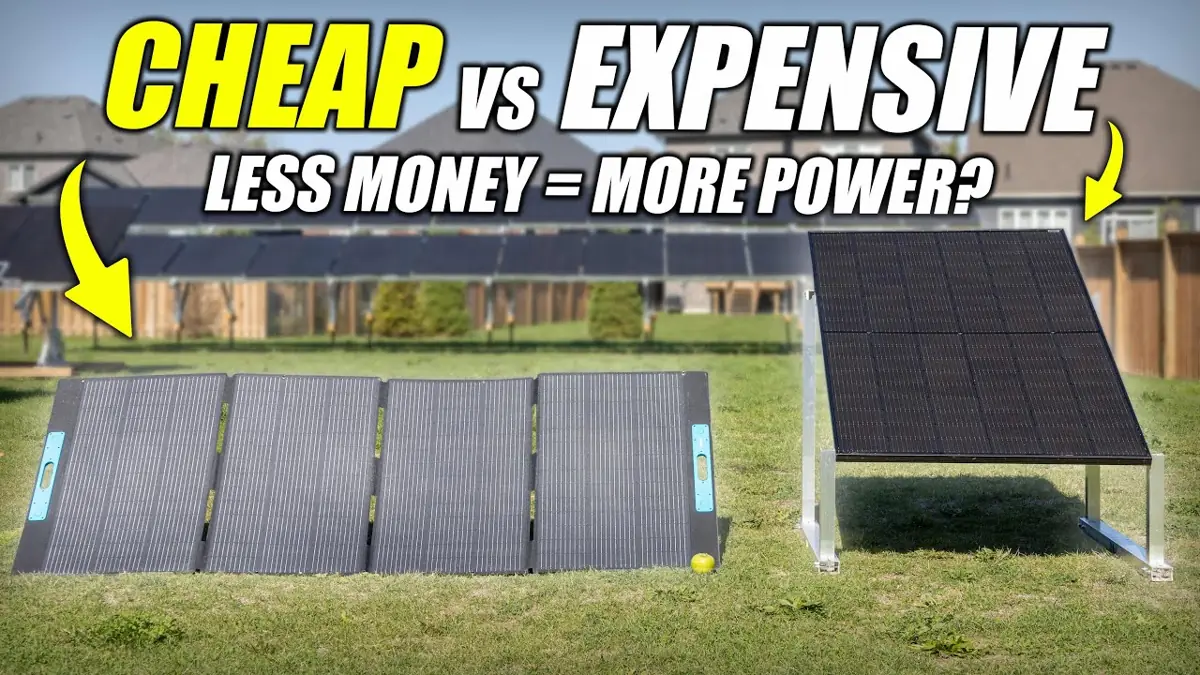
The panel type matters more than the brand. Rigid panels are glass-and-aluminum rectangles. Flexible panels are thin sheets that glue or screw to the roof. Portable panels fold into a suitcase you set on the ground and plug in at camp.
| Rigid | Flexible | Portable | |
|---|---|---|---|
| Typical efficiency | 20 to 23% | 17 to 21% | 20 to 23% |
| Weight per 100 W | 15 to 20 lbs | 4 to 6 lbs | 12 to 18 lbs (with case) |
| Lifespan | 25+ years | 5 to 10 years | 10 to 15 years |
| Cost per watt | Lowest | Highest | Middle |
| Best for | Permanent installs | Curved or crowded roofs | Renters, shade, part-timers |
Short version: if your roof fits them and you own the rig, buy rigid. Curved fiberglass with no flat space calls for flexible. Renters and forest campers do better with portable panels in the nearest sun patch. Our solar panel wattage explainer covers what watt ratings mean on a real roof.
Rigid Panels: The Full-Time Standard
Rigid panels win on every metric for a permanent install. Tempered glass over aluminum shrugs off hail, vibration, and decades of UV. Airflow underneath keeps cells cooler, and cooler cells produce more power. They are also the cheapest per watt, and every mounting standard assumes rigid panels.
Pros
- Lowest cost per watt and longest lifespan, typically 25 years or more
- Highest efficiency: modern monocrystalline hits 20 to 23 percent
- Air gap underneath keeps cells cooler for better hot-weather output
- Standard sizes and mounting hardware; easy to expand later
Cons
- Heavy: about 15 to 20 lbs per 100 W, which matters on weight-limited rigs
- Need flat mounting surface and drilled brackets or adhesive mounts
- Stick up 2 to 4 inches, adding clearance height and wind drag
Buy monocrystalline, not polycrystalline: more watts per square foot of precious roof space, and the price gap has nearly closed. Our mono vs poly comparison has the full numbers. Standard 100 W and 200 W 12V panels from Renogy, Rich Solar, and Newpowa dominate because they fit between roof vents and AC units.
Flexible Panels for Curved Roofs
Flexible panels bond almost flush to the roof, solving two problems: curved fiberglass that will not take brackets, and rigs where clearance height matters. At 4 to 6 lbs per 100 W they suit pop-ups and trailers with strict roof load limits. Install is simple: clean, adhere or screw, and wire.
Pros
- Conform to curved roofs and hug the surface for near-zero added height
- Lightweight enough for pop-ups and trailers with fragile roofs
- No bulky brackets; clean, low-profile look
Cons
- No air gap means hotter cells and 10 to 15 percent less real-world output
- Shorter life: 5 to 10 years is typical versus 25 for rigid
- Highest cost per watt of the three types
- Trapped moisture under glued panels can damage some roof membranes
Treat flexible as a five-year solution, not a lifetime one. Full-timers often replace them with rigid once output fades. If you go flexible, choose ETFE-coated panels from SunPower or Renogy, and leave an air gap with corrugated spacers if possible; it helps output and lifespan.
Portable Panels for Shade and Rentals
Portable panels skip the roof entirely. Suitcase kits unfold to 100 to 400 W, plug into a controller or power station, and tilt at the sun while the rig sits in shade. A portable panel in full sun out-produces a shaded roof panel every time.
Pros
- No drilling, no roof work, no permanent modification: ideal for rentals and leased rigs
- Park in shade, deploy panels in sun for the best of both worlds
- Tilt and re-aim through the day for 20 to 30 percent more harvest
- Doubles as home backup or tailgate power
Cons
- Setup and teardown at every stop; theft risk if left unattended
- Long cable runs to the rig add voltage drop unless you oversize the wire
- Impractical above about 400 to 600 W; too much gear to deploy daily
EcoFlow’s 220 W bifacial and Jackery’s SolarSaga 200 W are the reference designs, built for their power stations but usable with any MPPT controller. A popular hybrid: 200 to 400 W of rigid on the roof for baseline charging plus a 200 W portable kit for shade days.
How Many Watts Your RV Actually Needs
Shop panels after the power audit, never before. Rough map: 200 W covers lights, phones, and a vent fan on weekends. A 400 W kit with a 30 to 40 A MPPT controller is the classic starter and handles a 12V fridge plus moderate use. Full-timers without AC typically need 600 to 1,200 W; AC pushes past 1,500 W, which many roofs cannot fit.
Roof space is the binding constraint: a 100 W rigid panel runs about 42 by 21 inches, a 200 W about 58 by 27 inches. Map around the AC shroud, vents, and antenna before buying. Our RV solar sizing guide runs the full calculation, and our air conditioner solar guide covers cooling loads.
The Best RV Solar Panels for 2026
These picks prioritize proven reliability over spec-sheet racing. Every panel is monocrystalline, uses standard MC4 connectors, and comes from a brand with real US warranty support.
| Pick | Panel | Type | Size | Best for |
|---|---|---|---|---|
| Best budget rigid | Renogy 100W 12V monocrystalline | Rigid | 100 W | Starter systems and tight budgets |
| Best high-output rigid | Renogy 200W 12V N-type | Rigid | 200 W | More watts per square foot of roof |
| Best value alternative | Rich Solar 200W monocrystalline | Rigid | 200 W | Bigger arrays on large roofs |
| Best flexible | SunPower 110W flexible | Flexible | 110 W | Curved roofs and low clearance |
| Best portable | EcoFlow 220W bifacial portable | Portable | 220 W | Ground deployment and shade dodging |
| Best portable value | Jackery SolarSaga 200W | Portable | 200 W | Pairing with portable power stations |
Renogy earns the rigid picks on availability and ecosystem: its 400 W premium kit with a 40 A MPPT controller bundles matched panels, controller, and wiring at the $600 to $1,500 DIY price point most starters target, and its N-type cells reach up to 25 percent cell efficiency. For the broader market, see our best solar panel brands for 2026; for full project pricing, our 2026 RV solar cost guide.
Mounting, Tilt, and Maintenance That Pays
Do not economize on mounting hardware. Z-brackets with stainless hardware and proper lap sealant survive highway speeds and desert winds; cheap brackets crack and leak. Tilt mounts pay for themselves in winter, adding 20 to 30 percent versus flat panels when the sun rides low.
Wire in series for higher string voltage, use 10 AWG solar cable for roof runs, and fuse every positive line. EXPLORIST.life’s camper panel sizing guide has wiring diagrams for common RV arrays. Maintenance: wash panels a few times a year (dust costs 5 to 10 percent), check bolts after rough roads, and inspect MC4 connectors annually for heat discoloration.
Related Guides
- How to size an RV solar system for full-time boondocking, the complete audit-to-array workflow
- RV solar setup costs in 2026, priced component by component
- The best solar panel brands for 2026, residential and RV compared
- Solar panel wattage explained: what the numbers on the label mean
- Monocrystalline vs polycrystalline panels, and why RVs pick mono
How many watts of solar panels do I need on my RV?
Weekend campers typically need 200 to 400 W; full-timers without AC need 600 to 1,200 W. The real answer comes from a power audit: daily watt-hours divided by peak sun hours divided by 0.8. Roof space often caps the answer before the math does.
Are flexible solar panels worth it for an RV?
Only for curved roofs that cannot take brackets, strict weight limits, or clearance constraints. They cost more per watt, produce less in heat, and last 5 to 10 years versus 25 for rigid. If rigid fits, buy rigid.
Can I mix different solar panels on my RV?
Avoid it. Panels in series should match in wattage and voltage, or the weakest drags the string down. If you must expand with different panels, wire them as a separate string into their own MPPT controller.
Do portable solar panels work as well as roof panels?
Watt for watt, portables often produce more since you tilt them at the sun outside shade. Tradeoffs: daily setup, theft risk, and practical limits around 400 to 600 W. Many boondockers pair roof panels with a portable kit for shade days.
How long do RV solar panels last?
Rigid mono panels carry 25-year performance warranties and often work past 30 years, losing about 0.5 percent per year. Flexible panels last 5 to 10 years. Controllers, wiring, and batteries need replacement long before rigid panels do.
Ready to compare real solar prices?
Get free, no-pressure quotes from vetted local installers and see what solar costs for your roof.