

Warehouses are some of the best buildings in America for solar: vast flat roofs, daytime operating hours, and straightforward installations. This guide covers how much roof a warehouse array needs, realistic payback math with 2026 incentives, and the financing structures that fit distribution and storage operations.
- A 100,000 sq ft warehouse roof can typically host 500 kW to 1 MW of solar, depending on setbacks and obstructions.
- Modeled warehouse paybacks run 3 to 6 years after the 30 percent 48E credit and depreciation, thanks to daytime self-consumption.
- Flat roofs install fast with ballasted racking, but structural capacity and membrane condition must be verified first.
- Demand charges are a major warehouse cost driver; solar plus storage can attack both energy and demand charges.
- Third-party ownership works well for leased warehouses where the tenant cannot claim tax credits.
Why Warehouses Are Ideal for Solar
A warehouse is, from a solar developer’s perspective, close to a perfect host. The roof is large, flat, and usually unshaded. Operations run during daylight hours, when lighting, conveyor systems, forklift charging, and HVAC draw power exactly when panels produce it. And the building’s electricity rate is commercial, often 10 to 16 cents per kWh according to EIA data, high enough that every self-consumed kWh has real value.
Scale is the other advantage. Where a retail store might fit 30 kW, a mid-size distribution center can host several hundred kW, pushing the project into the per-watt pricing bands where commercial solar is cheapest. Our commercial cost-per-watt guide shows mid-market C&I projects at $1.50 to $2.10 per watt installed. At warehouse scale, developers also compete harder for the work, which tends to sharpen bids. If you operate the building and pay the electric bill, the warehouse roof is an asset sitting idle.
Roof Space and System Sizing
The rule of thumb for flat commercial roofs is about 10 watts of solar per square foot of usable roof, after accounting for row spacing, setbacks, and obstructions. A 100,000 sq ft roof therefore supports roughly 1 MW in theory, but real roofs have HVAC units, skylights, vents, and fire-code setbacks that consume 20 to 40 percent of the area. Practical capacity for that roof lands around 500 to 800 kW.
| Warehouse roof size | Usable for solar (typical) | Practical system size | Annual production (approx.) |
|---|---|---|---|
| 50,000 sq ft | 30,000 to 40,000 sq ft | 300 to 400 kW | 420,000 to 560,000 kWh |
| 100,000 sq ft | 60,000 to 80,000 sq ft | 500 to 800 kW | 700,000 to 1,120,000 kWh |
| 200,000 sq ft | 120,000 to 160,000 sq ft | 1 to 1.6 MW | 1.4 to 2.2 million kWh |
Production estimates assume roughly 1,400 kWh per kW per year, a reasonable national figure that varies with location. Sizing should follow the load, not just the roof: most utilities cap commercial systems near 100 to 120 percent of historical usage, so a warehouse with a modest bill cannot always fill its roof. Cold-storage warehouses are the exception that proves the rule. Their refrigeration runs around the clock and their bills are enormous, which is why refrigerated distribution centers are among the most aggressive solar adopters in logistics. See our 100 kW roof space guide for the detailed layout math on smaller arrays.
Structural and Roof Condition Checks
Two engineering questions decide whether the project proceeds. First, structural capacity. Ballasted flat-roof systems add 3 to 6 pounds per square foot, and older warehouses, especially pre-1990s tilt-up construction, may need a structural review. Most pass. When they do not, the fixes range from added purlins to reduced array density, and the engineer prices the remedy before anyone signs a construction contract.
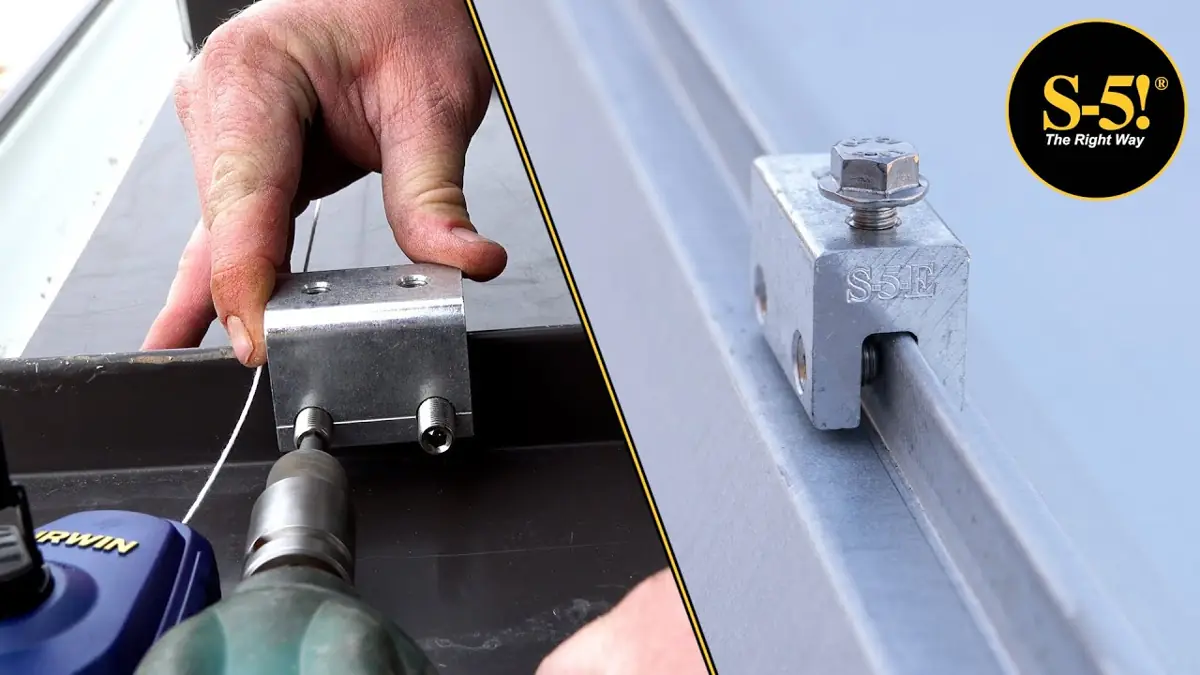
Second, membrane condition. Solar arrays last 25 to 30 years, and removing them mid-life for a re-roof costs $0.30 to $0.50 per watt plus the re-roof itself. If the membrane has under 10 years of life left, the honest sequence is re-roof first, then solar, and some owners negotiate the two projects together for a single mobilization. Standing-seam metal roofs are the best case: 40-plus-year life and clamp-on mounting with no penetrations. TPO and EPDM membranes are fine hosts as long as the seams and flashing are sound. Get a roof survey with core samples, not just a visual walk, before finalizing the design.
Warehouse Payback Math
Take a modeled example, labeled as an illustration. A 120,000 sq ft distribution center with a $6,000 monthly electric bill installs a 400 kW system at $1.65 per watt: $660,000 gross. The 30 percent 48E credit returns $198,000. Depreciation value at typical corporate rates adds roughly $115,000 in present value. Net cost: about $347,000. The system produces roughly 560,000 kWh per year, offsetting about $67,000 of the annual bill at 12 cents per kWh with high daytime self-consumption. Simple payback: just over 5 years. After that, the system generates power at near-zero marginal cost for two more decades.
Cold storage improves the math further because the load is larger and steadier, while lightly used storage warehouses with small bills see longer paybacks. The variables that move the result most are the utility rate, the share of production self-consumed versus exported, and whether demand-charge savings are captured. Which brings us to the line item warehouses should never ignore.
Demand Charges and Battery Pairing
Many warehouses pay demand charges of $10 to $25 per kW based on their highest 15-minute usage each month. A single afternoon when every dock door is open, the chargers are running, and the HVAC is maxed can set a demand peak that costs thousands per month, every month, regardless of total kWh consumed. Solar trims the energy charges but only dents demand peaks, because clouds and timing misalign with the peak.
Batteries close that gap. A commercial battery system charged from the solar array can discharge during the facility’s peak 15 minutes, shaving the demand peak that sets the charge. For warehouses with demand charges above roughly $12 per kW, the battery often pays for itself on demand savings alone, with energy arbitrage as a bonus. Our demand charges guide explains the mechanics and sizing logic in detail. When requesting warehouse proposals, ask every bidder to model demand-charge savings separately from energy savings; the developers who understand logistics buildings will already have done it.
Financing for Warehouse Projects
Owner-operators with tax appetite usually finance warehouse solar with a commercial loan, own the system, and claim the credits. The project sizes involved, often $300,000 to $2 million gross, make the transaction costs of tax-equity structures bearable for larger facilities, and credit transfer works for mid-size ones. Our zero-down commercial financing guide compares every structure.
Leased warehouses need a different playbook. The tenant pays the electric bill but cannot claim credits on a building it does not own, and the landlord has no bill to offset. The clean solutions are a green lease where the landlord installs solar and shares savings through the rent, or a third-party PPA where the developer owns the system and sells power to whoever occupies the building. Critically, align the solar contract term with the building lease term, or secure the landlord’s written consent for a longer commitment. More than one warehouse PPA has died because the tenant signed a 20-year power contract on a 5-year lease.
Pros
- Large flat roofs host big, cheap-per-watt systems
- Daytime operations maximize self-consumption value
- Simple ballasted installs with minimal roof penetration
- Demand-charge savings available with battery pairing
Cons
- Older roofs may need structural review or re-roofing first
- Leased buildings need landlord cooperation and term alignment
- Lightly used warehouses may lack the load to justify big systems
- Interconnection studies can delay large projects for months
How many solar panels fit on a warehouse roof?
Plan on roughly 10 watts per square foot of usable roof. A 100,000 sq ft roof with typical obstructions and setbacks hosts about 500 to 800 kW, or roughly 1,100 to 1,800 modern 450-watt panels.
What is the payback period for warehouse solar?
Modeled paybacks for owner-operated warehouses typically run 3 to 6 years after the 30 percent credit and depreciation, depending on the utility rate and daytime load. Cold-storage facilities trend shorter; lightly used storage trends longer.
Can a tenant install solar on a leased warehouse?
Only with the landlord’s written consent, and the economics usually favor structures where the landlord or a third-party developer owns the system. Align the solar agreement term with the building lease or get the landlord as a party to the deal.
Do warehouses need batteries with solar?
Not always, but warehouses with demand charges above about $12 per kW often find batteries pay for themselves through demand-charge reduction alone. Ask bidders to model demand savings separately.
Will the roof hold the weight of the panels?
Ballasted systems add 3 to 6 pounds per square foot, which most modern warehouse roofs handle. Older buildings need a structural engineer’s review, which is a standard and inexpensive step before construction.
Ready to compare real solar prices?
Get free, no-pressure quotes from vetted local installers and see what solar costs for your roof.