
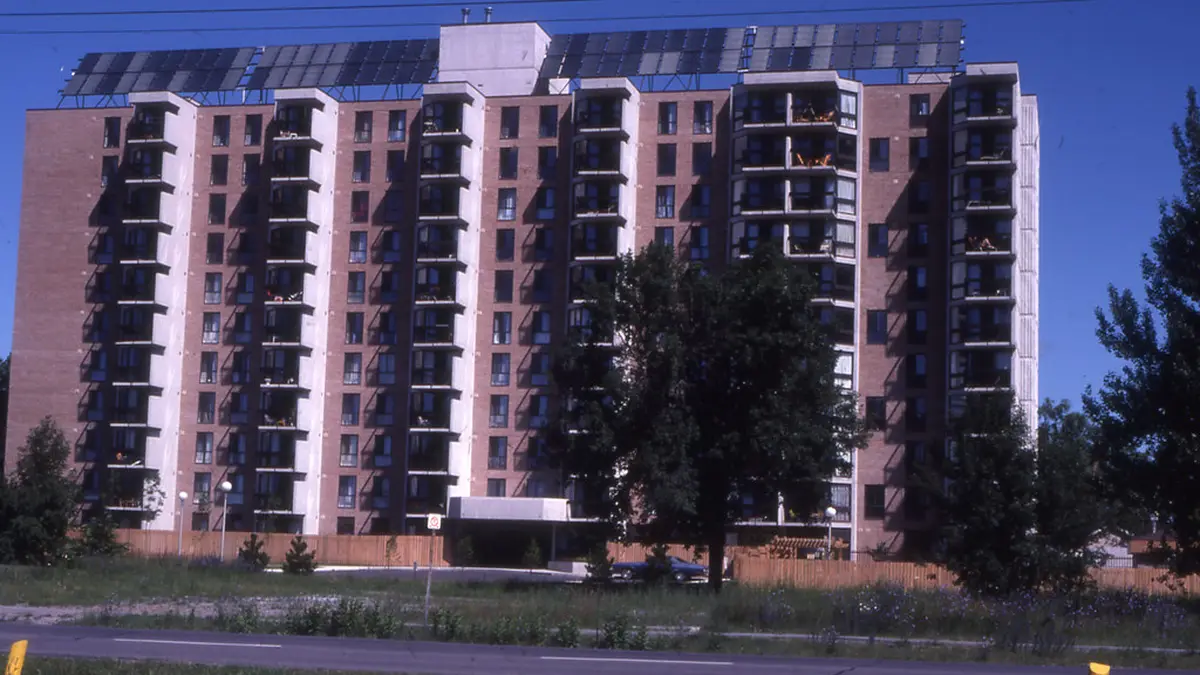
Apartment buildings can add solar without rewiring every unit. Virtual net metering, shared-system allocations, and common-area offsets let owners capture solar value through the existing electrical setup. This guide explains each approach, the costs involved, and how to solve the split incentive between owners and renters.
- Virtual net metering lets one rooftop array credit multiple tenant meters without physical rewiring, where state rules allow it.
- Offsetting common-area loads (hallways, elevators, laundry, parking) is the simplest first step and needs no tenant involvement.
- The split incentive, owners pay for solar while tenants get the savings, is solved through green leases or allocated credits.
- Multifamily projects can claim the commercial 48E credit, often with low-income bonus adders.
- State rules vary enormously. Confirm virtual net metering availability at dsireusa.org before designing anything.
The Split Incentive Problem
Multifamily solar stalls on one structural problem: the person who would pay for the system usually does not pay the electric bills. In most apartment buildings, tenants hold individual utility accounts for their units while the owner pays only for common areas. An owner who installs rooftop solar and wires it to tenant panels gives away the savings. A tenant who wants solar cannot touch the roof they do not own. Economists call this the split incentive, and it is the reason multifamily lags single-family in solar adoption despite having excellent roofs.
The fixes all work the same way: they reconnect the cost of the system with the value of its output. Either the owner finds a way to capture tenant-directed value, through allocated bill credits or adjusted rents, or the system is sized to loads the owner already pays for. Every approach below is a variation on that theme. Understanding the split incentive first keeps you from designing a technically elegant system that no owner will finance.
Start With Common-Area Loads
The simplest multifamily solar project ignores the tenants entirely. Every apartment building has house loads the owner already pays for: hallway and stairwell lighting, elevators, parking lot lights, laundry rooms, common-area HVAC, and the leasing office. A rooftop array wired to the house meter offsets those loads directly, and the savings land on the owner’s existing utility account with no regulatory creativity required.
Common-area loads are smaller than whole-building loads, typically 10 to 30 percent of total building consumption, so the system is modest, often 15 to 50 kW for a mid-size building. That keeps costs in the $30,000 to $110,000 range before incentives, small enough to finance simply and fast enough to permit quickly. The limitation is ceiling: once the house load is offset, the remaining roof capacity needs one of the tenant-reaching approaches below. But as a first phase, common-area solar is the lowest-risk way for an owner to learn the process. Our commercial cost guide benchmarks pricing for systems this size.
Virtual Net Metering Explained
Virtual net metering (VNM) is the regulatory tool that lets one solar array serve many meters. The array interconnects at a single point, usually the house meter, and the utility allocates its output as bill credits across the tenants’ individual accounts according to percentages the owner assigns. No rewiring, no submeters in the walls, no electrician in anyone’s apartment. The electrons flow to the grid; the accounting flows to the tenants.
Availability is the catch. Roughly a dozen-plus states have VNM or similar shared-solar allocation rules, with the strongest programs in California, New York, Massachusetts, Illinois, and a handful of others, and the details differ everywhere: eligible building types, allocation methods, and credit values all vary. Some states limit VNM to affordable housing; others allow market-rate buildings. A few utilities offer their own virtual programs even where the state is silent. Before spending a dollar on design, verify your state’s current rules at dsireusa.org and confirm directly with the utility, since program caps fill and rules change.
| Approach | Rewiring needed | Who benefits | Regulatory need |
|---|---|---|---|
| Common-area offset | No | Building owner | Standard net metering |
| Virtual net metering | No | Owner + tenants | State VNM program |
| Submetered shared system | Minimal (meter only) | Owner + tenants | Submetering rules |
| Green lease pass-through | No | Owner (via rent) | Lease law compliance |
Shared Solar Models for Multifamily
Where VNM is unavailable, submetering offers a physical alternative. The owner installs the array on the house meter and adds utility-grade submeters, or uses software allocation, to measure each unit’s share, then bills tenants for solar power at a rate below the utility’s. Many states expressly permit landlord submetering of electricity with consumer protections on the markup; a few restrict it. The hardware cost is modest, but the billing administration is real, and owners should budget for it or outsource to a billing provider.
The green-lease model takes a contractual route. The owner installs solar, keeps the output on the house meter, and adjusts rents or adds a solar service charge that shares the savings with tenants. Done transparently, with tenant consent and clear disclosure, this works in any state because it is a lease term, not a utility tariff. The emerging managed-service model goes further: a third-party developer owns the rooftop system, handles allocation and billing, and pays the owner roof rent while selling discounted power to tenants. For owners who want the amenity value without the operational headache, the managed model is increasingly the default.
Costs and Incentives for Apartment Solar
Multifamily rooftop systems price like small commercial projects: roughly $1.85 to $2.60 per watt installed for systems under 100 kW, per 2026 industry ranges. A 40 kW system on a 24-unit building might run $75,000 to $100,000 gross. The incentive stack is where multifamily gets interesting. The project claims the commercial 48E credit at 30 percent, pairs it with depreciation, and may qualify for the low-income bonus adders of 10 or 20 percentage points if the building serves qualifying households. A 50 percent total credit on affordable housing is achievable under current rules, though the low-income adder has allocated capacity limits.
Layer state and utility programs on top. Many states run multifamily-specific solar incentives, Illinois’ adjustable block program and New York’s multifamily offerings among them, and some utilities fund whole-building retrofits that bundle solar with efficiency. The Department of Energy maintains multifamily solar resources, and our 48E credit guide details the bonus adders. One caution: affordable housing often involves layered financing with tax-credit investors, and the solar structure must be coordinated with the existing capital stack, which adds legal cost but is well-trodden ground.
The Owner’s Implementation Playbook
Sequence the project in five steps. First, audit the building’s electrical setup: house meter capacity, panel space, and roof condition and remaining life. Second, confirm the regulatory path with the utility in writing, VNM, submetering, or house-meter offset, because the interconnection application differs for each. Third, survey tenants. You need to know who pays their own bill, what the turnover rate is, and whether the tenant base will value a solar amenity, since high-turnover buildings complicate allocated-credit models.
Fourth, model the finances under each candidate structure and pick the one with the best risk-adjusted return, not just the biggest headline savings. Fifth, choose the ownership model: direct ownership for owners with tax appetite, or a third-party developer for everyone else. Throughout, keep the roof in the plan. Multifamily roofs carry more foot traffic and equipment than most commercial roofs, so the array layout must preserve access paths and the membrane warranty must survive the installation. Get the roofer and the solar installer coordinating in writing before either mobilizes.
Pros
- Large, unshaded roofs with strong solar exposure
- Commercial credit plus potential low-income adders up to 50 percent
- Solar is a genuine leasing amenity in competitive rental markets
- Common-area offset needs no tenant coordination at all
Cons
- Split incentive complicates every tenant-reaching model
- Virtual net metering unavailable in many states
- Tenant turnover disrupts allocated-credit arrangements
- Affordable housing deals add financing complexity
Do I need to rewire apartments to add building solar?
No. Virtual net metering allocates one array’s output across tenant meters through utility billing, and submetered or green-lease models need no in-unit electrical work either. The array connects at one point, usually the house meter.
Can tenants be forced to participate in building solar?
Generally no. Participation models are opt-in or structured through lease terms with disclosure. Forcing charges onto tenants without consent invites regulatory trouble, so design the program as a benefit tenants choose.
What size system does an apartment building need?
A common-area-only system for a mid-size building runs 15 to 50 kW. Whole-building offset for a 24-unit property might need 60 to 150 kW depending on tenant usage. Start from the house meter’s 12-month history, then add tenant load if the regulatory path allows it.
Does solar raise rents?
It can support modest rent premiums as an amenity, and green-lease structures may add a solar service charge offset by lower electric bills. In affordable housing, rent restrictions usually prevent pass-throughs, which is why the low-income credit adders exist to make those projects work.
Who maintains an apartment building’s solar system?
The system owner, whether that is the building owner or a third-party developer. Budget roughly $10 to $20 per kW per year for monitoring, cleaning, and inverter maintenance, or bundle it into a developer’s service agreement.
Ready to compare real solar prices?
Get free, no-pressure quotes from vetted local installers and see what solar costs for your roof.