

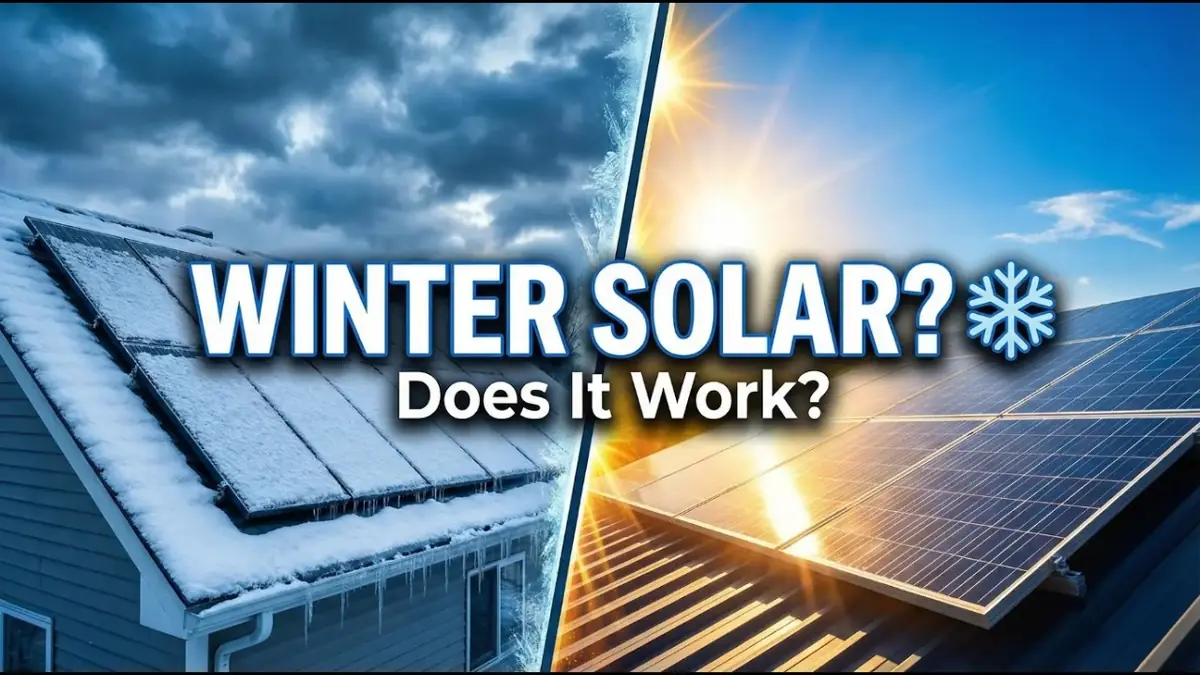
Clouds cut solar output, but they do not kill the economics. Germany, one of the cloudiest major solar markets on earth, has installed over 80 gigawatts of solar, and Seattle homeowners still see paybacks under 12 years. Here is how the math works when the sky is gray half the year.
- Cloudy regions still produce 60 to 80 percent of the solar output of sunny regions per installed watt.
- Germany’s solar fleet proves the model: gray skies plus decent electricity prices equals solid returns.
- Panels work on diffuse light, so overcast days still generate 10 to 25 percent of clear-sky output.
- Higher local electricity rates often offset lower production in cloudy states.
- South-facing arrays at a steeper tilt squeeze the most from low winter sun.
The Germany Proof: Gray Skies, Big Solar
If solar needed desert sunshine, Germany would be the last place on earth to install it. The country averages roughly 1,000 kWh of annual production per installed kilowatt, about two-thirds of what the same hardware makes in Arizona. Yet Germany built one of the world’s largest residential solar fleets. The lesson is simple: solar economics depend on the ratio of electricity price to installed cost, not on sunshine alone.
German households pay some of the highest residential electricity rates in the developed world, often above $0.35 per kWh. When each self-generated kilowatt-hour avoids 35 cents of grid power, even modest production adds up fast. The US has its own versions of this story: Seattle, Portland, and much of the Northeast combine mediocre sunshine with above-average electricity prices, and installers in those markets stay busy for a reason. For the detailed day-by-day physics, see what panels actually produce on cloudy days.
How Much Clouds Actually Cut Production
Solar panels do not need direct sunbeams; they also harvest diffuse light scattered by clouds. On a lightly overcast day, a system typically produces 40 to 60 percent of its clear-sky output. Under heavy gray cloud cover, output falls to roughly 10 to 25 percent. Rain actually helps over the long run by washing dust off the panels.
Annual production per installed kilowatt tells the real story. The table below compares typical specific yield across US climates. These are representative ranges from industry production models, not measurements from any single system.
| Location type | Annual kWh per kW installed | vs. sunny baseline |
|---|---|---|
| Desert Southwest (Phoenix) | 1,600 to 1,800 | 100% |
| Sunny Midwest/South | 1,300 to 1,500 | ~85% |
| Northeast / Seattle | 1,050 to 1,250 | ~70% |
| Germany (reference) | 950 to 1,100 | ~62% |
The gap between Seattle and Phoenix is real but not dramatic: about 30 percent less energy per panel. A cloudy-climate system compensates with a slightly larger array, and because panels are the cheapest part of an installation, the extra cost is modest.
Why High Electricity Rates Offset Gray Skies
Run the comparison. A 8 kW system in Phoenix making 13,600 kWh a year at $0.14 per kWh offsets about $1,900 annually. The same 8 kW in Seattle making 9,600 kWh at $0.24 per kWh offsets about $2,300. The cloudier city saves more money because its electricity costs more. This is the core insight most sunshine maps miss: savings equal production times price, and price varies more across the US than sunshine does.
Rate trajectory matters too. States with gray skies and regulated utilities have seen steady rate increases, and every increase raises the value of each solar kilowatt-hour. Our 2026 worth-it analysis walks through how to weigh your specific rate against your specific roof, and typical household savings figures show the national picture you can adjust from.
A Seattle Payback Example
Take an example Seattle household: an 8 kW system at $2.90 per watt installed, or $23,200. It produces about 9,600 kWh in year one. The home uses 10,000 kWh annually at $0.24 per kWh, and the system offsets roughly 90 percent of the bill after net metering credits, saving about $2,150 in year one. This is an example, not a quote.
Simple payback: $23,200 ÷ $2,150 ≈ 10.8 years. Factor in 3 percent annual rate increases and 0.5 percent panel degradation, and the real payback lands closer to 9 to 10 years, with 15-plus years of nearly free electricity after that. Compare that with keeping the money in a savings account: the solar array’s effective return beats most safe investments, which is why payback periods in the 8 to 12 year range are normal even far from the Sun Belt.
Note the federal picture: the 25D residential credit ended for systems installed after December 31, 2025, so 2026 installers cannot claim the old 30 percent. The example above already excludes it. State and utility incentives still exist in many gray-sky states, so check DSIRE for what your state offers.
Designing a System for Cloudy Climates
Installers in Seattle and the Northeast use a few standard tricks. Steeper tilt angles (35 to 45 degrees) catch the low winter sun better than the shallow pitches common in the South. True south orientation matters more when every photon counts, though southeast and southwest still perform within about 5 percent of south. Slightly oversizing the array relative to annual usage banks extra summer surplus against dark winters.
Panel choice matters at the margin. Panels with better low-light performance, often marketed around heterojunction or TOPCon cell technology, squeeze a few extra percent from diffuse light. Microinverters or DC optimizers help when patchy clouds shade parts of the array unevenly. None of these transform the economics alone, but together they can add 5 to 10 percent to annual production in a cloudy climate. Snow is a bonus consideration: it slides off tilted panels quickly and the reflective ground can briefly boost output.
Battery pairing deserves a mention for gray-sky regions. Because winter production is concentrated into fewer daylight hours, a battery lets you shift midday surplus into the expensive evening peak, which matters more under time-of-use rates that many cloudy-climate utilities now use. The battery does not create energy, but it raises the value of each kilowatt-hour you do produce. Size the battery to your evening load, not to your fantasies of going off-grid, and the economics usually pencil out.
When Cloudy Means Not Worth It
Clouds alone rarely disqualify a home, but combinations can. Heavy tree shading plus a north-facing roof plus the cheapest electricity rates in the country is a tough sell anywhere. If your roof gets less than about 4 hours of usable sun daily on average, or your utility pays almost nothing for exports while charging little for imports, get a production estimate before signing anything.
The honest test is a site-specific quote with modeled production, not a sunshine map. Reputable installers use tools like Aurora or Helioscope that account for your exact roof, shading, and local weather files. If two or three independent quotes all show payback beyond 15 years, believe them. And if you work from home, your daytime usage pattern gives you a built-in advantage in any climate, gray skies included.
One more reality check for northern homeowners: check your utility’s net metering rules before you size anything. Cloudy climates often pair with generous net metering, which lets summer surplus offset winter shortfalls at full retail value. If your utility has moved to reduced export credits, the economics tilt toward smaller systems sized to daytime self-consumption rather than maximum annual production. The policy environment matters as much as the cloud cover, and it is the part of the equation most likely to change between quotes.
Do solar panels work in the rain?
Yes, at reduced output. Rain clouds cut production to roughly 10 to 25 percent of clear-sky levels, but the rain also cleans the panels, which slightly improves performance afterward.
Is winter production too low to matter?
Winter months produce the least, sometimes under 10 percent of annual output in northern states, but summer surplus under net metering balances the year. Size the system on annual production, not the worst month.
Do I need more panels in a cloudy state?
Often slightly more than an identical home in Arizona, typically 15 to 30 percent additional capacity for the same annual offset. Because panels are the cheapest component, the added cost is smaller than most people expect.
Does snow damage panels or help them?
Snow rarely damages properly installed panels. It slides off tilted arrays, and bright snow cover reflecting light onto panels can briefly increase output once the panels themselves are clear.
Ready to compare real solar prices?
Get free, no-pressure quotes from vetted local installers and see what solar costs for your roof.