
Every home battery is either AC-coupled or DC-coupled, and the difference decides how it wires into your solar system. For retrofits onto existing panels, AC coupling wins on simplicity. For new installs, DC coupling wins on efficiency. Here is how to choose without overthinking it.
- AC-coupled batteries (Powerwall 3, Enphase IQ Battery, FranklinWH) connect on the AC side and work with any existing inverter. Best for retrofits.
- DC-coupled batteries charge directly from panels before inversion, gaining 2 to 4 percent round-trip efficiency. Best for new installs.
- The efficiency gap is real but small: it rarely decides the economics on its own.
- AC-coupled systems keep working if one component fails; DC-coupled designs can have a single point of failure.
- Your existing inverter usually makes the decision for you.
What the terms actually mean
Solar panels produce DC (direct current) electricity. Your home runs on AC (alternating current). Every solar system has an inverter that converts DC to AC, and every battery stores DC. The question is simply where the battery sits relative to that conversion.
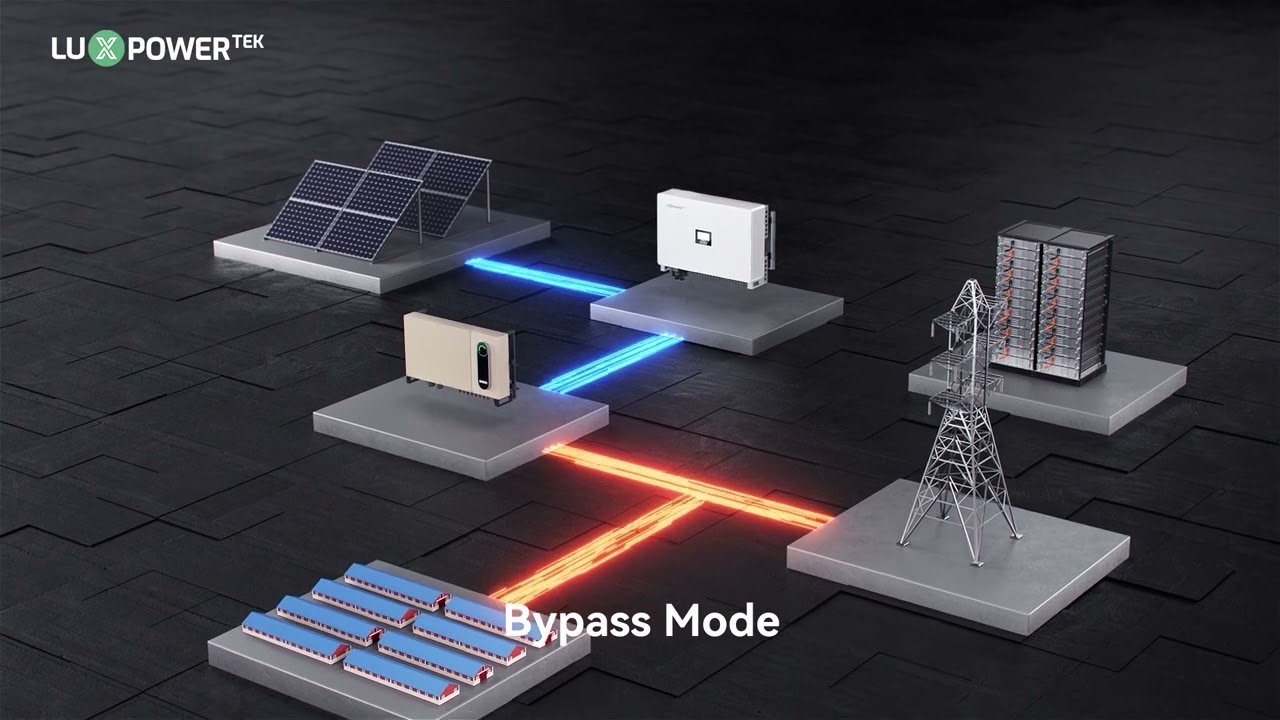
In an AC-coupled system, the battery connects after the solar inverter, on the AC side. Panel DC becomes AC through your solar inverter, then the battery’s own built-in inverter converts it back to DC for storage, then back to AC again when discharging. In a DC-coupled system, the battery connects before the solar inverter, on the DC side. Panel DC charges the battery directly, and a single hybrid inverter handles both solar and battery conversion to AC.
That is the whole concept. Everything else is consequences.
AC-coupled, explained
AC coupling is the retrofit-friendly architecture. Because the battery lives on the AC side, it does not care what inverter your panels use. String inverter from 2019? Fine. Enphase microinverters? Fine. The battery is essentially a separate appliance that watches your home’s AC wiring, absorbs surplus solar, and discharges when needed.
The leading residential batteries are AC-coupled by design: Tesla Powerwall 3, Enphase IQ Battery 5P, and FranklinWH aPower 2. See our Powerwall 3 vs Enphase comparison and Powerwall 3 vs FranklinWH breakdown for the current finalists.
AC coupling has a resilience advantage worth noting: the solar inverter and battery inverter are independent. If your solar inverter fails, the battery still works (it just charges from the grid instead of solar until the repair). If the battery fails, your panels keep producing. In DC-coupled designs with a single hybrid inverter, one failed box can sideline both solar and storage.
The downside is conversion losses. Every AC-to-DC-to-AC round trip wastes a few percent as heat. AC-coupled round-trip efficiency typically lands around 85 to 90 percent; we will do the math below. The Department of Energy’s storage overview and EnergySage’s battery guides are solid further reading on the technology.
DC-coupled, explained
DC coupling puts the battery on the panel side of the inverter. A hybrid inverter manages everything: panel DC flows either to the home (via inversion) or into the battery (directly, no conversion). When the battery discharges, its DC flows through the same inverter to become AC. One conversion each way instead of two.
This architecture shines in new installations. You buy one hybrid inverter (from SolarEdge, Enphase’s IQ series with storage, SMA, or others) instead of a separate solar inverter plus a battery with its own inverter. Wiring is simpler, there is less equipment on the wall, and round-trip efficiency runs 92 to 95 percent.
The catch is inflexibility. DC-coupled batteries must be compatible with the specific hybrid inverter, which locks you into an ecosystem. And for retrofits, going DC-coupled usually means replacing your existing, perfectly good solar inverter, which adds $2,000 to $4,000 to the project for a few percent of efficiency. That trade almost never pencils out, which is why our battery retrofit guide recommends AC coupling for existing systems.
The efficiency math, honestly
Let us quantify the famous efficiency gap so it stops being a marketing weapon. Assume your panels produce 30 kWh on a good day and you store 10 kWh of it.
| Metric | AC-coupled | DC-coupled |
|---|---|---|
| Round-trip efficiency (typical) | 85 – 90% | 92 – 95% |
| Usable energy from 10 kWh stored | 8.5 – 9.0 kWh | 9.2 – 9.5 kWh |
| Daily loss vs DC-coupled | 0.5 – 0.7 kWh | Baseline |
| Annual energy difference | Roughly 180 – 250 kWh per year | |
| Annual dollar value (at $0.25/kWh) | Roughly $45 – $65 per year | |
That is the honest scale: $45 to $65 a year for a typical household. Over a 12-year battery life, the lifetime efficiency advantage is maybe $600 to $800. If DC coupling costs you an extra $2,000 in inverter replacement on a retrofit, you will never earn it back. On a new install where the hybrid inverter costs about the same as a standard inverter, the efficiency is essentially free, so take it.
The retrofit decision
If your panels are already on the roof, the decision is nearly made: go AC-coupled. The three best retrofit batteries (Powerwall 3, Enphase IQ Battery 5P, FranklinWH aPower 2) are all AC-coupled, they install in a day or two without touching your array, and they work with whatever inverter you already own.
The only retrofit scenario where DC coupling deserves a look: your existing string inverter is failing or out of warranty anyway. If you are already paying $2,000 to $3,000 for an inverter replacement, stepping up to a hybrid inverter and a DC-coupled battery can make sense. Otherwise, keep it simple.
One nuance for Enphase microinverter owners: Enphase’s own IQ Battery 5P units integrate most cleanly with Enphase systems (single app, coordinated firmware). A Powerwall 3 also works, but you will manage two apps. Neither choice is wrong; weigh the app convenience against the spec differences in our head-to-head comparison.
The new-install decision
For new solar-plus-storage installs, DC coupling is the default recommendation, and most good installers will propose it without being asked. A hybrid inverter plus DC-coupled battery gives you the best efficiency, the cleanest wiring, and often the lowest equipment count. The Powerwall 3 blurs the line here: it is technically AC-coupled but has a built-in solar inverter, so on a new install it behaves much like a DC-coupled system with panels wired straight into it.
When would you choose AC coupling on a new install? If you want maximum component independence (separate solar and battery inverters so one failure never kills both), or if you are pairing panels with microinverters for shade-heavy roofs and adding a standalone AC battery. Both are legitimate designs. Just do not pay a premium for DC coupling on philosophical grounds; the dollar value of the efficiency is modest, as the math above shows.
AC-coupled strengths
- Works with any existing inverter (retrofit king)
- Independent components: one failure does not kill everything
- Widest battery selection
- Easy to add a second battery later
AC-coupled weaknesses
- 2 to 4 percent lower round-trip efficiency
- More boxes on the wall
- Two inverters means two potential failure points
DC-coupled strengths
- Highest round-trip efficiency (92 to 95 percent)
- Cleaner install with fewer components
- Often cheaper on new installs (one hybrid inverter)
DC-coupled weaknesses
- Requires compatible hybrid inverter
- Expensive for retrofits (inverter replacement)
- Single point of failure in many designs
- Smaller battery selection
Which should you choose
The short version: retrofit, choose AC-coupled; new install, choose DC-coupled (or a Powerwall 3, which splits the difference). Do not let an installer upsell you a full inverter replacement on a retrofit for the sake of DC efficiency; the payback on that upgrade alone is measured in decades.
Whichever architecture you pick, the battery chemistry matters as much as the coupling. Both leading options use LFP cells, and our LFP vs NMC guide explains why that is the right chemistry for a garage wall. And if you are still sizing the system, our battery economics guide runs the payback math without net metering.
Can I add a DC-coupled battery to my existing system?
Only by replacing your solar inverter with a compatible hybrid inverter, which typically adds $2,000 to $4,000. For most retrofits, an AC-coupled battery is simpler and cheaper.
Is DC-coupled always more efficient?
In round-trip efficiency, yes, by about 2 to 4 percentage points. In dollars, that is roughly $45 to $65 a year for a typical home: real, but small.
Is the Tesla Powerwall 3 AC or DC coupled?
The Powerwall 3 is AC-coupled but includes an integrated solar inverter, so on new installs you can wire panels directly into it, getting most of the DC-coupled simplicity.
Which is better for backup power during outages?
Both work. What matters more is the battery’s continuous power rating, the backup gateway, and which circuits are on the backup panel, not the coupling type.
Can I mix AC and DC batteries in one system?
Technically possible in some designs, but not recommended for residential systems. Pick one architecture and stay with it.
Ready to compare real solar prices?
Get free, no-pressure quotes from vetted local installers and see what solar costs for your roof.