

A $200 monthly electric bill usually means you need 18 to 28 solar panels, but the honest answer depends on your electricity rate, your roof’s sun, and your panel wattage. This guide walks through the exact math installers use, with worked examples, so you can sanity-check any quote.
- A $200 bill equals roughly 1,000 to 1,350 kWh per month depending on your rate, which translates to a 7 to 10 kW system for most US homes.
- At 400W panels, that is 18 to 25 panels. Higher-wattage panels mean fewer panels, not more power per square foot of roof.
- Your electricity rate matters more than your bill: $200 at 30 cents/kWh is far less energy than $200 at 12 cents/kWh.
- Always size from your actual kWh usage (on your utility bill), not the dollar amount, because rates change and dollar math goes stale.
The short answer
Most US homes with a $200 monthly bill use 1,000 to 1,350 kWh per month and need a 7 to 10 kW solar system, which is 18 to 25 panels at today’s standard 400W wattage. If your electricity is expensive (California, New England), you will be at the low end of that range. If it is cheap (Texas, the Southeast), you will be at the high end, because $200 buys more kilowatt-hours where rates are low.
That range is genuinely useful for quote-shopping: if an installer proposes 14 panels or 34 panels for your $200 bill, one of you has the math wrong. The steps below show you how to compute your own number. For the big-picture question of whether solar pencils out at all, start with our 2026 worth-it guide.
Step 1: turn $200 into kilowatt-hours
Panels produce kilowatt-hours, not dollars, so the first step is converting your bill. Find your average cost per kWh on your utility bill or the utility’s website (use the all-in rate including delivery charges, not just the supply rate). Then divide:
Monthly kWh = Monthly bill / Rate per kWh
At $200/month: with a 15 cent rate you use about 1,333 kWh; at 20 cents, 1,000 kWh; at 30 cents, 667 kWh. Same bill, very different systems. This is why installers ask for your kWh usage, not your dollar bill, and why you should pull 12 months of usage from your utility account before getting quotes. Usage swings seasonally, and a single summer bill can mislead.
For the rest of this guide, we will use 1,200 kWh per month (14,400 kWh per year) as our example household: a $200 bill at about 16.7 cents/kWh, close to the US average residential rate reported by the EIA.
Step 2: account for your sun
A kilowatt of solar panels produces different amounts of energy in Phoenix versus Seattle. The industry shorthand is peak sun hours: the equivalent hours of full-strength sun your location gets daily, averaged over the year. Rough US values:
| Region example | Peak sun hours/day | Annual kWh per kW installed |
|---|---|---|
| Southwest (Phoenix, Las Vegas) | 5.5 to 6.0 | 1,700 to 1,900 |
| California, Texas, Southeast | 4.5 to 5.5 | 1,400 to 1,700 |
| Midwest, Mid-Atlantic | 4.0 to 4.5 | 1,200 to 1,400 |
| Northeast, Pacific Northwest | 3.5 to 4.0 | 1,000 to 1,200 |
These figures assume a reasonably oriented roof with modest shading and include typical system losses (inverter efficiency, wiring, soiling, temperature). Heavy shading or a north-facing roof reduces them; your installer’s shade analysis refines the number. The NREL PVWatts calculator gives a free location-specific estimate if you want to check.
The formula: System size (kW) = Annual kWh needed / Annual kWh per kW. Our 14,400 kWh example household in a 4.5 sun-hour region needs 14,400 / 1,500 = 9.6 kW. In Phoenix it would need about 8 kW; in Seattle about 12 kW.
Step 3: pick panels and count them
Divide the system size by the panel wattage: Number of panels = System size (W) / Panel wattage. Our 9.6 kW example needs 24 panels at 400W, or 22 at 430W, or 21 at 460W. Higher wattage means fewer panels on your roof, which matters if roof space is tight, but the total system power is what you are buying. Our panel wattage guide explains when the rating actually matters.
Then check the roof. A typical residential panel is about 17.5 square feet, plus spacing for setbacks and access pathways that fire codes require. Twenty-four panels need roughly 450 to 500 square feet of usable roof. If your roof cannot fit the math, you either accept a smaller system covering part of the bill or consider higher-wattage panels to squeeze more power into the available space.
Three worked examples
Phoenix, $200 bill at 14 cents/kWh: 1,429 kWh/month, 17,148 kWh/year. At 1,800 kWh per kW: 9.5 kW system, 24 panels at 400W. Cheap power means a bigger system for the same dollars.
New Jersey, $200 bill at 22 cents/kWh: 909 kWh/month, 10,908 kWh/year. At 1,300 kWh per kW: 8.4 kW system, 21 panels at 400W. Moderate sun, moderate rates, middle of the range.
San Diego, $200 bill at 35 cents/kWh: 571 kWh/month, 6,857 kWh/year. At 1,700 kWh per kW: 4.0 kW system, 10 panels at 400W. Expensive power means $200 buys little energy, so the system is small. (In practice, San Diego bills run much higher than $200, which is why California systems tend to be large despite the great sun.)
Notice how the rate dominates the answer. Two neighbors with identical $200 bills in different states can need systems differing by a factor of two.
Why the answer is a range
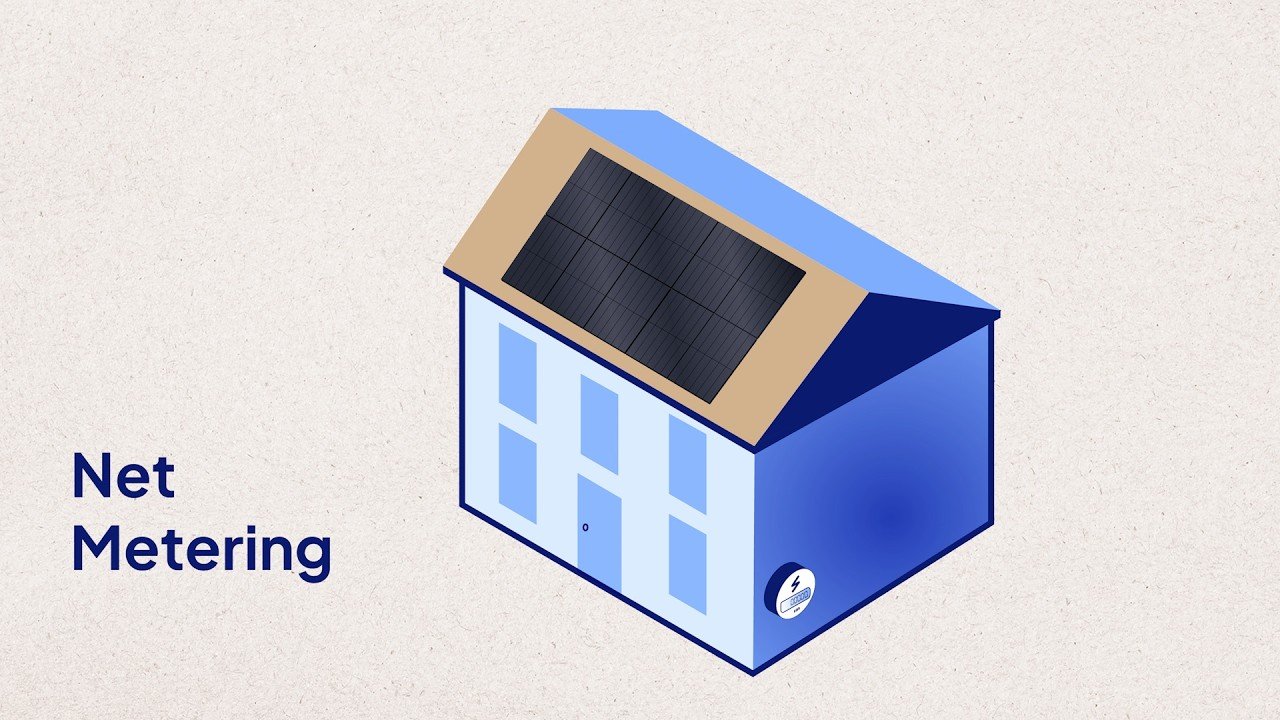
Four things move your number within (or beyond) the 18 to 25 panel range. Future usage: planning an EV or switching to electric heat? Size up now; adding panels later costs more per watt. Our 20 percent rule guide covers strategic oversizing. Utility caps: many utilities limit systems to 100 to 120 percent of historical usage, so you cannot always build as big as you want. Net metering rules: under full retail net metering, covering 100 percent of usage is the goal; under NEM 3.0-style rules, slightly undersizing can pay better. Roof reality: shading, orientation, and setbacks cut into the theoretical number.
A good installer models all four and shows you the production estimate behind the panel count. If a quote just says “24 panels” with no kWh production figure, ask for the year-one production estimate and the shade analysis. Vague quotes are how oversizing (and undersizing) happens.
What this system costs
At $2.50 to $3.50 per watt installed (the normal 2026 residential band), a 9.6 kW system costs roughly $24,000 to $33,600 before incentives. Remember the federal 25D credit ended for 2026 installs, so that is the out-of-pocket number unless state or utility incentives apply. Bigger systems cost less per watt than smaller ones, which is why the per-watt rate matters more than the total when comparing quotes.
High-usage homes should also read sizing for a 2,000 kWh home, and if you are wondering whether 10 kW is overkill for your situation, our 10 kW guide answers that directly.
Should I size my system from the dollar bill or the kWh usage?
Always kWh. Dollar amounts go stale when rates change, and installers design to energy production. Pull 12 months of kWh from your utility account for the most accurate sizing.
Is it better to oversize or undersize?
Slight oversizing (100 to 110 percent of usage) is usually smart to cover panel degradation and future needs like an EV. Check your utility’s cap first; many limit systems to 120 percent of historical usage.
Do I need a battery with this system size?
Not necessarily. Panels alone cut the bill under decent net metering. Batteries add outage protection and help under time-of-use rates or NEM 3.0-style rules. Size the solar first, then evaluate storage separately.
What if my roof cannot fit 24 panels?
Options: higher-wattage panels to fit more power in less space, a smaller system covering part of the bill, or a ground mount if you have the yard. An installer can also split arrays across roof faces.
How accurate are online solar calculators?
They are decent for ballparks but cannot see your roof’s shading, orientation, or electrical panel. Use them to sanity-check quotes, not to replace a site survey.
Ready to compare real solar prices?
Get free, no-pressure quotes from vetted local installers and see what solar costs for your roof.