

Without the 30 percent federal tax credit, the average US home solar system takes roughly 10 to 14 years to pay for itself, up from 7 to 9 years when the credit was available. That single change rewrites the math every buyer learned over the last decade. This guide shows you exactly how to calculate your own payback period with 2026 numbers, so you know your break-even date before you sign anything.
- Payback period equals your net system cost divided by your first-year electricity savings. Both numbers are knowable before you buy.
- A typical 8 kW system at $3.00 per watt costs about $24,000 in 2026 and saves roughly $1,800 to $2,400 per year, depending on your utility rate.
- High-rate states like California can still see payback under 10 years; cheap-power states like Texas and Louisiana often stretch past 14.
- Net metering rules, time-of-use rates, and whether you add a battery move the payback date more than panel brand does.
- Payback is only one lens. Twenty-five-year savings and protection against rising rates matter just as much.
The payback formula, explained simply
Payback period is the number of years until your cumulative electricity savings equal what you paid for the system. The formula is straightforward:
Payback (years) = Net system cost / Annual electricity savings
Net system cost means the out-the-door price minus any incentives you actually receive. For a 2026 installation, that usually means the full cash price, since the federal residential solar tax credit is no longer available for systems installed after December 31, 2025. If you financed, use the total financed cost including interest, not the sticker price, because interest is real money leaving your pocket.
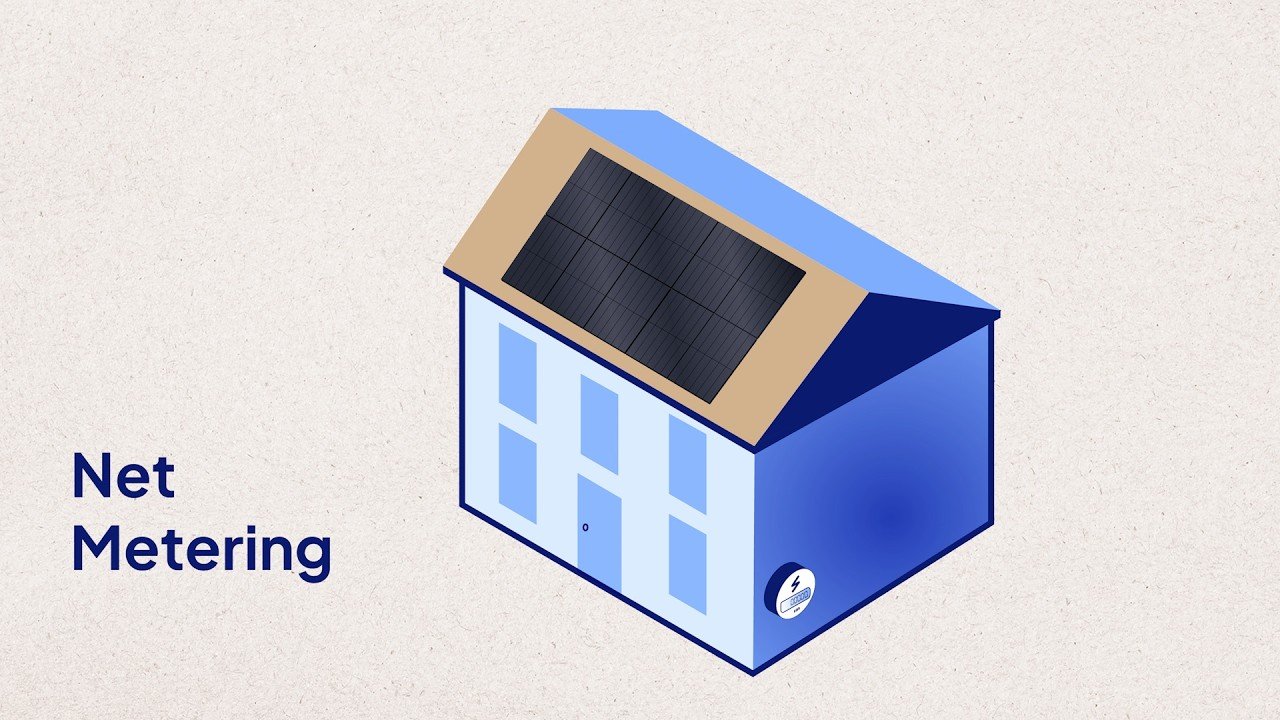
Annual electricity savings is the trickier number. It equals the kilowatt-hours your system produces each year multiplied by the value of each kilowatt-hour to you. Under traditional net metering, every kWh you produce offsets a kWh at your full retail rate. Under newer rules like California’s NEM 3.0, exported kWh earn far less, so self-consumed electricity is worth more than exported electricity. Your installer should show this calculation in the proposal. If they will not, that is a red flag.
One more honest note: simple payback ignores the time value of money and future rate increases, which roughly cancel each other out over a decade. It also ignores panel degradation, which shaves about 0.5 percent off production each year for most modern panels. A good estimate lands within a year or two of reality, which is all you need for a decision.
What a 2026 system really costs
Residential solar in the US currently installs for roughly $2.50 to $3.50 per watt before incentives, according to national installer survey data tracked by EnergySage and the Department of Energy. That range covers most of the variation you will see: small systems cost more per watt, premium equipment costs more per watt, and high-cost labor markets like California sit at the top of the band.
| System size | Typical 2026 cost range | Annual production (approx.) |
|---|---|---|
| 5 kW | $13,500 to $17,500 | 6,500 to 7,500 kWh |
| 8 kW | $20,000 to $28,000 | 10,500 to 12,000 kWh |
| 10 kW | $25,000 to $35,000 | 13,000 to 15,000 kWh |
| 12 kW | $30,000 to $42,000 | 15,500 to 18,000 kWh |
Production estimates assume average US sun exposure; the Southwest produces more, the Pacific Northwest and Northeast less. Your roof’s direction, tilt, and shading adjust these figures up or down, which is why a site-specific production estimate matters more than any national average.
To see the credit’s impact in one line: that 8 kW system at $24,000 cost a 2025 buyer about $16,800 after the 30 percent credit. The 2026 buyer pays the full $24,000. Same roof, same panels, $7,200 more. Everything that follows flows from that gap.
Estimating your annual savings honestly
Start with your electric bill. The average US residential rate sits near $0.18 per kWh as of recent EIA data, but your rate is what matters, and it varies wildly: under $0.13 in states like Texas, Louisiana, and Washington, over $0.30 in California, Hawaii, and parts of New England.
Multiply your system’s first-year production by your rate. An 8 kW system making 11,500 kWh in a net-metered home at $0.18/kWh saves about $2,070 in year one. That is the numerator and denominator of your payback fraction: $24,000 / $2,070 = roughly 11.6 years.
Three adjustments keep this honest. First, electricity rates have historically risen 2 to 4 percent per year, which shortens real payback; a conservative estimate ignores this, an optimistic one includes 3 percent annual escalation. Second, if your utility pays less for exported solar than your retail rate, size the system to your daytime usage or add a battery, because exports earn less. Third, how much solar cuts your bill depends on fixed monthly charges you cannot eliminate; most utilities charge $10 to $20 per month just for the connection, and solar does not erase that.
Three payback scenarios by state
Same 8 kW system, same $24,000 price, three different states. Watch how the local rate and net metering rules change the answer:
| Scenario | Rate and rules | Year-one savings | Simple payback |
|---|---|---|---|
| California (NEM 3.0) | $0.34/kWh, low export credit | ~$2,600 | ~9 years |
| New Jersey (net metering) | $0.19/kWh, full retail credit | ~$2,100 | ~11.5 years |
| Texas (cheap power) | $0.13/kWh, variable buyback | ~$1,500 | ~16 years |
California looks best despite NEM 3.0’s weak export rates, purely because grid power is so expensive that every self-consumed kWh is worth a lot. Texas looks worst because cheap grid power gives solar less to offset. These are modeled examples, not quotes, but the pattern holds across real proposals: your utility rate is the single biggest driver of payback, bigger than equipment choice or installer.
Adding a battery typically lengthens simple payback by 3 to 6 years on its own economics, since a $10,000 to $14,000 battery adds cost faster than it adds savings. Batteries earn their keep through backup power and, in places like California, by shifting solar into expensive evening hours. Buy the battery for resilience or rate arbitrage, not to shorten payback.
What stretches or shortens your payback
Beyond your utility rate, these factors move the break-even date by years:
- Financing terms. A solar loan at 6 to 7 percent over 20 years can add 30 to 40 percent to total cost versus cash. Dealer fees baked into “low APR” solar loans are the industry’s quietest payback killer.
- System size relative to usage. Oversizing past what your utility credits wastes money; undersizing leaves savings on the table. The sweet spot is usually 100 to 120 percent of annual usage where allowed.
- Roof and shade. A shaded or east-west roof can produce 15 to 25 percent less than a clean south-facing one, stretching payback proportionally.
- State and local incentives. Property tax exemptions, state rebates, and performance payments like SRECs still exist in many states and can shave 1 to 3 years off payback. Check current programs at DSIRE.
- Inverter replacement. String inverters often need replacement around year 12 to 15 at $1,500 to $2,500. Microinverters typically carry 25-year warranties. Budget the replacement into long-run math.
- Rate escalation. If your utility raises rates 4 percent annually, a 12-year nominal payback becomes about 10 years in real terms. Nobody can promise this, but history favors it.
Payback is not the whole story
A 12-year payback on equipment warrantied for 25 years still leaves 13-plus years of nearly free electricity. Over 25 years, that 8 kW system can save $35,000 to $50,000 in avoided utility bills depending on rate growth, which is why lifetime savings often tell a better story than payback alone.
There is also the question whether solar raises home value. Research from Lawrence Berkeley National Laboratory has consistently found that owned solar adds a premium to resale prices, often $3 to $4 per watt. On a $24,000 system, even a partial premium effectively shortens your economic payback if you sell before break-even.
The honest bottom line for 2026: solar is no longer the slam-dunk 7-year payback it was with the federal credit, but it remains a solid 10- to 14-year investment in most states with above-average electricity rates. Run your own numbers with the formula above, get competing quotes, and make the decision on your roof’s math, not national averages.
Does the payback calculation include the federal tax credit in 2026?
No. The 30 percent residential credit (Section 25D) ended for systems installed after December 31, 2025. Only systems installed in 2025 or earlier can claim it. A 2026 installation is calculated at full price.
What is considered a good solar payback period?
Under 10 years is excellent, 10 to 14 years is typical and reasonable in 2026, and beyond 15 years deserves scrutiny unless you value backup power or expect sharp rate increases.
Do installers’ payback estimates tend to be accurate?
Often optimistic. Common tricks include assuming high annual rate increases, ignoring degradation, and using pre-incentive pricing inconsistently. Ask for the production estimate source and the exact rate escalation assumption.
Does financing change the payback period?
Yes, it lengthens it. Interest and dealer fees raise total cost while monthly savings stay the same. Always compare payback on total financed cost, not the cash price.
Can payback be shorter than 10 years without any tax credit?
In high-rate states like California, Hawaii, and Massachusetts, yes, especially with full retail net metering or strong state incentives. In cheap-power states, it is unlikely without subsidies.
Ready to compare real solar prices?
Get free, no-pressure quotes from vetted local installers and see what solar costs for your roof.