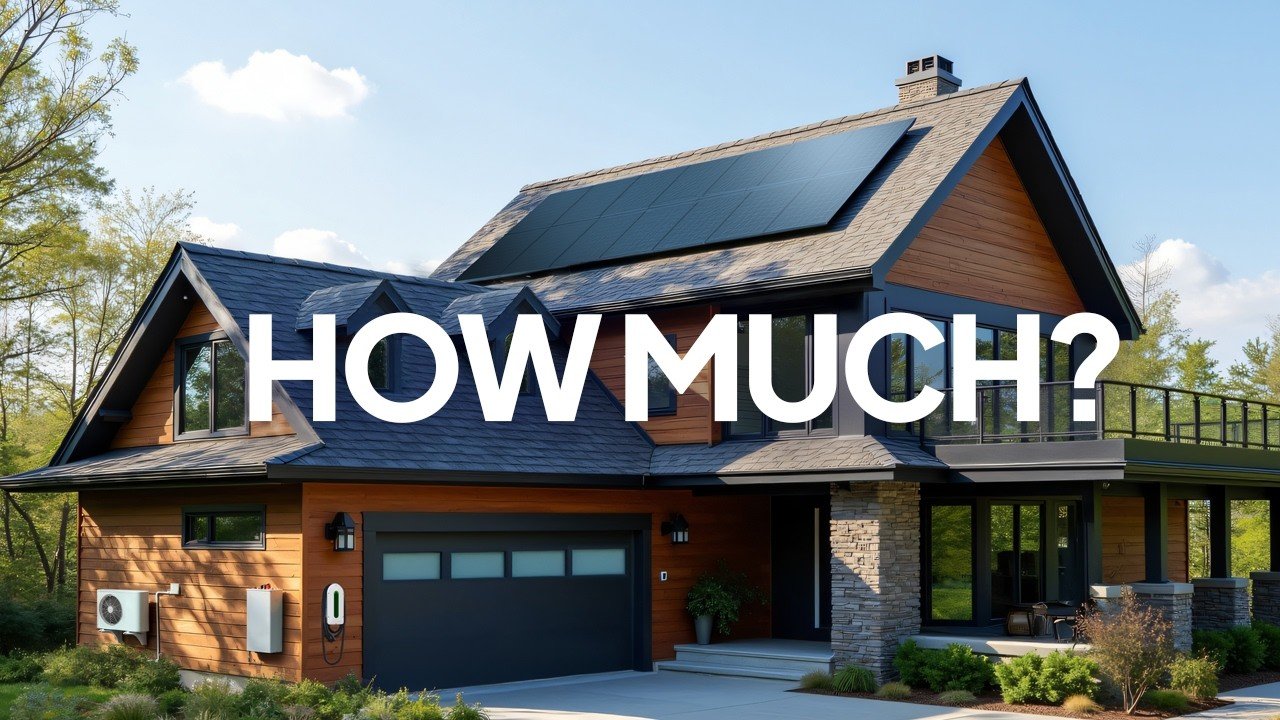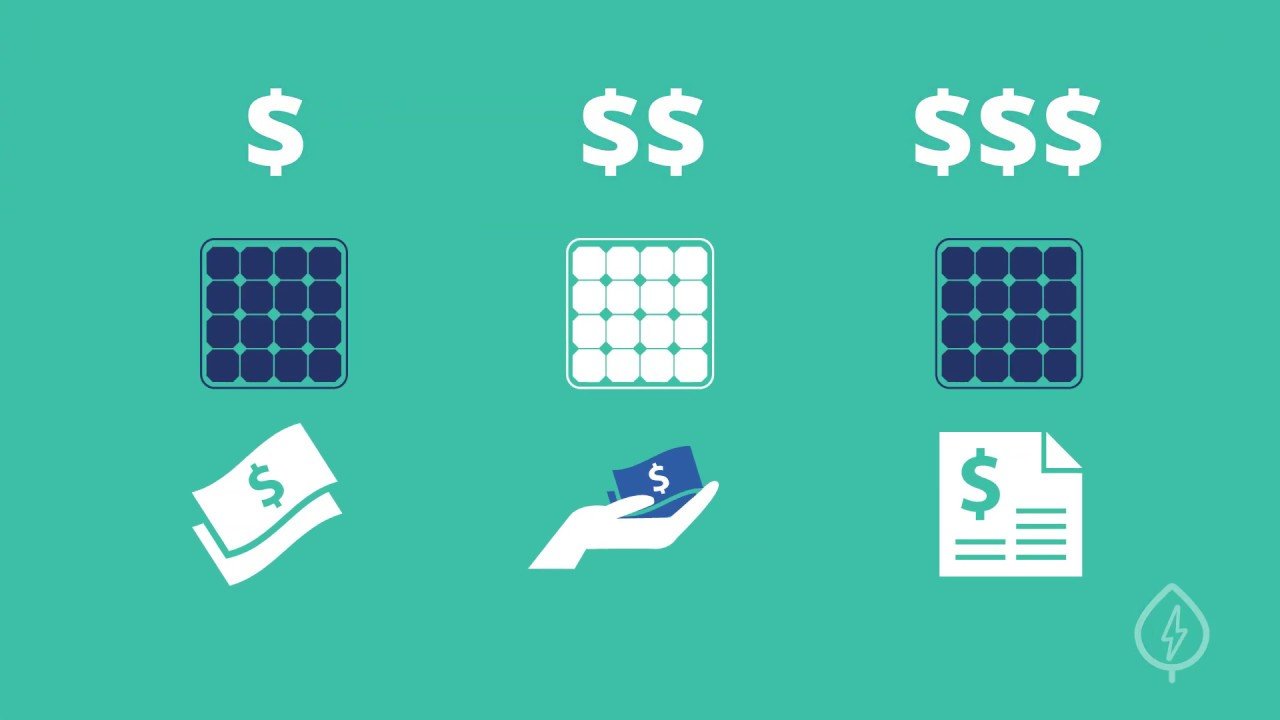


Most residential quotes cluster around three system sizes: 5 kW, 8 kW, and 10 kW. Each fits a different household, and picking wrong costs you thousands in unnecessary panels or years of remaining electric bills. This side-by-side comparison shows what each size produces, costs, and suits.
- 5 kW suits small efficient homes (under 8,000 kWh/year): roughly $14,000 to $18,000 installed, 13 panels.
- 8 kW is the sweet spot for typical families (8,000 to 12,000 kWh/year): roughly $20,000 to $27,000 installed, 20 panels.
- 10 kW fits above-average users with AC, EVs, or pools (12,000 to 16,000 kWh/year): roughly $25,000 to $35,000 installed, 25 panels.
- Bigger is cheaper per watt, but only buy the kilowatts your usage (and roof) justify.
The short answer
Match the system to your annual usage: 5 kW for under 8,000 kWh/year (small homes, gas appliances, mild climates), 8 kW for 8,000 to 12,000 kWh/year (the typical family), and 10 kW for 12,000 to 16,000 kWh/year (AC, EV, or pool in the mix). Production per kW varies by location, so a 5 kW system in Phoenix out-produces a 6 kW system in Seattle. Start from your utility bill’s kWh, not from a round number that sounds good.
If you have not run your own numbers yet, our 2026 worth-it guide frames the economics, and the bill-to-system math guide shows the calculation.
Side-by-side comparison
Assumptions: 400W panels, 1,400 kWh per kW per year (a middle-US location), $2.50 to $3.50 per watt installed with larger systems at the lower end of the band.
| 5 kW system | 8 kW system | 10 kW system | |
|---|---|---|---|
| Annual production (approx) | 7,000 kWh | 11,200 kWh | 14,000 kWh |
| Monthly bill it offsets (at 20c/kWh) | ~$117 | ~$187 | ~$233 |
| Panels at 400W | 13 | 20 | 25 |
| Roof space needed | ~250 sq ft | ~380 sq ft | ~470 sq ft |
| Typical installed cost | $14,000 to $18,000 | $20,000 to $27,000 | $25,000 to $35,000 |
| Cost per watt | $2.80 to $3.50 | $2.50 to $3.30 | $2.50 to $3.20 |
| Best for | Small efficient homes | Typical families | High-usage homes |
The per-watt trend is the key insight: the 10 kW system is cheapest per unit of power because fixed costs spread wider. But “cheapest per watt” only helps if you use the watts. An oversized system in a weak net-metering state wastes the advantage.
The 5 kW system: who it fits
A 5 kW system producing ~7,000 kWh per year fits homes using under 8,000 kWh annually: apartments with roof rights, small single-story homes, households with gas heat and gas water heating, and efficiency-focused owners. Thirteen panels fit on almost any roof, including tricky ones with limited south-facing space.
The trade-off is per-watt cost: small systems carry the highest $/W because permitting, design, and the crew’s day cost nearly the same as for bigger jobs. Still, $14,000 to $18,000 is the most accessible entry point, and in high-rate states the payback can be excellent. A 5 kW system in California or New England offsetting 30-cent power pays back faster than a 10 kW system offsetting 12-cent power in the Southeast.
Pairing note: 5 kW systems match well with a single small battery for evening self-consumption, and the inverter choice matters more at small scale. Our microinverters vs optimizers guide and hybrid vs string inverter guide help you pick the electronics.
The 8 kW system: the sweet spot
Eight kilowatts is the most commonly installed residential size in the US for a reason: it covers the typical family’s 8,000 to 12,000 kWh per year in most states (the EIA puts the national average near 10,500 kWh), fits comfortably on a standard roof (20 panels), and hits good per-watt pricing. If your bills run $130 to $200 in a mid-rate state, 8 kW is probably your answer.
Twenty panels give installers layout flexibility across two roof faces if needed, and most 200-amp panels accept an 8 kW system without electrical upgrades. It is also the size where panel wattage choices start mattering: 20 panels at 400W versus 18 at 450W can be the difference between fitting and not on a tight roof. Our N-type vs P-type guide explains the cell tech behind those wattages.
The 10 kW system: for bigger loads
Ten kilowatts suits households using 12,000 to 16,000 kWh per year: central AC in hot climates, one EV, a pool, or electric heat. At 25 panels it needs a real roof, not a postage stamp, and it delivers the best per-watt pricing of the three tiers. In sunny states it produces enough to zero out $200-plus bills; in cloudy states it covers the typical family with margin.
The main risk with 10 kW is oversizing in weak net-metering states, where surplus exports earn pennies. If your state is in that camp, verify the export rules before committing to the top tier. Our is 10 kW overkill guide goes deeper on that judgment call.
Payback compared
Simple payback (cost divided by annual savings) at 20 cents/kWh in a mid-sun state:
| System | Midpoint cost | Annual savings (approx) | Simple payback |
|---|---|---|---|
| 5 kW | $16,000 | $1,400 | ~11.4 years |
| 8 kW | $23,500 | $2,240 | ~10.5 years |
| 10 kW | $30,000 | $2,800 | ~10.7 years |
These are illustrative: your rate, sun, and net metering rules move them by years. The pattern holds though: payback is similar across sizes when each is matched to its usage, because bigger systems cost less per watt but also cost more total. Rate inflation (historically 2 to 4 percent per year) shortens all three in practice. Note these assume no federal credit, since 25D ended for 2026 installs.
How to choose
Follow this order: 1. Pull 12 months of kWh usage from your utility account. 2. Add near-future loads (EV, heat pump, pool) with real numbers, not guesses. 3. Divide annual kWh by your area’s production per kW (1,200 to 1,800 depending on state) to get the target size. 4. Check roof fit and your utility’s oversizing cap (usually 100 to 120 percent of usage). 5. Round to the nearest sensible tier, favoring slight oversizing for degradation and growth.
When quotes come back at different sizes, ask each installer to show the production estimate behind their number. The installer who shows math earns more trust than the one who shows a round number. Keep in mind that quotes also differ in equipment quality, so compare panel and inverter models alongside the kilowatt figures, not just the headline size. And if your usage is far above these tiers, read sizing for a 2,000 kWh home.
What is the most commonly installed residential size?
Around 7 to 8 kW, which covers the typical US household’s usage in most states. The 5/8/10 kW tiers in this guide bracket that average: 5 kW below it, 8 kW right on it, 10 kW above it. Your quotes will likely land in this band unless your usage is unusual.
Should I size the battery at the same time as the panels?
Size the solar array first from your usage, then size storage separately from your backup goals. The two exercises use different math: panels cover annual kWh, batteries cover outage hours and evening peaks. Doing them together lets the installer design one coherent electrical plan, which is cheaper than retrofitting later.
Can I start with 5 kW and expand to 10 kW later?
Technically yes, but expansions cost more per watt and may need new permits and inverter capacity. If you know you will need 10 kW within a few years, install it now.
Does a bigger system need a bigger inverter?
Yes, the inverter (or microinverter count) scales with system size. With Enphase microinverters this happens automatically per panel; with string inverters the installer sizes the unit to the array.
Which size adds the most home value?
Research (notably Berkeley Lab) links value to system size, but owned systems add more than leased ones at any size. Do not oversize purely for resale; size for your bills.
Do I need three-phase power for 10 kW?
No. US homes run single-phase, and residential inverters up to well beyond 10 kW are single-phase. Three-phase is a commercial concern.
What if my usage falls between tiers?
Round up slightly. Panel degradation (~0.5 percent per year) and future load growth favor the larger tier, and the per-watt price improves with size.
Ready to compare real solar prices?
Get free, no-pressure quotes from vetted local installers and see what solar costs for your roof.