

A commercial solar system in 2026 typically costs between $1.25 and $2.60 per watt installed before incentives, with the exact number depending mostly on system size. This guide breaks down current per-watt pricing by project size, explains what drives the variation, and shows the after-incentive figure your business will actually pay.
- Most 2026 commercial projects land between $1.25 and $2.60 per watt installed, before any tax credits or incentives.
- Bigger systems cost less per watt: small commercial (50 to 250 kW) runs roughly $1.85 to $2.60/W, while large C&I (1 to 5 MW) runs roughly $1.25 to $1.75/W.
- After the 30 percent federal 48E credit and depreciation, the effective net cost can fall to roughly half of the sticker price for profitable businesses.
- Equipment is only part of the bill. Labor, engineering, permitting, and interconnection make up a large share of commercial project cost.
- Comparing quotes on a dollars-per-watt basis is the only fair way to judge commercial bids of different sizes.
The Short Answer on Commercial Cost
Commercial solar pricing is a range, not a number: a 40 kW rooftop on a retail store and a 2 MW ground-mount at a factory are barely the same product. Industry-published 2026 ranges cluster around $1.10 to $2.50 per watt installed for rooftop projects, with large systems at the low end and small ones at the high end. Most signed projects fall between $1.25 and $2.60 per watt.
Those figures are before incentives. A profitable business that can use the federal 48E clean electricity investment credit will subtract 30 percent right off the top, and five-year MACRS depreciation shaves off more. We will work through the after-incentive math later, because for most companies it is the net number, not the sticker price, that decides whether the project moves forward. For context on how residential pricing differs, our real price of solar in 2026 guide covers the homeowner side, where per-watt costs run higher because systems are smaller.
Cost Per Watt by System Size
Size is the single biggest predictor of per-watt cost. Fixed expenses like engineering, permitting, interconnection studies, and mobilizing a crew do not scale linearly with system size, so larger projects spread those costs over more watts. A 2026 industry guide to commercial solar ROI publishes the following pre-incentive installed ranges by segment, and they line up well with what developers report on actual bids:
| Project segment | Typical capacity | Installed cost ($/W, pre-incentive) | Typical total project cost |
|---|---|---|---|
| Small commercial | 50 to 250 kW | $1.85 to $2.60 | $90,000 to $650,000 |
| Mid-market C&I | 250 kW to 1 MW | $1.50 to $2.10 | $375,000 to $2.1 million |
| Large C&I | 1 to 5 MW | $1.25 to $1.75 | $1.25 to $8.75 million |
The ranges come from a commercial solar ROI guide published in 2026, which also notes commercial was the one segment where installed pricing ticked upward in early 2026 as balance-of-system costs rose faster than module prices fell. Treat the table as a benchmarking band, not a guarantee; your roof condition, location, and utility can push you to either edge.
What Drives the Price Up or Down
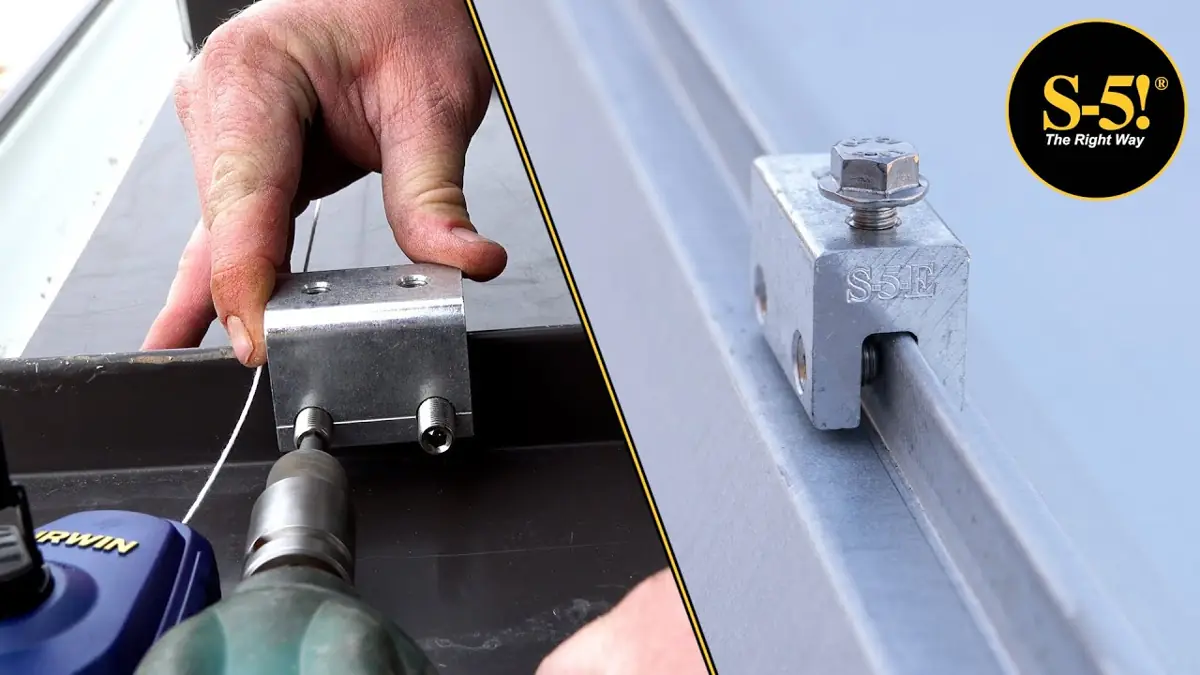
Beyond size, six factors move commercial pricing the most. Roof condition is first. A new standing-seam metal roof is the cheapest surface to build on because clamps attach without penetrations; an aging membrane roof that needs replacement first can add tens of thousands of dollars before a single panel goes up. Electrical infrastructure is second. If your main service panel needs an upgrade or the utility requires a new transformer, those costs land on your project.
Mounting type is third: rooftop is cheapest, ground-mount costs more because of foundations and trenching, and solar carports carry the largest premium, typically 20 to 40 percent above rooftop. Interconnection complexity is fourth: some utilities approve a 200 kW system with a simple application, while others require a costly system-impact study and months of waiting.
Fifth is prevailing wage and labor rules, which matter more in 2026 than ever because the 30 percent federal credit rate generally requires meeting labor standards on larger projects. Sixth is timing. Module prices have been falling for years, but tariffs and trade policy can reverse that quickly, so a quote is a snapshot, not a permanent price. Our guide to reading a solar quote walks through the line items where these drivers hide.
Where the Money Actually Goes
On a typical mid-size commercial project, the panels themselves are only about a quarter to a third of the total cost. Inverters, racking, wiring, and electrical gear add another 15 to 25 percent. The rest is soft costs: design and engineering, permitting, interconnection fees, project management, and installation labor. This surprises business owners who anchor on panel prices they saw online, and it explains why two quotes with identical panels can differ by 30 percent.
Labor deserves special attention. Commercial crews are specialized, rooftop work carries insurance and safety costs, and prevailing-wage requirements on credit-qualifying projects raise hourly rates. None of this is waste; it is the price of a system that passes inspection the first time and survives 25 years of weather. When a bid looks unusually cheap, the discount is almost always in the soft-cost line: thinner engineering, no structural review, or an installer who plans to figure out interconnection later. Those are the projects that stall for six months waiting on a utility study.
The After-Incentive Number That Matters
Here is where commercial solar separates from residential: a profitable company with tax appetite can combine the 30 percent federal 48E credit with five-year MACRS depreciation, often cutting the effective cost roughly in half. Take a modeled example, labeled as an example: a 200 kW system at $1.75 per watt costs $350,000 installed. The 30 percent credit is worth $105,000, and depreciation on the remaining basis can be worth another $50,000 to $70,000 in present value depending on the company’s tax rate. Net effective cost lands near $175,000 to $195,000, or roughly $0.90 to $1.00 per watt.
Two caveats. First, you need tax liability to use tax benefits, and the timing matters; companies without enough liability may need tax-equity structures or transfer arrangements, so confirm the mechanics with a tax professional. Second, the residential 25D credit ended for systems installed after December 31, 2025, which is a different credit and does not apply here; the commercial 48E credit is the one businesses claim. Our 48E credit guide and business ITC guide detail the rates, labor rules, and bonus adders.
How to Compare Commercial Quotes
Normalize every bid to dollars per watt of DC capacity before comparing: a $400,000 quote for 250 kW ($1.60/W) beats a $300,000 quote for 160 kW ($1.88/W). Then check that each quote includes the same scope: structural engineering, interconnection fees, monitoring, and a production guarantee. A bid that excludes interconnection costs is not cheaper; it is incomplete.
Ask each bidder for their assumed first-year production in kWh and divide the net system cost by that number to get a rough cost per kWh. Anything under about 8 to 12 cents per kWh over 25 years is strong against commercial utility rates, which the EIA reports at roughly 13 to 14 cents per kWh nationally. Finally, get at least three bids. Commercial pricing varies even more than residential because project complexity differs, and a spread of 20 to 30 percent between qualified bidders is normal, not a red flag by itself.
Related Commercial Solar Guides
This article is the pricing hub for our commercial solar coverage. Go deeper with these companions:
- Is Solar Worth It for a Small Business Without the Residential Credit?: who benefits most, 48E basics, and payback examples for smaller companies.
- The 48E Commercial Solar Credit: What Businesses Can Still Claim: rates, timelines, qualifying equipment, and bonus adders.
- What Is the Solar Investment Tax Credit for Businesses in 2026?: how companies claim the ITC, depreciation pairing, and recapture risk.
- How to Finance Commercial Solar With No Money Down: loans, leases, and PPAs for businesses with no upfront cash.
- Solar for Warehouses: Roof Space, Payback and Financing: flat roofs, load profiles, and payback math for distribution and storage buildings.
- How Much Roof Space Does a 100 kW Commercial System Need?: watts per square foot, setbacks, and layout planning.
- Demand Charges Explained: Why Batteries Matter for Commercial Solar: the primer on demand charges and battery pairing.
- How Apartment Buildings Can Add Solar Without Rewiring Every Unit: virtual net metering, shared systems, and common-area loads.
- Solar Carports: Cost Per Watt and When They Beat Rooftop: the carport premium and when the dual use case wins.
What is a good price per watt for commercial solar in 2026?
For a mid-size rooftop project (100 to 500 kW), anything under about $1.75 per watt pre-incentive is competitive in most US markets. Smaller systems under 100 kW at $1.85 to $2.60 per watt are normal because fixed costs spread over fewer watts.
Why is commercial solar cheaper per watt than residential?
Scale. Engineering, permitting, interconnection, and crew mobilization cost roughly the same whether the system is 10 kW or 200 kW, so larger projects dilute those fixed costs. Bulk equipment purchasing helps too.
Does the per-watt price include the federal tax credit?
No. Published per-watt figures are almost always pre-incentive installed cost. Subtract the 30 percent 48E credit and depreciation value separately to get your net cost, and confirm the credit mechanics with a tax professional.
How much does a 100 kW commercial system cost?
At $1.70 to $2.55 per watt, a 100 kW rooftop system typically runs $170,000 to $255,000 before incentives. See our 100 kW roof space guide for the layout side of that question.
Are commercial solar prices still falling?
Module prices continue to decline, but total installed costs have flattened because labor, electrical equipment, and interconnection costs are rising. Budget on today’s pricing rather than assuming next year will be cheaper.
Ready to compare real solar prices?
Get free, no-pressure quotes from vetted local installers and see what solar costs for your roof.