
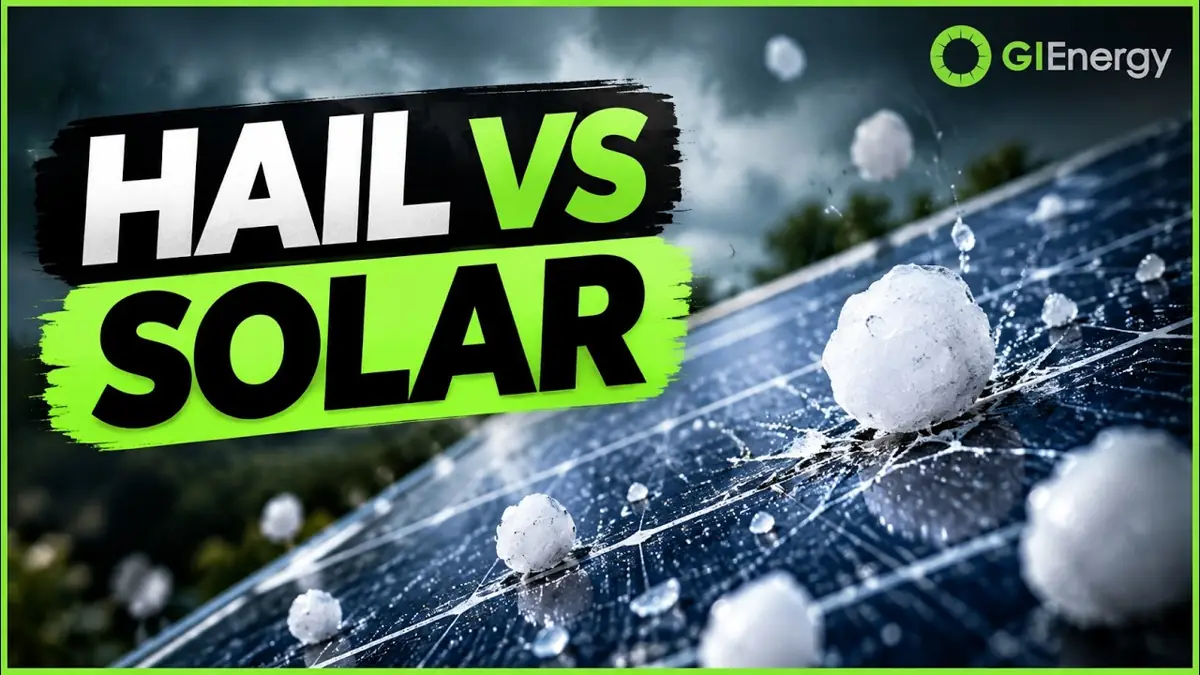
Every hailstorm sends solar owners to the window, imagining thousands of dollars of shattered glass on the roof. The reality is more reassuring: solar panels are among the most impact-tested building products you can buy, and ordinary hail bounces off them. But “hail-resistant” is not “hail-proof,” and the giant stones that total cars can damage panels too. This guide explains the testing standards, what size hail actually causes damage, and what to do after a storm.
- All certified panels pass hail impact tests: typically a 25mm (1-inch) ice ball fired at 23 m/s (about 83 km/h).
- Normal hailstorms rarely damage quality panels; damage starts with golf-ball size stones and larger.
- Hidden microcracks can reduce output even when the glass looks intact after a severe storm.
- Hail damage is an insurance claim, not a warranty claim; manufacturer warranties exclude weather events.
- After a storm, inspect from the ground, check monitoring for dead panels, and document everything before calling your insurer.
The Short Answer
Can hail damage solar panels? Yes, but it takes a serious storm. The vast majority of hail events, pea to marble size, the kind that rattles gutters but does not total cars, leave panels completely unharmed. Panels earn their certification by surviving impacts far harder than typical hail, and field experience in hail-prone states like Texas and Colorado backs up the lab results: most systems weather decades of storms without a cracked panel.
The damage threshold sits around golf-ball size (about 45mm) and larger, especially when stones arrive with high wind. At that size, the kinetic energy jumps dramatically: a 45mm stone carries roughly ten times the impact energy of the 25mm stone used in standard testing. Tennis-ball and baseball size hail, the kind that smashes windshields and dents cars, can absolutely crack panel glass and crush cells.
Geography matters. If you live in hail alley, the corridor from Texas through Colorado, Nebraska, and Kansas that sees the country’s most severe hail, this article deserves your full attention and your insurance policy deserves a careful read. If you live where hail is rare and small, file this under reassuring background knowledge and move on.
How Panels Are Hail-Tested
Every panel sold by a reputable manufacturer is certified to IEC 61215, the international design qualification standard, which includes a specific hail impact test. The lab fires ice balls at eleven points across the panel, including the vulnerable center and edges. Department of Energy hail-test research shows the test protocol in detail, including how impact energy scales with ice ball size. The standard test uses 25mm diameter ice balls traveling at 23 meters per second, roughly 83 km/h or 51 mph.
Twenty-five millimeters is about one inch, which covers the large majority of real hailstones. Importantly, manufacturers can choose to certify to larger ice ball sizes, and many do: testing at 35mm, 45mm, or even 55mm is a selling point for premium panels marketed in hail regions. If you live in severe hail country, asking bidders which hail size their panels are certified to is a smart question most buyers never think to ask.
US testing adds another layer. UL laboratories test panels by dropping a two-inch solid steel sphere from 51 inches onto the glass, simulating the impact energy of serious hail. Between the IEC ice-ball test and UL impact requirements, a certified panel has survived far worse in the lab than anything short of a severe storm will throw at it.
What Size Hail Causes Damage
Hailstone energy scales brutally with size, because both mass and terminal velocity grow with diameter. The table below maps common hail sizes to the realistic risk for certified residential panels.
| Hail size | Diameter | Risk to certified panels |
|---|---|---|
| Pea / mothball | Under 15mm | Negligible; well below test levels |
| Marble / penny | 15-25mm | Very low; at or below standard test impact |
| Quarter / golf ball | 25-45mm | Low to moderate; edge strikes and high wind raise risk |
| Tennis ball | 50-65mm | Moderate to high; expect some cracked glass |
| Baseball and larger | 70mm+ | High; widespread panel damage likely |
Two factors beyond size influence the outcome. Wind-driven hail strikes at an angle with far more energy than vertical falls, which is why the same storm damages one neighborhood’s panels and spares another’s. Strike location matters too: the panel center flexes and absorbs impact better than the rigid edges near the frame, where cracks initiate most often.
What Hail Damage Looks Like
Obvious damage is easy to spot: shattered or spider-webbed glass, dented frames, and panels knocked visibly out of alignment. From the ground with binoculars after a severe storm, scan for the glitter of broken glass catching the light differently than intact panels. Any panel with cracked glass needs replacement; it is a safety and performance issue, not a cosmetic one.
The sneakier problem is microcracks: fractured solar cells beneath intact-looking glass. A hailstone can flex the panel enough to crack cells without breaking the surface, and the damage shows up as reduced output, sometimes immediately, sometimes worsening over months as cracks propagate with thermal cycling. This is why the post-storm monitoring check matters as much as the visual one.
Over longer timeframes, damaged panels can develop snail trails, dark wavy lines where moisture entered through microcracks, and hot spots where damaged cells overheat. Neither is an emergency, but both signal a panel living on borrowed time. Document them with photos and monitoring screenshots for the insurance claim.
Insurance vs Warranty
This distinction surprises many owners: hail damage is covered by your homeowner’s insurance, not by the panel manufacturer’s warranty. Equipment warranties cover defects in materials and workmanship; every major manufacturer’s warranty explicitly excludes damage from weather events including hail, hurricanes, and falling objects. Performance warranties are no help either, since they guarantee against gradual degradation, not storm damage.
The good news is that standard homeowner’s insurance policies do cover solar panels as part of the dwelling, whether owned outright or financed. Call your insurer after installing solar to confirm the panels are listed on the policy and that your coverage limit reflects the system’s value; some owners need a small rider. EnergySage’s solar guide covers insurance considerations for new owners. If you lease your system or have a power purchase agreement, the leasing company typically insures the equipment itself, so check your contract.
File promptly after a damaging storm, with documentation ready: dated photos of visible damage, monitoring screenshots showing the production drop, your original installation contract showing system size and value, and any professional inspection report. Insurers process documented solar claims like any other dwelling claim, usually paying for panel replacement and labor minus your deductible.
What to Do After a Hailstorm
Work through this sequence once it is safe to go outside. First, inspect from the ground: walk the perimeter and look up at the array with binoculars for cracked glass, displaced panels, or damaged flashing. Do not climb on the roof; storm-damaged roofs are slippery and some panels may have exposed wiring.
Second, check your monitoring app. Compare each panel’s output to its pre-storm baseline on a clear day. Panels reading zero or far below neighbors are damaged even if the glass looks fine from below. Screenshot everything with dates, since this is your evidence. Our phone monitoring guide shows where to find per-panel history.
Third, call your installer for a professional inspection if you find damage or suspicious production drops. They can assess safely from the roof, test panels electrically, and provide the written damage report insurers want. Then file the claim with your documentation package. Do not authorize replacement before the adjuster visits unless panels pose a safety hazard. Have mounting hardware and flashing inspected too; hail that cracks panels may have damaged seals, a detail tied to roof leak prevention and routine maintenance checks.
Can You Protect Your Panels?
Honest answer: not much, and that is fine. Purpose-built hail covers exist but are impractical for roof-mounted residential arrays: they must be deployed before each storm, secured against wind, and removed afterward, which means roof trips in dangerous weather. For most owners, the risk does not justify the hassle.
What actually helps is decided at purchase time. Choosing panels certified to larger hail test sizes, asking about dual-glass construction (glass on both sides, which resists cell flexing), and mounting at a steeper tilt all improve severe-storm survival. None of these eliminate risk, but they shift the odds in your favor for a modest or zero cost premium.
The real protection is financial: adequate homeowner’s insurance with panels listed on the policy. Panels are tough enough that most owners will never file a hail claim, and insurance covers the rare storm that overwhelms them. That combination is the complete hail strategy.
Will hail void my solar panel warranty?
Hail does not void the warranty, but weather damage was never covered by it. Manufacturer warranties cover defects, not storms. Hail damage goes through your homeowner’s insurance instead.
What size hail breaks solar panels?
Panels are tested against 25mm (1-inch) ice balls at 83 km/h. Damage risk rises from golf-ball size upward, with tennis-ball and larger hail capable of cracking glass and cells.
Should I get special insurance for my solar panels?
Usually not special insurance, but do confirm with your insurer that the panels are listed on your homeowner’s policy and that your coverage limit reflects the system’s value. Leased systems are typically insured by the leasing company.
Can cracked solar panels still produce electricity?
Sometimes, at reduced output, but cracked panels should be replaced. Broken glass admits moisture that corrodes cells over time, and damaged panels can develop dangerous hot spots.
Do solar panels protect my roof from hail?
To a degree, yes. Panels shield the roof area beneath them, and roofers in hail regions report that shingles under arrays often survive storms that damage exposed roofing. The panels take the hit instead.
Live in hail country? Choose panels built for it
Get free quotes from local installers and ask about hail-certified panels for your roof.