

If you already have a standing seam metal roof, or you are choosing a roof with future solar in mind, you have the gold standard. Panels mount with clamps that grip the raised seams, which means zero holes in your roof, faster installation, and no leak risk from penetrations. This guide explains how it works, what it costs, and what to ask your installer.
- Standing seam roofs allow non-penetrating mounts. Clamps grip the raised seams, so installers never drill into your roof.
- S-5! clamps are the industry standard, with models matched to seam profiles, and rail-less systems cut mounting costs substantially versus railed designs.
- Installation is faster on standing seam than shingle or tile, which can mean lower labor costs and fewer change orders.
- A metal roof lasts 40 to 70 years, outliving your panels, so you will likely never pay for panel removal for reroofing.
- Only true standing seam qualifies. Corrugated or screw-down metal needs different hardware with penetrations.
Why Standing Seam Is the Easiest Solar Roof
A standing seam roof is made of long metal panels joined by raised seams running ridge to eave. Those seams are structural, weather-tight, and perfectly spaced for solar. Instead of driving lag bolts through roofing into rafters, the installer attaches clamps directly onto the seams and builds the racking on top.
Compare the alternatives. On asphalt shingles, every attachment means lifting shingles, driving a lag bolt into the rafter, sealing it with flashing, and replacing shingles around it. A typical system needs 20 to 40 penetrations. On tile, installers lift or cut fragile tiles, and breakage is common. Both work fine when done well, but every penetration is a future leak risk. Our tile vs shingle comparison details those tradeoffs.
On standing seam, the penetration count is zero. Clamps grip the seam with set screws that dimple the metal but never pierce it. The roof’s weather integrity stays as the manufacturer intended, which generally keeps your roof warranty intact. Fewer steps means faster installs and lower labor costs.
How Seam Clamps Actually Work
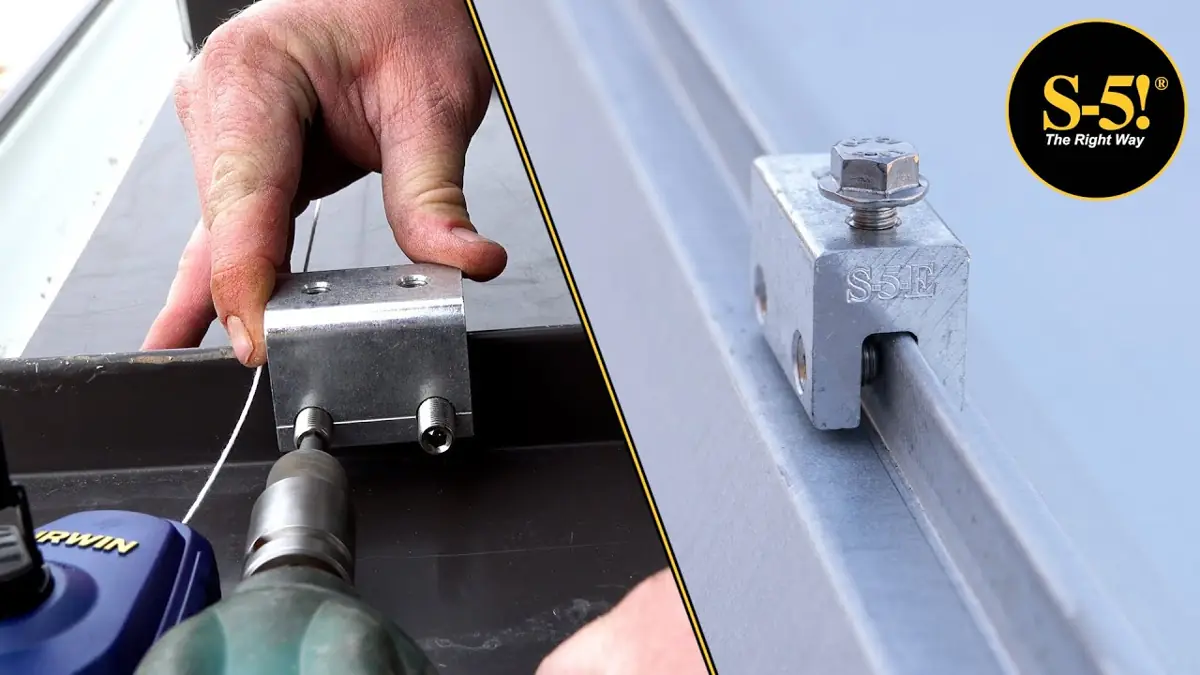
The industry standard is the S-5! clamp from a Colorado manufacturer specializing in metal roof attachments. A small aluminum block with a shaped slot fits over the raised seam, and hardened set screws tighten against it to lock the clamp in place, dimpling the seam for grip without puncturing it. Each clamp carries rated uplift and lateral loads, and engineers specify count and spacing for your wind zone and snow loads. You can browse the clamp lineup and load ratings on S-5!’s official site.
Seam profiles need matching clamps: the S-5-S fits snap-together seams, the S-5-N fits nail-strip profiles, and other models cover double-locked and T-seams. Your installer identifies the profile during the site survey and orders accordingly. Wrong clamp selection is one of the few ways to damage a standing seam roof, so this matching step matters.
Above the clamps, systems go up railed or rail-less. Railed systems bolt aluminum rails across clamp rows, with panels fixed by mid and end clamps. Rail-less systems like S-5!’s PVKIT attach panels directly to the seam clamps, and S-5! reports mounting cost reductions of roughly 25 to 30 percent versus railed designs, plus faster installation. Either way, panels sit a few inches above the roof, and that cooling airflow underneath is a small but real production bonus.
Clamps vs Roof Penetrations: The Real Difference
Leaks. A properly flashed shingle penetration rarely leaks, but “rarely” does heavy lifting over 25 years of thermal cycling and aging sealant. Clamp mounts eliminate the category: no hole to seal, no sealant to age, no flashing to fail. In heavy rain or snow regions, this is the biggest single advantage.
Speed. Drilling, flashing, and sealing dozens of penetrations takes hours. Clamping is far faster: set the clamp, torque the screws, move on. Standing seam jobs consistently go up faster than same-size shingle jobs, with less foot traffic on your roof.
Warranties. Drilling can complicate the roof manufacturer’s warranty, and some shingle warranties exclude aftermarket penetrations. Clamp mounts generally preserve the roof warranty since nothing is pierced. Confirm with your specific manufacturer, but the starting position is much stronger.
Removability. If panels come off for service or end of life, unclamping leaves the roof essentially untouched. Removing a shingle system leaves dozens of sealed holes needing re-inspection. The cleaner removal pays off decades later.
Cost Comparison: Metal vs Shingle vs Tile
Solar on standing seam is often the cheapest roof type to install on. The savings are labor: faster mounting, no flashing kits, no tile replacement, no shingle work, with rail-less systems compounding hardware savings. Installed costs stay in the normal $2.50 to $3.50 per watt band, but standing seam projects tend to land at the lower end of an installer’s range for a given size.
The comparison flips on the roof itself: standing seam costs two to three times asphalt shingles. If your shingle roof is 10 years old and healthy, reroofing in metal just for solar rarely pencils out. Put panels on the shingles and plan metal for the next cycle. If your shingles are aging, read our guide to solar on an old roof first.
| Factor | Standing seam metal | Asphalt shingle | Concrete/clay tile |
|---|---|---|---|
| Mounting method | Seam clamps, zero penetrations | Lag bolts with flashing, 20–40 penetrations | Hooks or replacement tiles |
| Leak risk from install | Essentially none | Low when flashed properly | Low, but tile breakage is common |
| Install speed | Fastest | Standard | Slowest |
| Mounting cost tendency | Lowest labor; rail-less saves more | Baseline | Highest labor |
| Roof lifespan | 40–70 years | 20–25 years | 50+ years (underlayment less) |
| Reroof with panels on? | Rarely needed | Likely once; $8k–$12k removal/reinstall | Underlayment may need work |
The reroof row deserves emphasis. Shingles installed the same year as your panels will likely need replacement while panels still work, and removal plus reinstall for reroofing typically costs $8,000 to $12,000. A standing seam roof installed with your panels will still be going strong at panel retirement. The Department of Energy’s homeowner solar guide is a solid primer on how roof condition should factor into your go-solar timing.
Not Every Metal Roof Qualifies
Clamp mounts only work on true standing seam with raised seams, typically 1 to 2 inches tall. Similar-looking metal roofs need different hardware. Corrugated metal has no seam to grip; installers use brackets through the ribs with sealant, meaning penetrations. Screw-down (exposed fastener) roofs, common on outbuildings and budget jobs, take additional screwed attachments, and the roof type is itself more leak-prone as screws back out over time. Metal shingles and stone-coated steel mount like shingles, with penetrations and flashing.
Unsure what you have? View the roof from the side: standing seam shows clean vertical ribs with no visible screws. Or ask during the site survey. Correct profile identification takes an experienced surveyor five minutes and determines the entire mounting plan.
Pros
- Zero penetrations means essentially no leak risk from installation.
- Fastest and often cheapest mounting, especially rail-less.
- 40 to 70 year roof life outlives panels, avoiding reroof removal costs.
Cons
- Standing seam costs 2 to 3 times shingles if you are reroofing.
- Only true standing seam works with clamps; other metal needs penetrations.
- Dark metal runs hot, slightly trimming output on peak summer afternoons.
What to Ask Your Installer
First: which clamp model matches my seam profile, and how did you verify it? You want a specific S-5! model or equivalent, matched at survey, not a guess on install day. Second: railed or rail-less, and why? Rail-less saves money on most residential jobs; railed suits irregular layouts or heavy snow. Either is fine with reasoning specific to your roof. Third: how does this affect my roof warranty? Get it in writing, ideally with manufacturer confirmation. Fourth: what is the panel-to-roof gap? A few inches of airflow keeps panels cooler and more productive. Finally, ask for photos of past standing seam installs. Good clamp work is visibly tidy. Our 15 questions to ask a solar installer covers the rest of vetting.
The Lifespan Match: Roof Outlives Panels
The deepest advantage is temporal. Solar panels last 25 to 30 years or more, degrading slowly; asphalt shingles last 20 to 25. Panels on shingles collide at year 20: working panels on a dying roof, with a $8,000 to $12,000 removal and reinstall bill to reroof beneath them. Standing seam at 40 to 70 years never creates that collision. Install once, and the roof is still serviceable at panel retirement. Over a 30-year horizon, that avoided reroof outweighs any hardware savings. It is the easiest yes in residential solar.
Can you put solar panels on a standing seam metal roof?
Yes, it is the easiest roof type for solar. Clamps grip the raised seams with no drilling: zero penetrations, no mounting leak risk, and faster installation than shingle or tile.
What are S-5! clamps?
The industry-standard hardware for standing seam roofs. An aluminum block fits over the raised seam and set screws lock it without puncturing the metal. Models match seam profiles, so the installer must match the clamp to your roof.
Is solar cheaper to install on a metal roof?
The installation itself is often cheapest on standing seam: faster clamp mounting, no flashing kits, and rail-less options cutting hardware costs. The metal roof itself costs more than shingles, but that is a roofing decision.
Do solar panels damage metal roofs?
Clamp-mounted systems do not. Clamps dimple the seam slightly for grip but never pierce it, and the roof warranty is generally preserved. Faster installs also mean less foot traffic.
What about corrugated or screw-down metal roofs?
Different hardware with penetrations. Corrugated uses brackets through the ribs with sealant; screw-down roofs take additional screwed attachments. Neither gets the zero-penetration advantage of true standing seam.
Will I ever need to remove panels to replace a metal roof?
Almost certainly not. Standing seam lasts 40 to 70 years against 25 to 30 for panels, so the roof is still serviceable at panel retirement, avoiding the $8,000 to $12,000 removal and reinstall shingle owners often face.
Ready to compare real solar prices?
Get free, no-pressure quotes from vetted local installers and see what solar costs for your roof.