
If your solar panels went up around 2021 and you are now thinking about backup power, here is the good news: you do not need to replace your system. An AC-coupled battery can be added to almost any existing residential solar setup, and the project is one of the most common jobs installers do today.
- Most five-year-old systems can take an AC-coupled battery (Tesla Powerwall 3, Enphase IQ Battery 5P, FranklinWH aPower 2) without touching the existing inverter or panels.
- Expect to pay $9,000 to $16,000 installed for a single ~13.5 kWh battery, including the backup gateway and labor.
- You will need a new permit and an updated utility interconnection agreement, even though the panels are already approved.
- Homes with older 100-amp electrical panels or complex subpanels may need upgrades that add $1,000 to $3,000.
- There is no federal tax credit for a battery added in 2026, so price the project on its own merits.
Why homeowners retrofit batteries
Five years ago, most residential solar went in without storage. Batteries were expensive and net metering was generous in most states. A lot has changed since then. Utilities in California moved to NEM 3.0, which slashed the value of exported solar. Time-of-use rates spread to more states, making evening electricity two to three times pricier than midday power. And storms keep reminding people that grid-tied panels shut off during outages.
The result is a wave of retrofit projects. Installers report that battery add-ons are now a large share of their residential work. If that describes you, the process is straightforward, but it helps to understand what the battery actually connects to before you start collecting quotes.
How an AC-coupled retrofit works
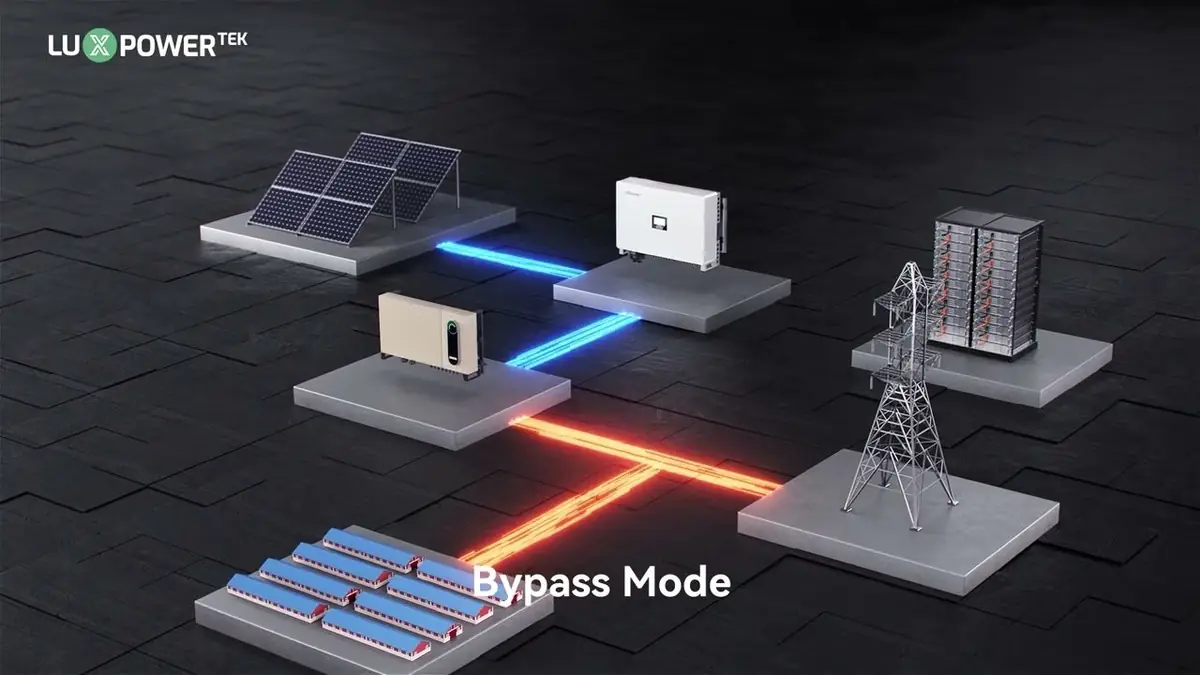
Your existing system almost certainly converts panel output to AC power through either a string inverter (a wall-mounted box from SolarEdge, SMA, or Fronius) or microinverters under each panel (usually Enphase). A retrofit battery does not touch any of that. Instead, an AC-coupled battery connects on the AC side of your electrical system, downstream of your existing inverter.
Here is the flow. During the day, your panels produce AC power as they always have. Your home uses what it needs, and the surplus flows into the battery, which uses its own built-in inverter to store it. In the evening, the battery discharges and powers your home. When the grid goes down, a backup gateway disconnects your home from the grid in milliseconds and the battery keeps your backed-up circuits running.
The alternative is DC-coupled storage, where the battery charges directly from the panels before inversion. That design is slightly more efficient, but it requires replacing or reconfiguring your existing inverter, which is why our AC-coupled vs DC-coupled comparison recommends AC coupling for nearly every retrofit. The efficiency penalty is small, typically 2 to 4 percent round-trip, and it buys you a far simpler install.
For manufacturer specs, see Tesla’s Powerwall page and the Department of Energy’s homeowner guide to going solar. For a head-to-head on the two most popular retrofit batteries, see our Powerwall 3 vs Enphase IQ Battery 5P comparison.
Will it work with your system
Before you sign anything, run through this compatibility checklist. Most of it can be confirmed from your original install paperwork.
Inverter type. String inverter systems (SolarEdge, SMA, Fronius, Growatt) are the easiest retrofits: the battery and gateway wire into your main panel and the existing inverter keeps doing its job. Enphase microinverter systems pair most naturally with Enphase batteries, though a Powerwall 3 can also be added; the installer just needs to confirm firmware and gateway compatibility.
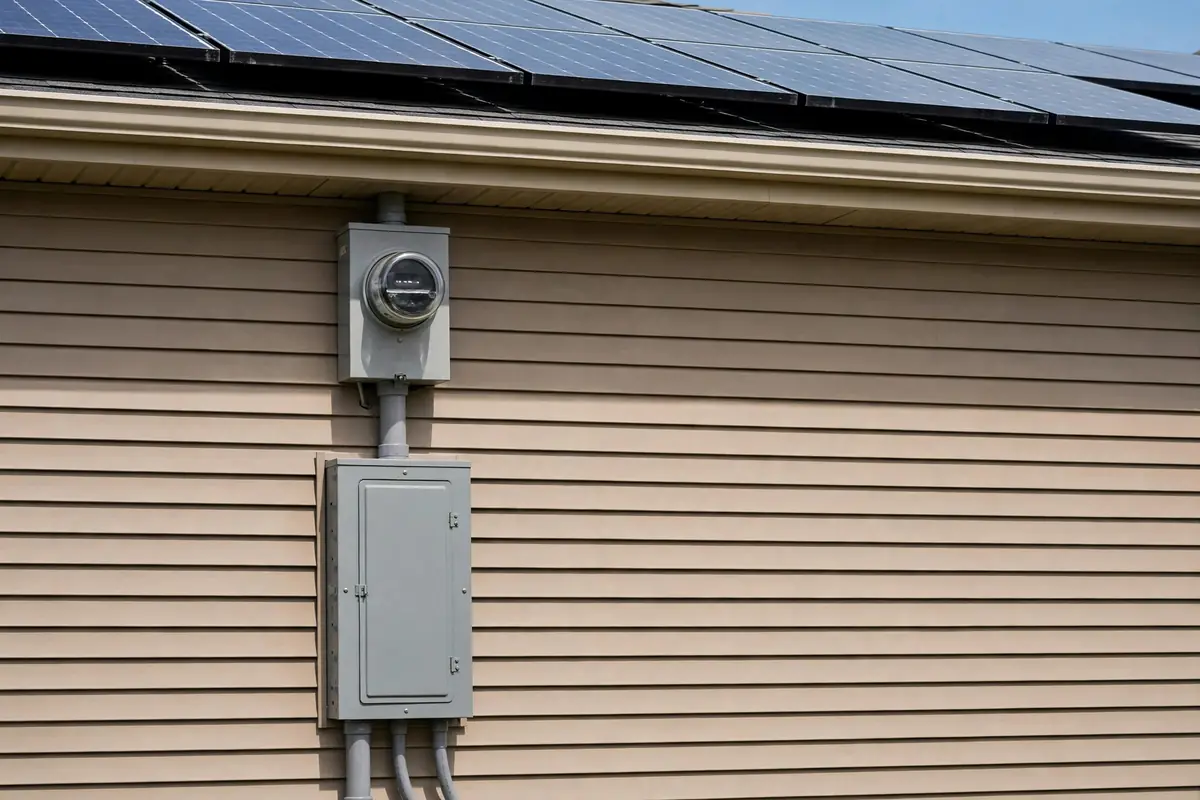
Electrical panel. This is where retrofit quotes most often grow. If your home still has a 100-amp panel, many installers will recommend or require an upgrade to 200 amps before adding a battery and backup gateway. A panel upgrade typically adds $1,500 to $3,000. Homes with 200-amp service and space for new breakers usually avoid this cost.
Roof and panel condition. The battery does not care about your roof, but a good installer will glance at the array during the site visit. If your panels are underperforming due to a failed inverter, fix that first.
Monitoring. Your battery will come with its own app (Tesla app, Enphase app, FranklinWH app). It will not merge with your old solar monitoring unless both are the same brand. Minor annoyance, worth knowing.
Utility interconnection. Your original permission to operate covered panels only. Adding storage changes what your system can do, so your utility requires an updated interconnection application. Your installer handles the paperwork, but it adds two to six weeks in most territories.
What a battery retrofit costs in 2026
For a single 13.5 kWh-class battery with gateway and installation, national pricing in 2026 lands between $9,000 and $16,000. The spread reflects real differences: equipment choice, local labor rates, panel upgrades, and wiring complexity. A straightforward Powerwall 3 install on a 200-amp panel in Texas might land near $11,000; the same job in California with a panel upgrade can push past $15,000.
| Cost component | Typical range | Notes |
|---|---|---|
| Battery unit (13.5 kWh class) | $6,500 – $9,500 | Powerwall 3, FranklinWH aPower 2, or 2-3 Enphase 5P units |
| Backup gateway / system controller | $1,000 – $1,800 | Required for outage protection; sometimes bundled |
| Labor and electrical work | $1,500 – $3,000 | Higher for complex panels or long wire runs |
| Permits and interconnection | $300 – $800 | Varies by city and utility |
| Panel upgrade (if needed) | $1,500 – $3,000 | Only if you still have 100-amp service |
Two cost notes specific to 2026. First, there is no federal tax credit for a residential battery installed in 2026. The 25D residential clean energy credit covered batteries of 3 kWh or more, but only for systems installed through December 31, 2025. Do not let anyone promise you a 30 percent credit on a 2026 battery project. Second, some states still offer battery incentives: California’s SGIP program has paid per-kWh rebates for storage, and a few utilities run bring-your-own-battery programs. Check current funding at DSIRE.
To sanity-check whether the battery size is right for your goals, see what size battery you need for a multi-day outage and how long a 13.5 kWh battery runs essential loads.
The installation steps, start to finish
A retrofit is faster than the original solar install because the panels, racking, and roof work already exist. Realistic timeline: four to ten weeks from signed contract to a working battery, with most of that time eaten by permits and utility paperwork rather than actual labor.
1. Site assessment (week 1). The installer photographs your electrical panel, existing inverter, and proposed battery location. They confirm panel amperage, available breaker space, and signal for monitoring.
2. Design and quote (weeks 1-2). You get a one-line diagram showing the battery, gateway, and which circuits move to the backup panel. Ask whether the quote covers whole-home or partial-home backup; most retrofits back up essential circuits (fridge, lights, internet, some outlets) rather than the entire panel.
3. Permits and utility application (weeks 2-6). The installer submits electrical permits to your city and an updated interconnection application to your utility. This is the longest phase and the one you cannot rush.
4. Installation day (1-2 days). The crew mounts the battery, installs the gateway, and moves backed-up circuits to a subpanel. Your power will be off for a few hours during the panel work. The panels themselves are untouched.
5. Inspection and permission to operate (weeks 6-10). The city inspects, the utility grants updated permission, and the installer commissions the system and walks you through the app. Test an outage simulation before the crew leaves.
Is it worth doing now
A retrofit battery is worth it in three situations. First, you lose power more than a couple of times a year and you are tired of it. Second, you are on a time-of-use rate where evening power costs two to three times midday power; the battery earns its keep daily by shifting your own solar into the expensive hours. Third, you are in California under NEM 3.0, where storing and self-consuming beats exporting at low credit rates.
It is harder to justify if your grid is reliable, your utility still offers full retail net metering, and your rate is flat. In that case the battery is mostly an insurance policy, and you should price it as one. If the answer is “peace of mind,” that is a legitimate reason, just own it.
One more consideration: if your 2021 system uses an older string inverter nearing the end of its 10 to 12 year warranty, some homeowners time the battery addition with an inverter replacement and go DC-coupled instead. For everyone else, AC coupling is the simpler, cheaper path. Compare the finalists in our Powerwall 3 vs FranklinWH aPower 2 breakdown before you decide.
Will adding a battery void my solar panel warranty?
No. The battery connects to your electrical panel, not to the panels or their wiring, so panel and inverter warranties are unaffected.
Can I add a battery myself to save money?
We do not recommend it. Battery retrofits involve high-voltage DC, main panel work, and utility paperwork that requires a licensed electrician in most jurisdictions. DIY also complicates the manufacturer’s warranty.
How long does the installation itself take?
The physical work is usually one to two days. Permits, utility approval, and inspection stretch the total project to four to ten weeks.
Do I need to replace my inverter to add a battery?
No, not with an AC-coupled battery, which is the standard choice for retrofits. Your existing inverter keeps working exactly as before.
Will one battery back up my whole house?
Usually not. A single 13.5 kWh battery comfortably covers essential circuits (fridge, lights, Wi-Fi, outlets, gas furnace blower) but not central air conditioning or electric cooking for long. Whole-home backup typically needs two or more batteries.
Ready to compare real solar prices?
Get free, no-pressure quotes from vetted local installers and see what solar costs for your roof.