
A home using 2,000 kWh per month needs roughly a 13 to 18 kW solar system, or 33 to 45 panels, depending on location. High-usage homes face constraints average homes never see: roof space limits, utility size caps, and panel upgrade costs. This guide works through the exact math and the workarounds.
- 2,000 kWh/month (24,000 kWh/year) needs about 13 kW in the sunny Southwest and up to 18 to 20 kW in the Northeast.
- That is 33 to 45 panels at 400W, needing roughly 600 to 800 square feet of usable roof.
- Utility oversizing caps (often 100 to 120 percent of usage) rarely block high-usage homes, but roof space and panel capacity often do.
- Expect $33,000 to $60,000 installed before incentives, with lower per-watt pricing than smaller systems.
The short answer
A 2,000 kWh monthly home (24,000 kWh per year, more than double the national average household usage reported by the EIA, and roughly a $300 to $450 bill depending on rates) needs a 13 to 18 kW system in most of the US: about 13 kW in Arizona, 15 kW in Texas or Florida, and 17 to 20 kW in the Northeast or Pacific Northwest. At standard 400W panels, that is 33 to 45 panels. The math is the same as for any home; what changes at this scale are the physical constraints.
Homes using this much power usually have central AC, a pool, an EV or two, electric heat, or some combination. Before sizing solar, it is worth asking whether efficiency upgrades (a heat pump swap, pool pump timer, attic insulation) could cut the load first. Every kWh you eliminate is a kWh you do not have to generate, and efficiency upgrades often cost less per kWh saved than solar costs per kWh generated. For the standard version of this math, see our $200 bill sizing guide.
The sizing math
Annual usage is 2,000 x 12 = 24,000 kWh. Divide by your location’s annual production per installed kW (see the table):
| Location type | kWh per kW per year | System size needed | Panels at 400W |
|---|---|---|---|
| Southwest (Phoenix) | 1,800 | 13.3 kW | 34 |
| California / Texas | 1,600 | 15.0 kW | 38 |
| Southeast / Midwest | 1,400 | 17.1 kW | 43 |
| Northeast / Northwest | 1,200 | 20.0 kW | 50 |
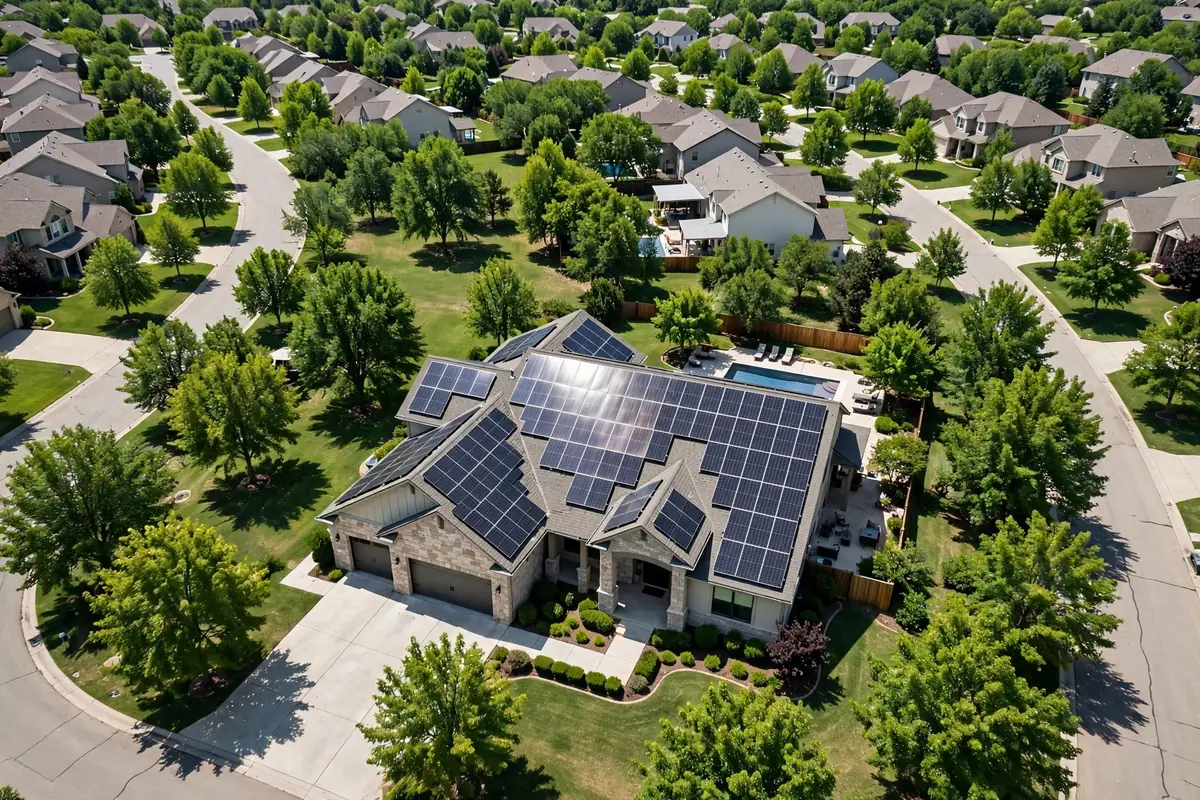
These assume good roof orientation and modest shading. A 20 kW system in the Northeast is a very large residential install: 50 panels, a big inverter setup, and serious roof area. This is where high-usage homes in cloudy states hit physical limits first. The NREL PVWatts calculator can refine these numbers for your address.
One nuance for big systems: the federal 25D credit’s end for 2026 installs hits large systems hardest in absolute dollars, since there is no credit on a $45,000 project anymore. That does not kill the economics (high bills mean big savings), but it lengthens payback. Our 2026 worth-it guide runs the post-credit numbers.
The roof space problem
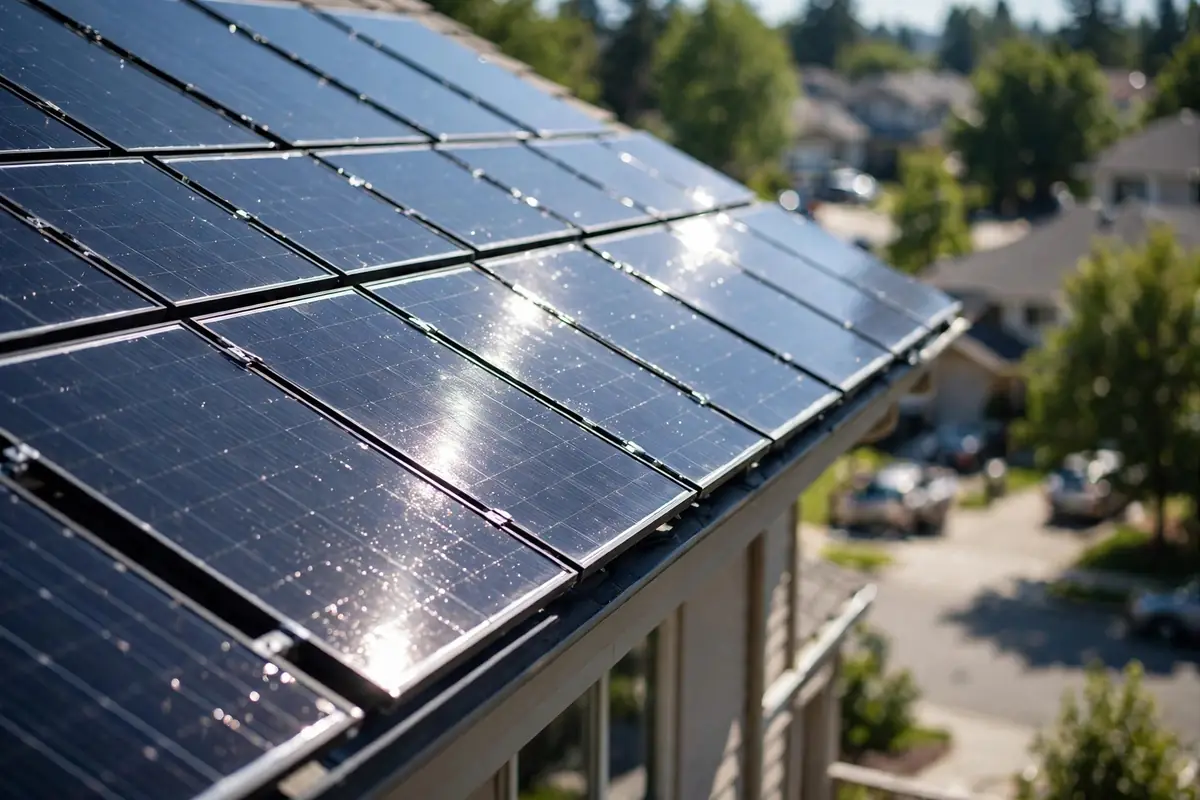
Forty panels need roughly 700 square feet of usable roof after setbacks and fire-code access pathways. Many homes simply do not have that on a good solar face. South and west faces produce the most; east is workable; north is usually skipped. A high-usage home with a small or cut-up roof faces a real choice: cover what you can and accept a partial offset, or find more space.
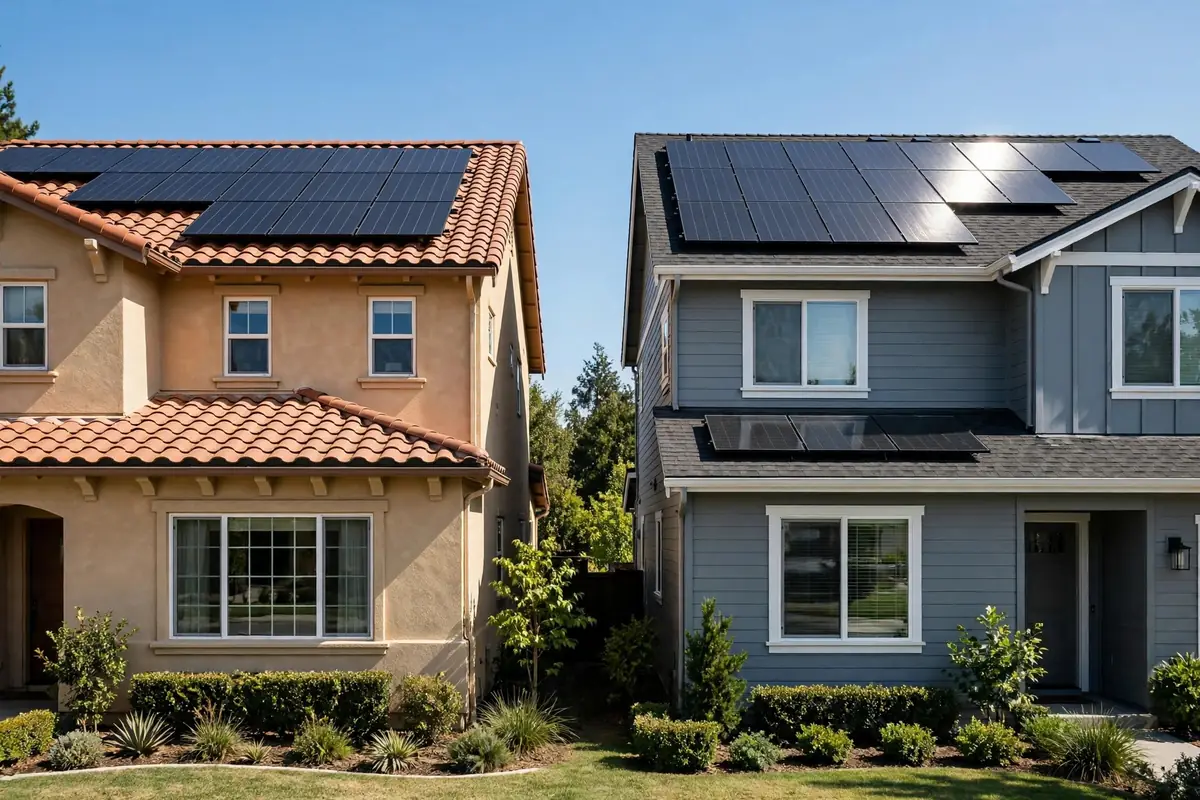
Higher-wattage panels help at the margins: 460W panels cut a 43-panel design to 38. That is meaningful on a tight roof but will not conjure 700 square feet from 400. Be skeptical of any installer who promises full offset on a roof that clearly cannot fit the array. Ask to see the panel layout drawing, not just the panel count.
Electrical panel and utility constraints
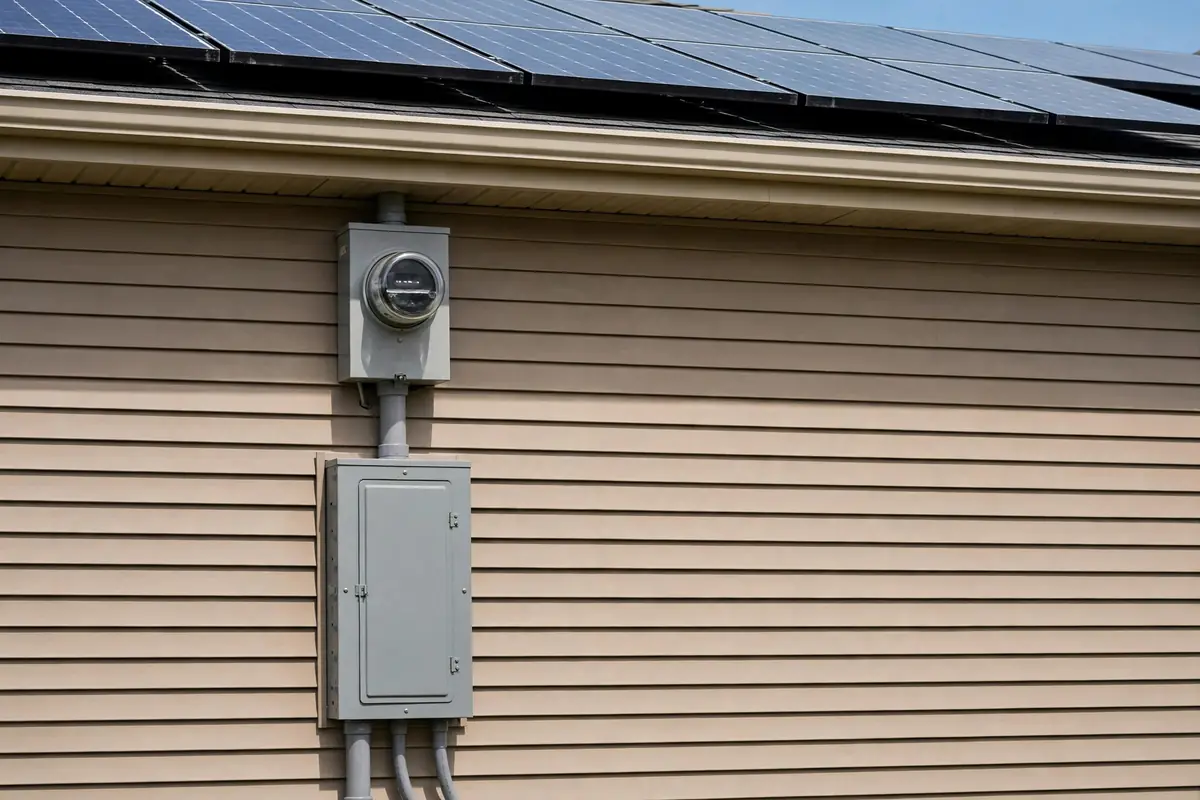
Systems above 15 kW often trigger extra scrutiny. Electrically, a 200-amp panel can typically accommodate up to about 15 to 19 kW of solar depending on the configuration (the 120 percent rule for busbar loading). Beyond that, you may need a panel upgrade, a line-side tap, or a second service panel. Budget $1,500 to $4,000 if your panel needs work; your installer’s site survey should flag this early.
Utilities, meanwhile, usually cap residential systems at 100 to 120 percent of historical usage. At 2,000 kWh/month of documented usage, a 15 to 18 kW system is comfortably within most caps, so high-usage homes rarely fight this battle. The exception is new construction or recent usage spikes (a new EV, a new pool) where 12 months of history does not reflect reality. Some utilities accept documented load additions; others make you wait. Ask your installer how your utility handles it.
Permitting for large residential systems is generally the same process as smaller ones, though some jurisdictions add structural review for very large arrays. Timelines do not change much; the hardware just gets bigger.
What it costs
Large systems enjoy better per-watt pricing because fixed costs (permitting, design, truck rolls) spread over more watts. While small systems run $2.80 to $3.50 per watt, a 15 to 18 kW install often lands at $2.40 to $3.00 per watt, or roughly $36,000 to $54,000 all-in. In competitive markets with simple roofs, the low end is achievable; complex roofs and panel upgrades push toward the high end.
At a $350 monthly bill ($4,200 per year), a $45,000 system has a simple payback around 10 to 11 years before accounting for rate inflation, which historically runs 2 to 4 percent annually and shortens the real payback. High-usage homes often have the best solar economics in their neighborhood precisely because every generated kWh offsets expensive retail power. Wondering if 10 kW would already cover you? Our 10 kW guide helps you judge.
When the roof is not enough
If the roof cannot fit the full system, you have options. Ground mounts cost 10 to 25 percent more than roof installs but can be oriented perfectly and sized freely; they need yard space and a separate permit. Partial offset is underrated: covering 60 percent of a huge bill still saves thousands per year, and you can add a ground array later. Efficiency first: a pool pump timer ($300) can save 2,000+ kWh per year; sealing ducts and adding attic insulation cut AC loads substantially. Reducing the load shrinks the required array, sometimes enough to fit the roof.
Also consider strategic oversizing within the cap: if you are adding an EV next year, size for it now if the utility allows. Our 20 percent rule guide explains when oversizing pays and when utilities push back. And pair the conversation with storage if outages concern you: a big array plus batteries is a different design exercise covered in our battery sizing guide.
Can a residential roof handle 40+ panels structurally?
Usually yes. Panels and racking add about 3 to 5 pounds per square foot, well within most modern roof designs. Installers verify with a structural check, and tile or older roofs may need an engineering review.
Will my utility allow a 20 kW residential system?
If your documented usage supports it (and 2,000 kWh/month does), generally yes under the 100 to 120 percent rule most utilities use. Very large systems may face additional interconnection review, adding a few weeks.
Should I get one big inverter or microinverters for a large system?
Both work. Microinverters (Enphase) scale gracefully and handle mixed roof faces well; string inverters with optimizers can be cheaper per watt at large sizes. Partial shading favors module-level electronics.
Does a bigger system need more maintenance?
Not really. Maintenance is minimal regardless of size: occasional cleaning, inverter monitoring via app, and a professional checkup every few years. More panels just mean more of the same.
What size inverter do I need for a 15 kW system?
Typically a 15 kW inverter setup, either one large string inverter, two smaller ones, or 38 microinverters. Installers often undersize the inverter slightly relative to the DC array (a 1.2 DC-to-AC ratio is common) because panels rarely hit nameplate output. Your quote should show the inverter model and the DC/AC ratio.
Is it worth covering 100% of a 2,000 kWh bill?
Under full retail net metering, yes. Under NEM 3.0-style rules with low export credit, the last 10 to 20 percent of offset earns less, so slightly undersizing plus a battery can pay better. Check your state’s rules.
Ready to compare real solar prices?
Get free, no-pressure quotes from vetted local installers and see what solar costs for your roof.