

The 30 percent federal tax credit is gone, and 2026 solar quotes can look intimidating. But the cheapest way to add solar in 2026 is not a secret program. It is a short list of unglamorous decisions: buy only the capacity you need, make installers compete, and dodge the financing traps that quietly add thousands. This guide walks through each one with current 2026 pricing.
- Installed residential solar averaged about $2.60 per watt nationally in 2026, roughly $31,000 for a typical 12 kW system before incentives.
- The federal 25D credit ended for systems installed after December 31, 2025, so your installer choice is now the biggest lever on price.
- Right-sizing, four or more quotes, and a solar co-op cut the most dollars for the least effort.
- Community solar needs $0 down and trims bills 5 to 15 percent, while dealer fees on solar loans quietly add thousands.
- Never chase the lowest bid by skipping permits or voiding your warranty. The cheapest system is the one you only buy once.
What Solar Costs in 2026 Without the Tax Credit
The math changed in 2026: the 30 percent residential credit ended for systems installed after December 31, 2025. A 2025 installation can still claim it on 2025 taxes with IRS Form 5695; a 2026 one cannot. See what 2026 buyers get instead, including the state and utility programs still on the table.
With no credit softening the blow, EnergySage’s 2026 marketplace data puts the national average at about $2.60 per watt installed, roughly $31,135 for a typical 12 kW system before incentives. Most quotes land in the $2.50 to $3.50 band depending on state, roof, and equipment; our breakdown of the real price of solar in 2026 translates that across common system sizes.
One encouraging trend: SEIA and Wood Mackenzie reported turnkey residential prices fell 1.4 percent year over year in Q2 2026 to $3.36 per watt, as module prices dropped 16 percent to $0.37 per watt, per pv magazine USA. Panels keep getting cheaper; labor, permitting, and overhead are the stubborn part, and that is where the savings below come from.
Buy Only the Capacity You Actually Need
Oversizing is the most common way homeowners overpay. A rep rounds up for “future needs” and suddenly you are buying 12 kW when 8 kW would cover you. At $2.60 per watt, that is roughly $31,200 versus $20,800: ten thousand dollars decided before anyone has seen your roof.
Size to your actual electricity use over the last twelve months, not a salesperson’s projection; read whether a 10 kW system is overkill and the 20 percent sizing rule first. The sweet spot for most households is 100 to 110 percent of current usage.
One exception: if an EV or heat pump arrives within two years, sizing up now beats adding panels later. But “maybe someday” is not a plan, and undersizing leaves you asking why the electric bill is still high after solar.
Make Installers Compete for Your Roof
The highest-return hour of this project is collecting more quotes. Bids for the identical roof regularly differ by 40 percent or more between installers, as documented in why solar quotes vary so much. You cannot negotiate against a spread you never see, so get at least four quotes; our guide on how many quotes to get explains why three is a minimum, not a target.
Compare bids on dollars per watt, not the headline total. A $24,000 quote for 8 kW ($3.00/W) is worse than a $26,000 quote for 10 kW ($2.60/W). Tell each installer you are comparing bids, insist on an itemized quote, and learn how to read a solar quote line by line so padded “system design” fees cannot hide.
Join a Solar Co-op or Group-Buy Program
A solar co-op is the closest thing residential solar has to a group discount. A nonprofit, the best known being Solar United Neighbors, gathers neighbors who want solar and runs one competitive bid for the whole group. Joining is free with no obligation, and because the installer wins dozens of customers at once, the group price routinely beats solo quotes.
The trade-off is timing: you may wait months for the co-op cycle. Check whether one is forming near you, and verify local programs at DSIRE, the national database of solar incentives.
| Cheapest paths to solar | Upfront cost (8 kW example) | The trade-off |
|---|---|---|
| Turnkey installer, solo quote | $20,000 to $28,000 | Highest price, but maximum convenience |
| Solar co-op or group buy | Below typical turnkey pricing | You wait for the co-op cycle |
| Community solar subscription | $0 down | 5 to 15 percent bill discount; you own nothing |
| DIY-assist (you buy gear, pro installs) | Equipment near wholesale plus labor | You manage design, permits, and risk |
| $0-down loan or PPA | $0 down | Higher lifetime cost via interest or escalators |
Illustrative examples from 2026 pricing bands, not quotes. Your numbers will differ.
Try Community Solar When Rooftop Is Too Expensive
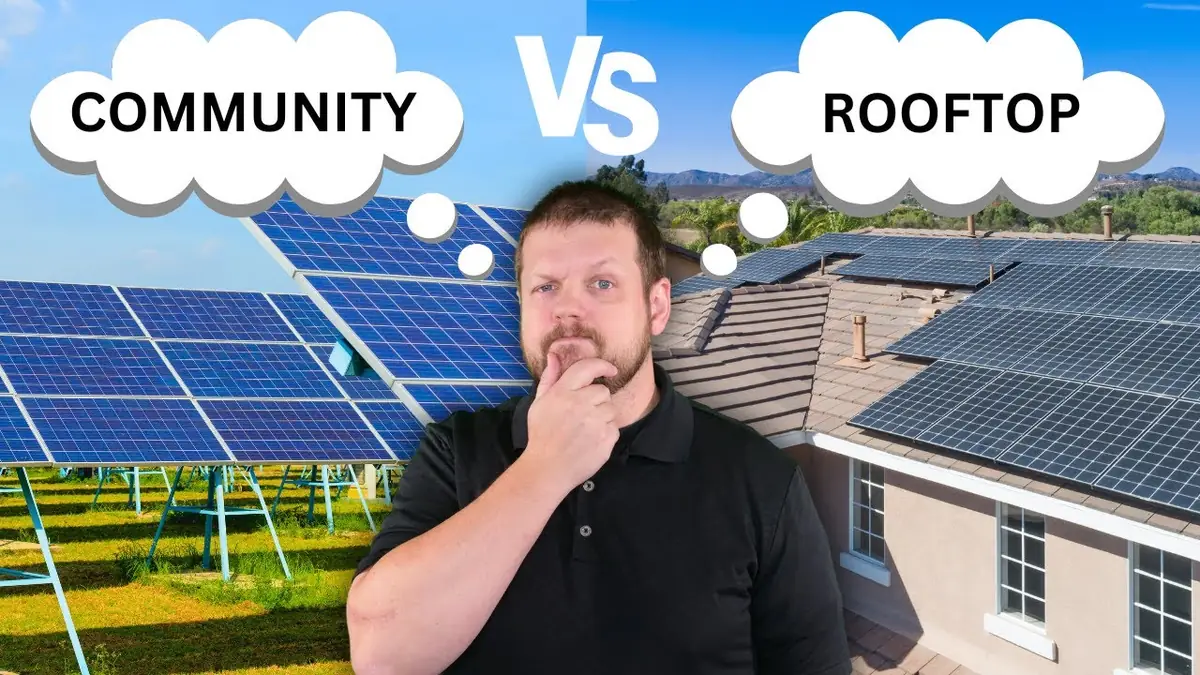
If rooftop solar is out of reach, your roof is shaded, or you rent, community solar is the cheapest legitimate way to cut your bill with no money down. You subscribe to a share of a local solar farm and credits for its output appear on your electric bill, usually trimming 5 to 15 percent. Most programs cost nothing to join and let you cancel if you move within the utility territory.
This is not ownership: you build no equity and the savings are modest, not the near-elimination of your bill a rooftop system delivers. But for $0 down it is real money back monthly; our community solar versus rooftop comparison runs the 25-year math on both.
Dodge the Financing Traps
This is where cheap solar goes to die. A loan’s monthly payment is not its price. The classic trap is the dealer fee baked into low-APR solar loans: the lender charges the installer a fee, often a fifth or more of the loan, which lands on your system price. You get a pretty 3.99 percent rate on a system costing thousands more than its cash price.
Long terms are the second trap: 25 years of payments can add half the system price again in interest. Get the cash price in writing first, then compare each loan’s total cost against it. Shorter terms with a higher APR and no dealer fee frequently win.
Leases and PPAs need the same scrutiny: $0 down and immediate savings, but you own nothing and payments usually escalate yearly. See who still wins with a solar lease in 2026, and watch for the seven red flags of a bad solar quote, especially same-day pressure and missing cash prices.
Save on Equipment Without Buying Junk
With sizing and installer settled, equipment is the last place to trim. The premium for big-name panels rarely pays: a mid-tier Tier 1 panel produces nearly the same energy per watt for meaningfully less. Read what the Tier 1 list means and the brands installers recommend, then ask for a value-tier quote alongside the premium one.
Give the battery a cold-eyed look: at roughly $9,000 to $16,000 installed for 13.5 kWh, it can nearly double the project cost. It earns its keep under time-of-use rates and net billing like NEM 3.0, but under one-to-one net metering it is mostly an expensive backup generator. Run the numbers in are home batteries worth it first.
Timing shaves a little more: installers are hungriest in late fall and winter, and reps chasing end-of-quarter targets can discount. But never cut the non-negotiables: permits, a licensed and insured installer, and proper warranty registration. Skipping them can void your solar panel warranty, so vet any cheap bid with these questions to ask a solar installer.
Pros
- The lowest credible bid shortens the payback period on paper.
- Competition forces installers into itemized, transparent pricing.
- A lean, right-sized system means less equipment to maintain.
Cons
- Rock-bottom bids often mean subcontracted labor and thin warranties.
- Vague quotes hide change orders that surface after the deposit.
- Skipped permits or unlicensed work can void warranties and block interconnection.
What is the cheapest way to get solar panels in 2026?
A right-sized, cash-purchased system won through competitive quotes or a solar co-op, near $2.50 to $3.50 per watt installed. Community solar or a PPA saves with $0 down but costs more over the long run than owning.
Can I still get the 30 percent federal tax credit in 2026?
No. The residential credit ended for systems installed after December 31, 2025. A 2025 installation can still claim it on 2025 taxes via IRS Form 5695. See what 2026 buyers get instead.
Will installing solar panels myself save money?
It cuts labor costs, but you own the design, permitting, electrical work, and inspections, and mistakes can void your panel warranty. A middle ground is DIY-assist: buy equipment near wholesale and hire a licensed pro to install it.
How much can a solar co-op actually save me?
It varies by market, but members typically pay less than going solo because the installer wins dozens of customers at once and shares that saving as a group price. Joining is free with no obligation.
Should I wait for solar prices to keep falling?
Probably not. Module prices keep falling, but labor and permitting are not, and every waiting month is another full utility bill. Buy in the low-demand season if you can.
Related guides
- Is Solar Still Worth It in 2026?
- Solar Panel Cost for a 1,500 Sq Ft Home (2026)
- The Real Price of Solar in 2026
- How to Read a Solar Quote
- Why Solar Quotes Vary So Much
- How Many Solar Quotes Should You Get?
- Best Solar Panel Brands in 2026
- Tier 1 Solar Panels, Explained
- Solar Panel Wattage Ratings, Explained
- Solar Panels for a $200 Electric Bill
- Solar System Size for 2,000 kWh/Month
- Is a 10 kW Solar System Overkill?
- The 20% Rule for Sizing Solar
Ready to compare real solar prices?
Get free, no-pressure quotes from vetted local installers and see what solar costs for your roof.