
Yes, you almost certainly need a permit for rooftop solar. What that permit involves, how long it takes, and what it costs depends entirely on your city, and the variance is enormous: same-week approval in some places, two months of back-and-forth in others.
- Rooftop solar needs both electrical and building permits in nearly every US jurisdiction.
- Your AHJ (authority having jurisdiction) sets the rules. Timelines range from days to 8+ weeks.
- Reputable installers handle all permitting. If the paperwork is your job, reconsider the installer.
- HOAs cannot ban solar in most states, but they can impose design rules. Know your state law.
- Unpermitted solar risks fines, forced removal, insurance denial, and a failed home inspection at sale.
Yes, You Almost Certainly Need One
Solar panels are an electrical generation system bolted to your roof. Every city and county in the US treats that as construction requiring permits, typically both an electrical permit and a building or structural permit. There is no de minimis exception for residential rooftop systems. A handyman telling you permits are optional is telling you he does not pull them.
The permit serves three purposes that actually protect you. It forces a structural review confirming your roof can carry the array. It triggers an electrical inspection of the wiring, disconnects, and grounding. And it creates a paper trail your insurer and future buyers will ask for. Our installation timeline guide shows where permitting fits in the full project sequence.
Your AHJ Sets the Rules
AHJ stands for authority having jurisdiction: the city, county, or township building department that enforces code where you live. The National Electrical Code provides the baseline, and most states adopt it with amendments, but your AHJ decides the details that affect your project: setback distances from roof edges and ridges for firefighter access, whether they require a structural engineering stamp, and how they interpret rapid shutdown rules.
This is why national solar advice about permits is always hedged. An installer working in Phoenix operates under different plan-check expectations than one in suburban Chicago. When vetting companies, ask how many systems they have permitted with your specific AHJ. That local repetition is what keeps your application out of the correction cycle. The installer vetting questions cover exactly what to ask.
What the Permit Application Includes
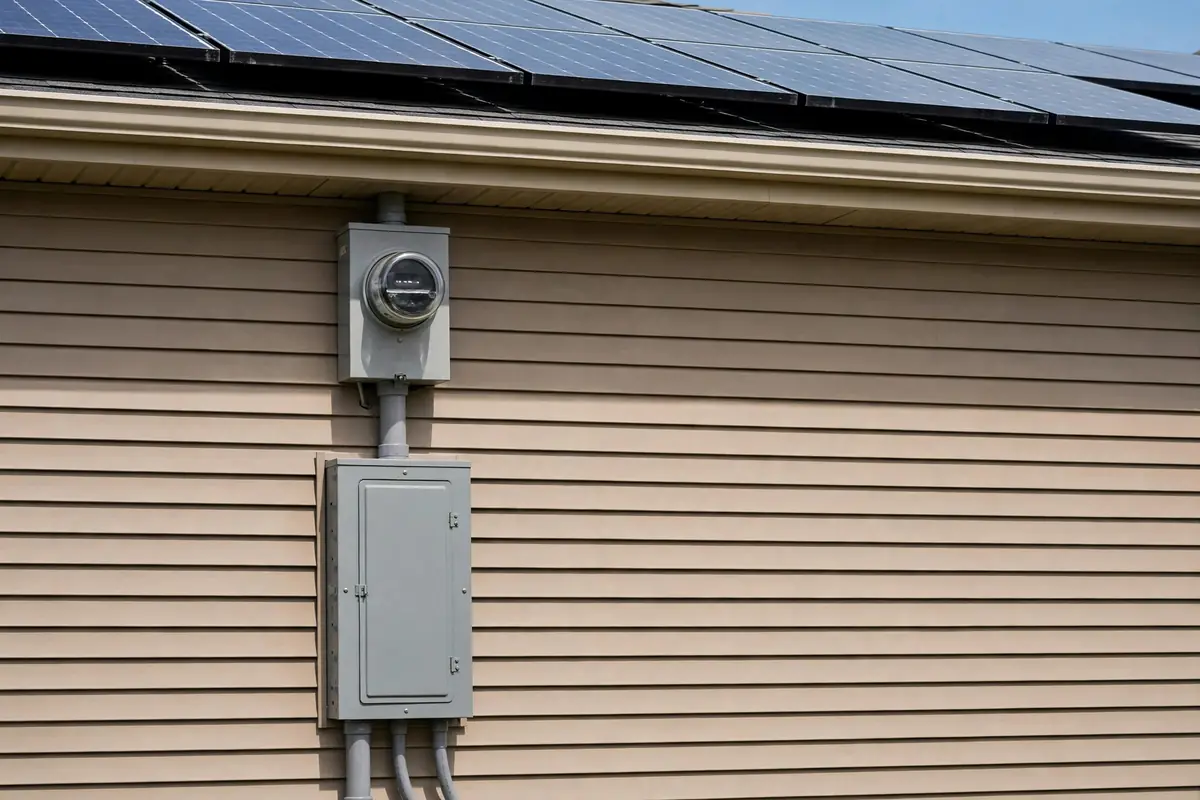
Your installer prepares and submits the permit package. A typical one contains a site plan showing panel layout, setbacks, and equipment locations; a single-line electrical diagram of the system from panels through inverter to your main panel and the utility meter; structural calculations or a standard engineering letter certifying the roof loading; and equipment spec sheets for panels, inverters, and racking.
Some jurisdictions add requirements: fire department review of access pathways, historic district design approval, or additional structural review for tile roofs and older homes. Plan-check corrections are normal and not a sign of trouble. A typical correction asks for a clearer electrical diagram or an added setback dimension, and your installer turns it around in days. If your roof is near the end of its life, read our guide on whether solar belongs on a 20-year-old roof before spending money on permits for a roof you will replace anyway.
How Long Permitting Takes
Permitting is the most unpredictable phase of a residential solar project. The physical installation usually takes one to three days. Permitting takes anywhere from a few days to two months, and it is almost entirely outside your installer’s control once submitted.
| Jurisdiction type | Typical permit timeline | Notes |
|---|---|---|
| Solar-friendly cities | Same day to 2 weeks | Online portals, standardized checklists, over-the-counter review |
| Average suburbs | 2 to 4 weeks | One or two rounds of plan-check corrections are normal |
| Strict or understaffed AHJs | 4 to 8 weeks | Structural stamps, fire review, or backlog delays |
| Historic districts | 6 to 12 weeks | Design review boards add a separate approval layer |
Expedited programs exist in some places. The Department of Energy’s SolarAPP+ is an automated online permitting tool that can approve standard residential systems same-day in participating jurisdictions. Ask your installer whether your AHJ participates. Where it does, weeks of waiting collapse into an afternoon.
Inspections After Installation
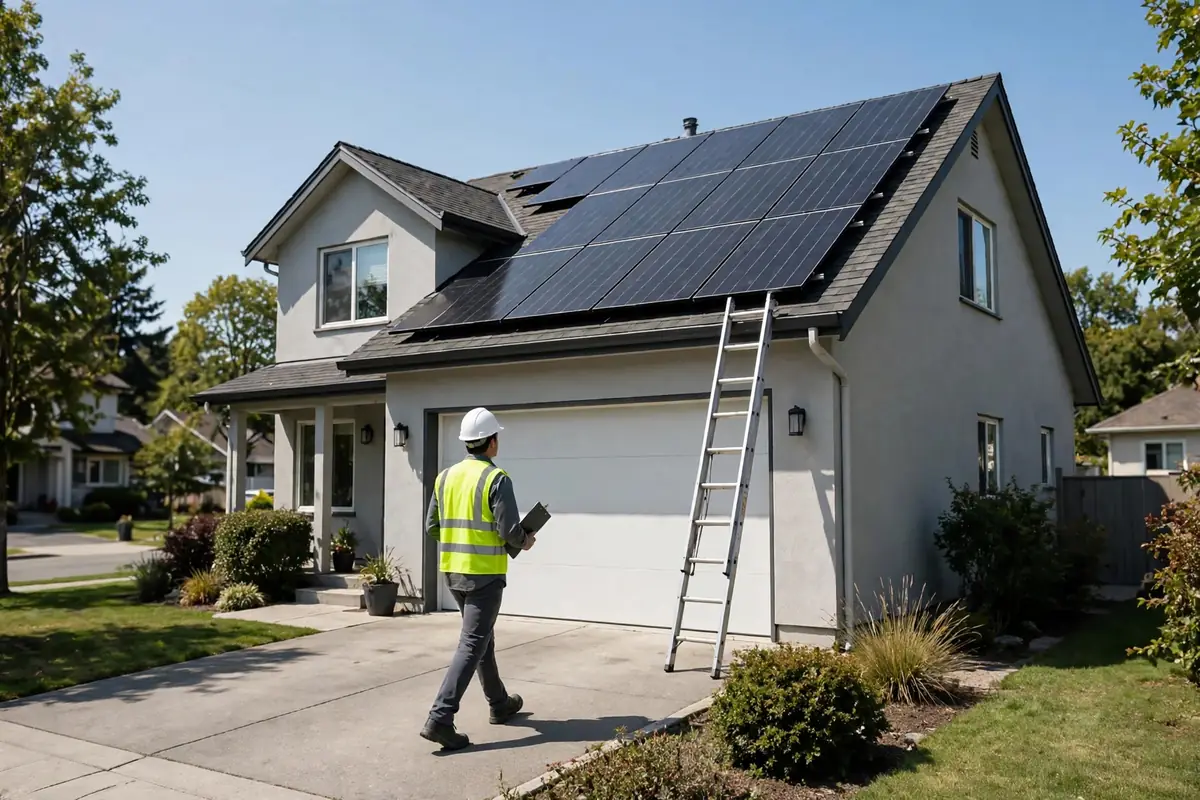
The permit is not the end of the AHJ’s involvement. After installation, the city or county inspects the work before the system can operate. The inspector checks structural attachment, wiring methods, conduit, disconnect labeling, grounding, and rapid shutdown functionality. Most inspections take under an hour and pass on the first visit when a competent crew did the work.
If the inspection fails, the installer corrects the flagged items and schedules a re-inspection, usually within days. This is routine and not a sign of a bad installer; even good crews get occasional correction notices because inspectors interpret gray areas differently. What matters is that corrections happen quickly and at no cost to you. After the AHJ signs off, your utility grants permission to operate, which is a separate step with its own timeline.
HOAs: What They Can and Cannot Block
Homeowners associations are the other gatekeeper people worry about. The good news: most states have solar access laws that prohibit HOAs from banning rooftop solar outright. About half the states have explicit statutes, and courts in others have generally sided with homeowners.
The catch is that many of those laws let HOAs impose “reasonable” restrictions on placement, color, and visibility. An HOA can often require panels on the rear roof rather than the street-facing plane, or mandate black frames instead of silver, even if that trims production by a few percent. What they typically cannot do is impose requirements that make solar economically unviable, such as demanding a specific expensive tile or banning panels from the only usable roof plane.
Before signing anything, get your HOA’s architectural guidelines and any solar-specific rules in writing. Your installer should review them during design, not discover them at the permit counter. Submit the HOA application early, because some associations meet only monthly, and their 30-day review clock can run in parallel with city permitting if you start both at once. If your HOA pushes back beyond what your state allows, your state attorney general’s consumer protection office is the escalation path, and several states have fined HOAs for overreach.
What Happens If You Skip the Permit
Some homeowners are tempted, usually because a cheap contractor suggests it. The downside is severe and multi-layered. Your city can issue a stop-work order, fine you daily until compliance, and in extreme cases require the system removed. Your homeowner’s insurance can deny claims related to the unpermitted work, including a roof leak or an electrical fire. And when you sell, the buyer’s inspection will flag the unpermitted system, forcing you to permit retroactively or credit the buyer, usually at the worst possible negotiating moment.
There is also the utility angle. Without permits and inspection, your utility will not grant interconnection approval or enroll you in net metering, which means the system cannot legally export power and your savings math collapses. The permit fee itself is typically a few hundred dollars, a rounding error on a $20,000-plus project. It is the cheapest insurance in the entire process. Our red flags guide lists permit avoidance as a disqualifying signal from any contractor who suggests it.
How much does a solar permit cost?
Usually $200 to $600 for residential rooftop systems, set by your AHJ’s fee schedule. Some jurisdictions cap solar permit fees by law. The fee is normally included in your installer’s quote rather than billed separately.
Can I pull the permit myself to save money?
Technically yes in most places, but there is little to save since reputable installers include permitting in their price. Owner-pulled permits also make you the responsible party for corrections, which is a bad trade.
Does my HOA approval replace the city permit?
No. HOA architectural approval and the municipal building permit are separate requirements. You need both where both apply, and neither substitutes for the other.
What is SolarAPP+?
An automated online permitting platform from the Department of Energy that approves code-compliant residential solar designs instantly in participating jurisdictions. Ask your installer if your AHJ uses it. More information is at energy.gov.
Can a permit be denied?
Outright denial is rare for standard residential systems. What happens instead is a correction cycle: the plan checker requests changes, your installer revises, and it gets approved. True denials usually involve historic districts or structural problems with the roof itself.
Ready to compare real solar prices?
Get free, no-pressure quotes from vetted local installers and see what solar costs for your roof.