
Most solar goes on roofs because the roof is free real estate. But a ground-mounted array in the backyard can face perfectly south, tilt at the ideal angle, and stay cooler and cleaner, producing 10 to 20 percent more power per panel. Here is when the backyard beats the rooftop.
- Ground mounts cost roughly $0.50 to $1.00 more per watt than rooftop systems due to racking, foundations, and trenching.
- Optimal tilt and orientation plus better cooling can yield 10 to 20 percent more annual production per panel.
- Ground mounts make sense with shaded or weak roofs, ample land, or plans for a larger system.
- Permitting, setbacks, and HOA rules complicate ground mounts more than rooftop jobs.
- An aging roof is one of the strongest reasons to build on the ground instead.
How Roof and Ground Mounts Differ
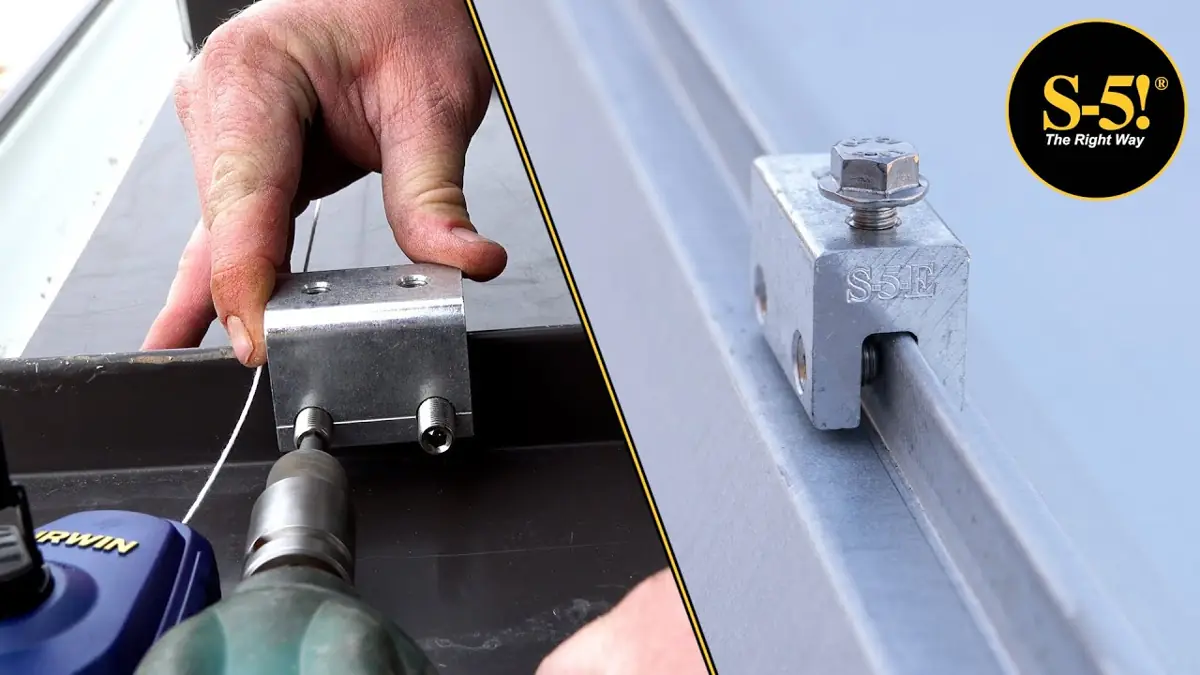
A rooftop system bolts racking to your roof structure, with panels typically sitting a few inches above the shingles at the roof’s pitch. A ground-mount system sets panels on steel posts anchored in concrete footings or driven piles, arranged in rows across open land, wired back to your house through a buried trench. Same panels, same inverters, very different civil engineering.
The structural difference drives everything else. Rooftop uses your existing structure and needs no extra land; ground mount needs open, unshaded land and a foundation built from scratch. Rooftop panels inherit your roof’s orientation and pitch, for better or worse; ground mounts get placed at whatever azimuth and tilt the designer chooses. If your roof is new, unshaded, and south-facing, the roof usually wins on simplicity. If not, keep reading.
Cost Comparison: The Ground-Mount Premium
Ground mounts cost more, full stop. The premium comes from steel racking and foundations, trenching for conduit (often $5 to $15 per foot), longer wire runs, and more labor. Typical installed costs run $3.00 to $4.50 per watt for residential ground mounts versus $2.50 to $3.50 for rooftop. On an 8 kW system, that is a premium of roughly $4,000 to $8,000.
| Cost factor | Roof mount | Ground mount |
|---|---|---|
| Typical $/watt installed | $2.50 to $3.50 | $3.00 to $4.50 |
| 8 kW example total | $20,000 to $28,000 | $24,000 to $36,000 |
| Structural work | Roof attachments only | Foundations + trenching |
| Maintenance access | Ladder required | Walk-up access |
| Roof replacement conflict | Must remove panels | None |
The premium narrows on larger systems, since trenching and design costs spread over more watts, and it can vanish entirely if the alternative is a roof replacement. Removing and reinstalling rooftop panels for a re-roof costs $3,000 to $6,000; if your roof has under 10 years of life left, a ground mount sidesteps that bill completely. Our old-roof guide works through that decision, and 2026 pricing benchmarks help you judge any bid.
Production Differences: Tilt, Cooling, and Cleaning
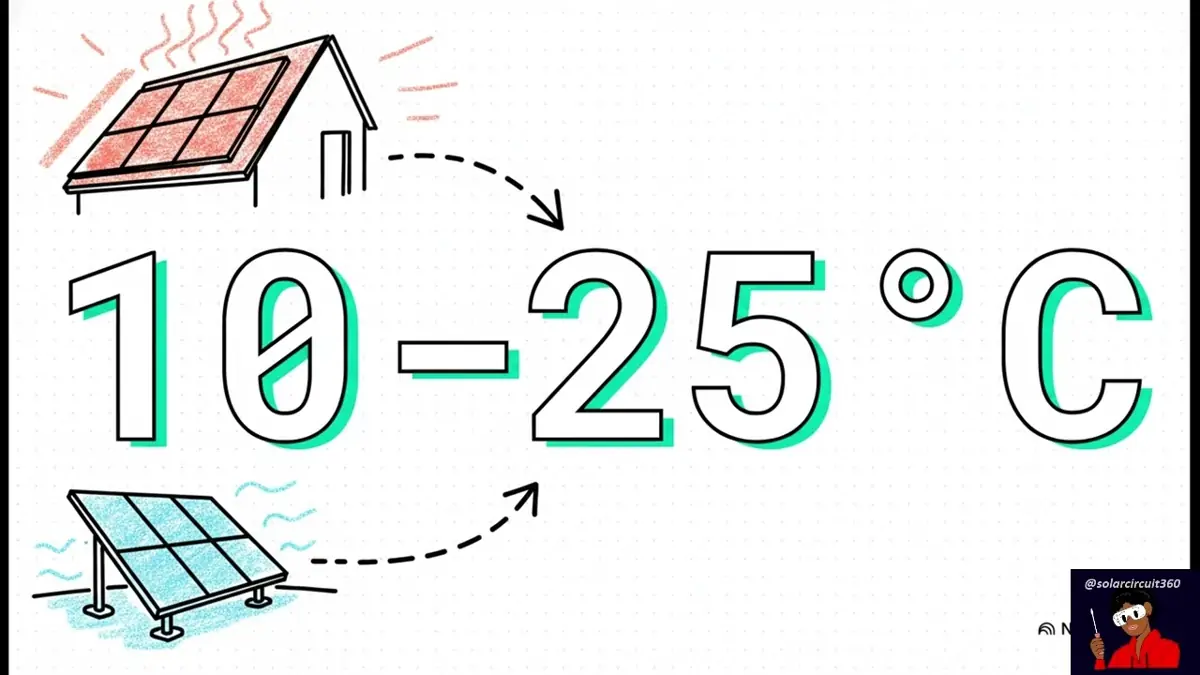
A ground mount’s production edge comes from three compounding advantages. First, perfect orientation and tilt: panels face true south at the latitude-ideal angle (or seasonally adjustable tilt on some racks), while roofs face wherever the house faces at whatever pitch the builder chose. Second, cooling: panels mounted high off the ground get airflow underneath, running several degrees cooler than roof-hugging panels, which recovers a few percent of heat losses. Third, cleaning and snow: walk-up access means you can actually brush off dust or snow, a real advantage in dusty or snowy climates.
Combined, these typically deliver 10 to 20 percent more annual kilowatt-hours per installed watt than a compromised roof, and 5 to 10 percent more than a good roof. Bifacial panels amplify the effect: with light-colored ground cover like gravel, the rear face harvests reflected light that a dark roof would absorb. That production bonus partially offsets the cost premium, improving the ground mount’s payback more than the sticker price suggests. Run both options through lifetime cost math before deciding on price alone.
Land, Permits, and HOA Realities
Ground mounts need land: roughly 400 to 600 square feet for a typical 8 to 10 kW residential array, plus setback distances from property lines. The spot must be unshaded from 9 a.m. to 3 p.m. year-round, reasonably close to the house (long trench runs get expensive), and not in a wetland, easement, or septic field. Walk your property with the designer’s shade analysis, not just your eyes; winter sun angles surprise people.
Permitting is heavier than rooftop in most jurisdictions: structural engineering for the foundation, electrical permits, and sometimes zoning review or variances for setback rules. Timelines stretch accordingly; a ground mount can take 2 to 4 months from contract to permission to operate versus 4 to 8 weeks for rooftop. HOAs are the wildcard: many restrict visible ground arrays even in states with solar access laws, so check your covenants early. Your installer should handle permitting, but confirm that explicitly, along with who pays if a variance is needed. State rules change, so verify current requirements at DSIRE and with your local building department.
Pros of ground mount
- Ideal orientation, tilt, and cooling boost production.
- Easy walk-up maintenance and cleaning.
- No roof penetrations, leaks, or re-roof conflicts.
Cons of ground mount
- $4,000 to $8,000 cost premium on typical systems.
- Needs unshaded land and heavier permitting.
- More visible; HOA and aesthetic objections possible.
When a Backyard Array Wins
Ground mounts win decisively in several situations. A roof that is heavily shaded, north-facing, structurally weak, or near end of life makes the decision easy: the ground is simply the better solar site. Rural properties with acreage and a distant, shady house are classic candidates. Homeowners planning systems larger than the roof can hold, for a future EV or heat pump, can build the array the roof cannot fit.
There is also the tracker option, unique to ground mounts: single-axis trackers follow the sun and can add 15 to 25 percent more production, though the moving parts add cost and maintenance. For most homes, a fixed-tilt ground mount is the sweet spot. And whichever mount you choose, the question of who installs it matters: ground mounts reward experienced local crews more than any other residential solar work, since the civil and trenching work is where inexperience shows.
Choosing for Your Property
Decision framework: if your roof is newish, unshaded, and reasonably oriented, put the panels on the roof and pocket the savings. Price both options if your roof is marginal; the ground mount’s production bonus plus avoided re-roof costs often closes the price gap. If you lack the land or face HOA resistance, the roof wins by default.
Get dedicated quotes for each: a rooftop quote from a roofer-friendly installer and a ground-mount quote that itemizes foundations, trenching, and permitting separately, so you can see where the premium goes. For typical suburban homes, cost benchmarks for common home sizes give you the rooftop baseline to compare against. Either way, you are buying the same 25 years of power; the mount is just the delivery mechanism.
If you go with ground mount, think about placement as a 25-year landscaping decision. Leave room for future expansion, keep the array clear of growing trees, and consider screening with plantings if visibility bothers you or the neighbors. A well-planned array looks intentional and tidy; a cramped one becomes the thing everyone notices. The best ground-mount installers will walk the property with you and flag these issues before you sign, which is one more reason to favor experienced local crews for this work.
How much land do I need for a ground-mount system?
Roughly 400 to 600 square feet of unshaded land for a typical 8 to 10 kW home array, plus setbacks from property lines. The site needs clear sun from about 9 a.m. to 3 p.m. year-round and a practical trench route to your electrical panel.
Do ground-mounted panels need more maintenance?
Less, in practice. Walk-up access makes cleaning easy, airflow reduces heat stress, and there are no roof penetrations to maintain. Mowing or weed control around the array is the main recurring chore.
Can I install ground-mount solar myself?
The racking and panels are DIY-friendly, but foundations, trenching, and grid interconnection usually require licensed professionals and permits. Most homeowners hire an installer; DIY makes sense only if you have construction experience and your utility allows it.
Will a ground mount hurt my property value?
Evidence is thinner than for rooftop, but a well-sited, professional array on acreage is generally neutral to positive. An array dominating a small suburban backyard can deter some buyers, so consider placement and screening.
Ready to compare real solar prices?
Get free, no-pressure quotes from vetted local installers and see what solar costs for your roof.