
After the panels, the inverter system is the most consequential equipment choice on your quote, and most 2026 buyers face the same fork: Enphase microinverters or a SolarEdge inverter with power optimizers. Both solve the shade problem that cripples old string inverters. They differ in architecture, cost, monitoring, and track record. Here is how to choose with eyes open.
- Both systems optimize each panel individually, so partial shade hurts far less than with a plain string inverter.
- Enphase puts a microinverter on every panel (no single point of failure); SolarEdge uses one central inverter plus small optimizers per panel.
- Enphase typically costs $500 to $1,500 more on a residential system but carries 25-year warranties on every microinverter.
- SolarEdge offers slightly higher peak efficiency and strong monitoring, but its central inverter warranty is 12 years (extendable).
- Roof complexity, expansion plans, and local installer expertise should drive the choice more than brand loyalty.
Why panel-level electronics exist
A traditional string inverter connects all your panels in series, like old Christmas lights: the weakest panel limits the whole string. One shaded panel at 4 p.m. could drag down the output of twenty sunny ones. Module-level power electronics (MLPE) fix this by letting each panel operate at its own maximum, so shade on one panel stays one panel’s problem.
Building codes added a second reason. Rapid shutdown requirements (NEC 2017 and later) mandate that rooftop DC wiring de-energize within seconds of a shutdown event for firefighter safety. Both Enphase microinverters and SolarEdge optimizers satisfy this inherently, which is why they dominate residential installs in jurisdictions enforcing modern code.
If your roof is completely unshaded and simple, a plain string inverter remains the cheapest option, covered in our hybrid versus string inverter guide. For most real roofs with vents, chimneys, trees, or multiple faces, MLPE earns its premium.
How each system works
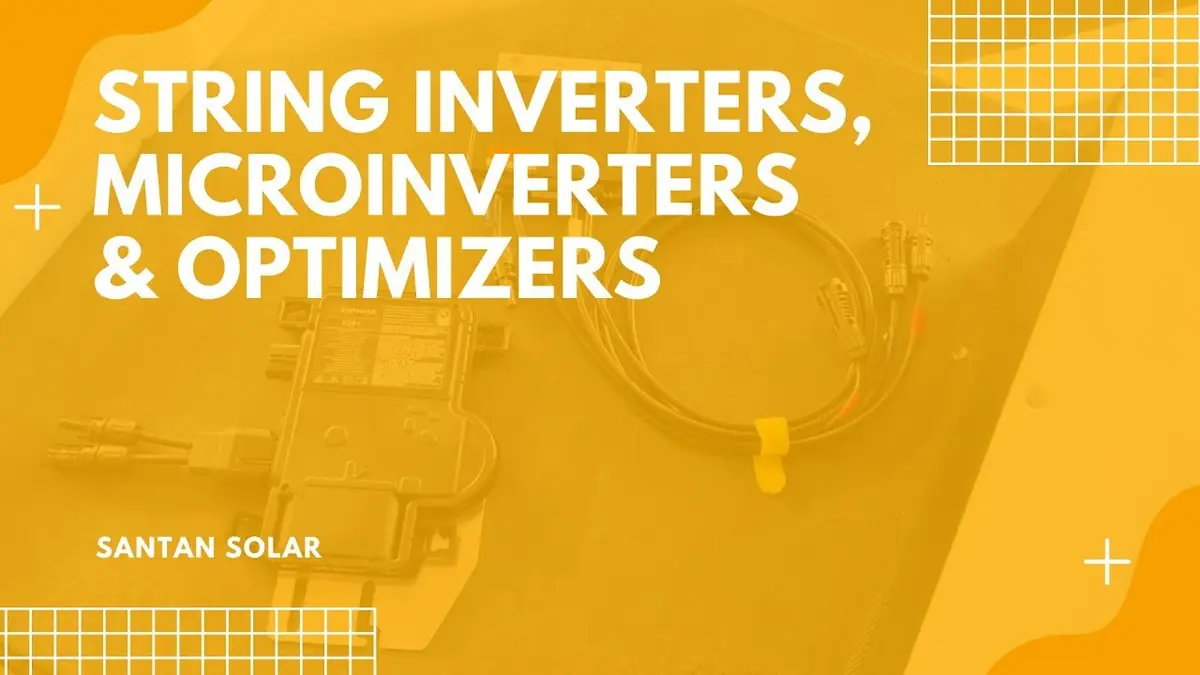
Enphase mounts a small microinverter on the back of every panel. Each unit converts its panel’s DC to AC right on the roof, so only AC wiring runs to your electrical panel. There is no central inverter at all. If one microinverter fails, you lose one panel, not the system. The current IQ8 series also supports sunlight backup, providing limited daytime power during outages without a battery.
SolarEdge takes a hybrid approach: a small power optimizer on each panel conditions the DC (handling shade optimization and rapid shutdown), while a single central inverter on the wall converts the combined DC to AC. You get panel-level optimization plus the efficiency of one large conversion stage. If the central inverter fails, the whole system stops until it is repaired or replaced.
Head-to-head comparison
| Factor | Enphase microinverters | SolarEdge + optimizers |
|---|---|---|
| Architecture | Microinverter per panel, all-AC wiring | Optimizer per panel, one central inverter |
| Single point of failure | No | Yes (central inverter) |
| Typical cost premium | $0.15 to $0.25/W over string | $0.10 to $0.20/W over string |
| Equipment warranty | 25 years (microinverters) | 12 years inverter (extendable), 25 years optimizers |
| Peak efficiency | ~97% | ~99% (inverter) |
| Battery integration | AC-coupled, modular | DC-coupled, efficient with SolarEdge battery |
| Expansion ease | Excellent, add panels anytime | Good, within inverter capacity |
Shade performance and monitoring
In real shade, both systems perform similarly well, and both dramatically outperform plain string inverters. Independent testing and field data consistently show MLPE recovering most of the energy that shade would otherwise steal. The differences between Enphase and SolarEdge on shade are small compared to the gap between either of them and a basic string inverter.
Monitoring is a genuine differentiator in daily life. Both offer panel-level monitoring through phone apps, letting you spot a failing or dirty panel from your couch. Enphase’s app is widely considered the more polished and homeowner-friendly of the two, with clearer visualizations. SolarEdge’s monitoring is powerful and detailed, arguably better for data enthusiasts, but its interface feels more technical. Neither is bad; Enphase is simply easier for non-technical owners.
Reliability and warranty track records
This is where the debate gets honest. Enphase’s microinverters carry 25-year warranties, matching the panels themselves, and the company’s field failure rates are among the industry’s lowest. When a unit does fail, the system keeps running minus one panel, and replacement is a single rooftop swap.
SolarEdge’s optimizers also carry 25-year warranties and are reliable. The central inverter is the concern: 12-year standard warranty (extendable to 20 or 25 for a fee), and a failure takes the whole system offline until service. SolarEdge went through a difficult period with inverter reliability and financial stress in 2023-2024, including significant restructuring. The company has stabilized, but buyers should know the history and confirm their installer will service the equipment long term. Both manufacturers publish full warranty terms online: Enphase and SolarEdge warranty documents are worth reading before you commit, since the fine print governs what happens in year 14.
For context on 2026 system economics, budget one central inverter replacement (~$1,500 to $2,500 installed) in 25-year math for SolarEdge if you do not extend the warranty. Enphase’s 25-year microinverter warranty avoids that line item.
What installers charge for each
Equipment cost is only part of the price difference; labor shapes it too. Enphase systems take more rooftop labor, with a microinverter mounted and wired under every panel, but the AC-only home run to the electrical panel is simpler and faster. SolarEdge systems are quicker on the roof (optimizers are lighter and simpler to mount) but require DC homeruns, a wall-mounted inverter with its own conduit, and more careful string design.
In practice, reputable installers quote Enphase systems roughly $0.10 to $0.20 per watt more than SolarEdge for the same roof, though the gap varies by market and crew. Be suspicious of quotes where the gap is far larger: some installers inflate the Enphase premium because they prefer selling what they stock, not because the labor justifies it. Getting competing quotes on both platforms for the same roof is the fastest way to see the honest local spread.
Also ask about monitoring setup fees and extended warranty costs as separate line items. SolarEdge’s extended inverter warranty (20 or 25 years) typically adds a few hundred dollars, which narrows the lifetime cost gap with Enphase’s included 25-year coverage. A quote comparison that ignores the extended warranty is not comparing like with like.
Which should you choose
Enphase tends to win when
- Your roof has complex shading or many faces
- You value the 25-year no-replacement warranty
- You may expand the system later
- You want the simplest homeowner monitoring
- Your installer is Enphase-certified and experienced
SolarEdge tends to win when
- Upfront cost is the deciding factor
- You want SolarEdge’s DC-coupled battery pairing
- Your roof is simple with mild shade
- Your installer has deep SolarEdge experience
- You prefer detailed technical monitoring
The last bullet in each column is doing quiet heavy lifting. Installer familiarity with the platform affects commissioning quality, troubleshooting speed, and warranty service. An excellent SolarEdge installer beats a mediocre Enphase installer every time. Ask how many systems they have installed on each platform in the last year, and let that answer weigh heavily.
Pair this decision with the right panels: our N-type versus P-type guide and panel type explainer cover the other half of the equipment choice.
Is Enphase worth the extra cost over SolarEdge?
Often yes for complex roofs and long ownership, thanks to the 25-year warranty and no single point of failure. On simple roofs with tight budgets, SolarEdge’s lower cost is rational.
Can I add a battery later with either system?
Yes. Enphase pairs naturally with AC-coupled batteries including its own IQ Battery. SolarEdge systems pair most efficiently with SolarEdge batteries (DC-coupled) but work with AC-coupled options too.
What happens if my SolarEdge inverter fails?
The system stops producing until the inverter is repaired or replaced. With monitoring alerts, most owners notice within a day. This is the main architectural disadvantage versus Enphase.
Do microinverters work in extreme heat?
Yes, though rooftop electronics in places like Phoenix run hot. Enphase units are rated for high temperatures and have strong field records in hot climates. Ensure airflow under panels per the install manual.
Which monitoring app is better?
Enphase’s app is generally considered more intuitive for homeowners; SolarEdge’s offers deeper technical detail. Both provide panel-level visibility, which is what matters most.
Ready to compare real solar prices?
Get free, no-pressure quotes from vetted local installers and see what solar costs for your roof.